


















Game Introduction
Welcome to the fun-filled world of Greedy Beans! Your core mission is to control the little bean and gobble up all the beans in the level as quickly as possible. Remember to chow down as many beans as you can each time, and be extra careful to dodge the sudden lightning strikes from above! Clear all the beans, and you’ll pass the level to unlock new challenges—come start your foodie adventure!
Game Features
1. Fast-paced Bean-eating Showdown
It requires both bean-gobbling speed and strategic decision-making, as you need to eat as many beans as possible in one go while balancing risk avoidance.
2. Unpredictable Lightning Dangers
Irregular lightning strikes break the fixed level-clearing mode, bringing variability to each challenge and greatly boosting the thrill of passing levels.
3. Low-threshold & Easy to Master
With ultra-simple control logic, players of all ages can quickly get the hang of it, and enjoy casual level-clearing fun even during fragmented time.
4. Pure & Stress-free Experience
There are no complicated development or pay-to-win systems; it focuses on the core loop of "eating beans - avoiding dangers - clearing levels", which is both relaxing and rewarding.
Gameplay and Controls
1. Control your character to move freely in the level; beans will be eaten automatically when you get close
2. Prioritize route planning and eat as many beans as possible in one go to improve clearance efficiency
3. Keep an eye out for random lightning strikes, move in time to dodge them and avoid being hit to interrupt the challenge
4. Clear all beans in the level to complete the level and pass
Game Guide
Greedy Beans centers on the dual challenge of "fast bean-gobbling" and "lightning evasion". Many players frequently fail due to greed or poor anticipation. This guide, covering basics to advanced skills, helps you clear all levels steadily while balancing efficiency and safety.
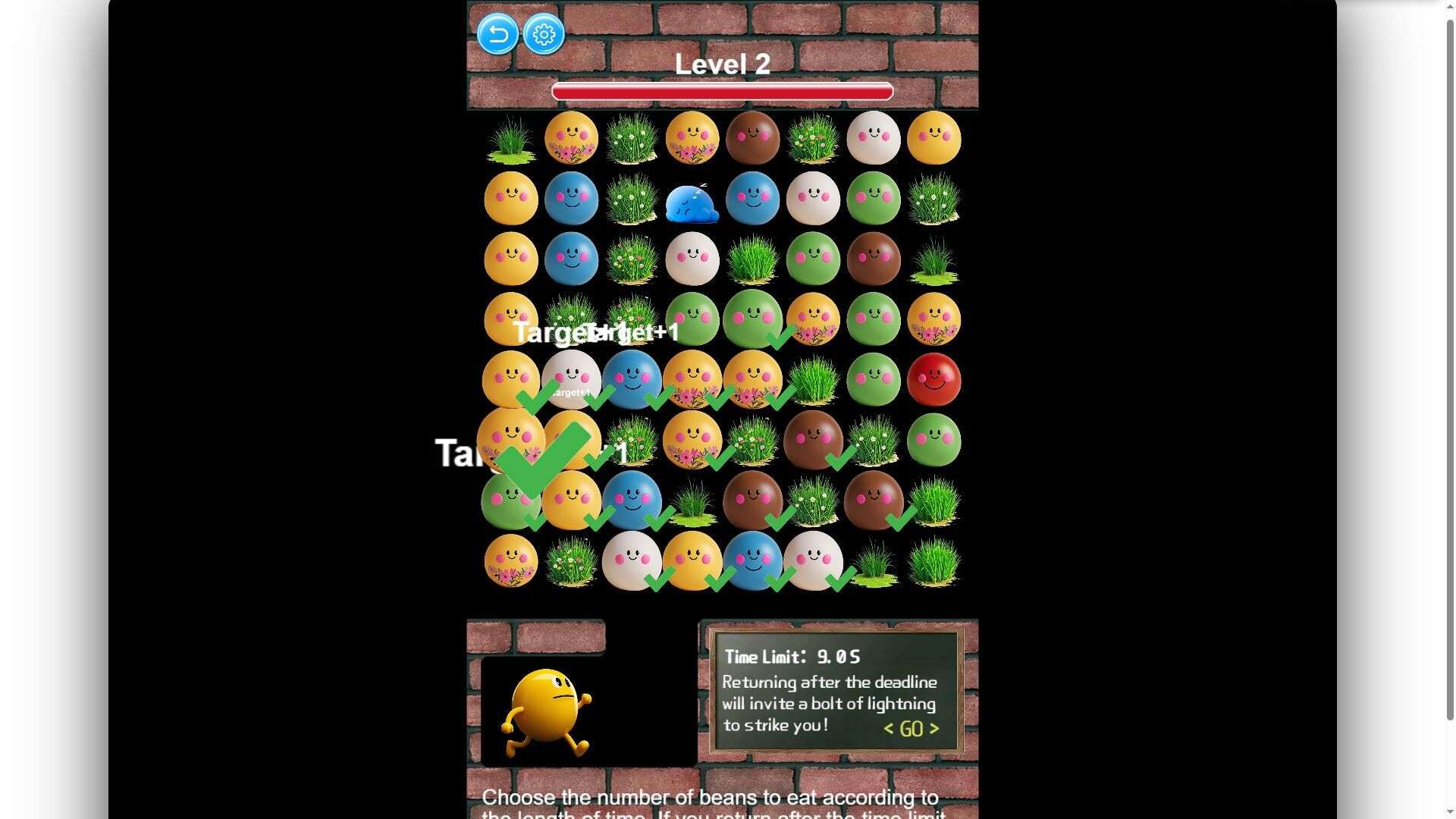
Optimizing basic operations is fundamental to clearing levels. The game uses a free-movement system where beans are eaten automatically when you get close. New players tend to fall into "random wandering" while eating beans. It's recommended to use "diagonal swiping" instead of straight-line movement, which increases coverage by 30% and allows you to eat 3-5 adjacent beans at a time. Keep your finger lightly touching the screen during operation to avoid over-slipping that makes the character "overshoot". Especially in bean-dense areas, small adjustments can reduce missed beans. Remember: bean-eating efficiency ≠ swiping speed; precise control is more important.
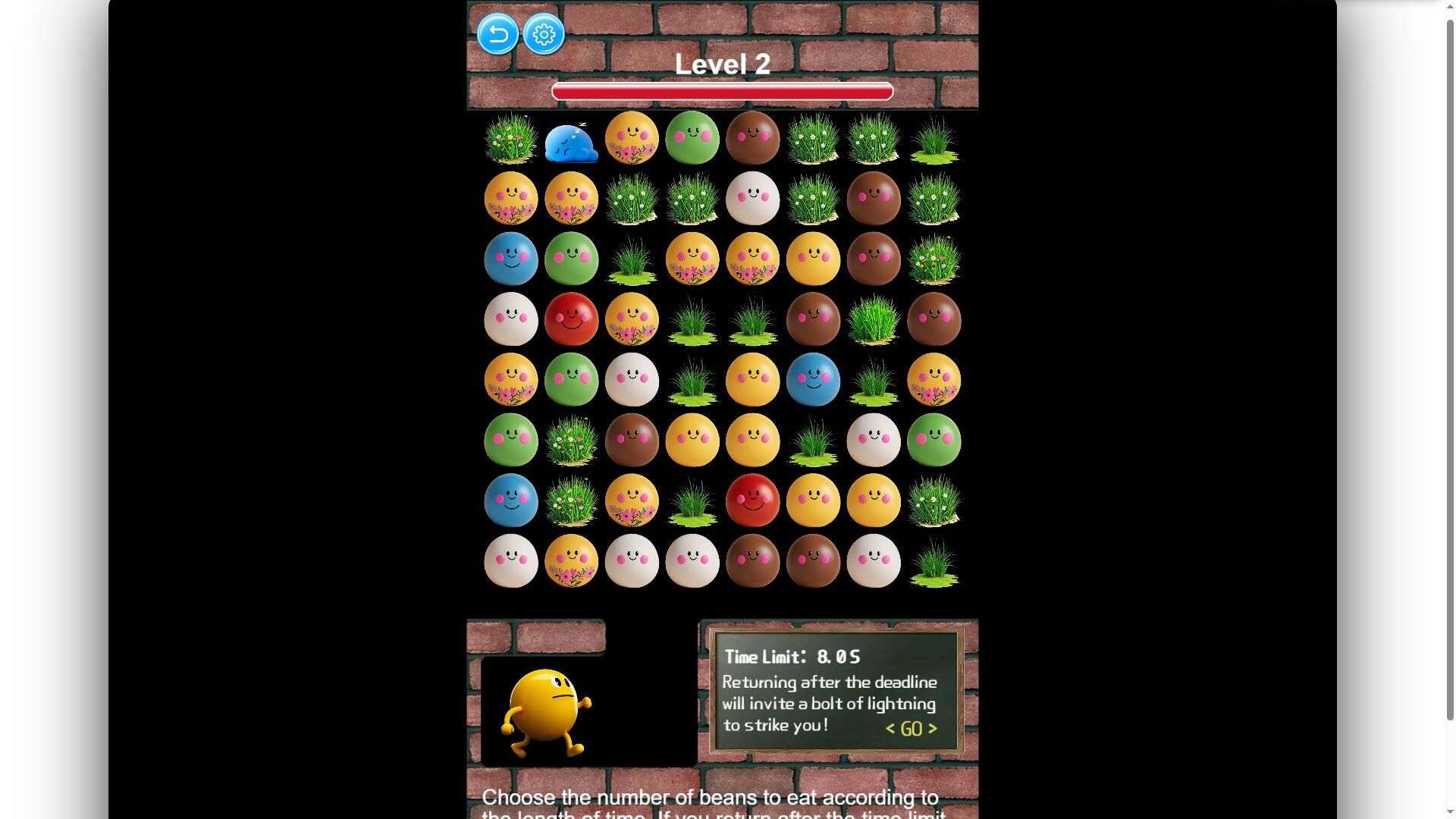
Lightning evasion is the core difficulty. Random lightning has no fixed trajectory, but there's a 0.5-second flash warning before it strikes. New players must remember "anticipation first": if the flash appears near your current bean-eating area, move to an open space immediately and never be greedy. If you're at the edge of the map, move to the center in advance to reserve evasion space. The advanced skill is "sacrifice beans to survive" — when a lightning warning appears near a dense bean cluster, decisively abandon local beans to avoid resetting the entire level's progress.
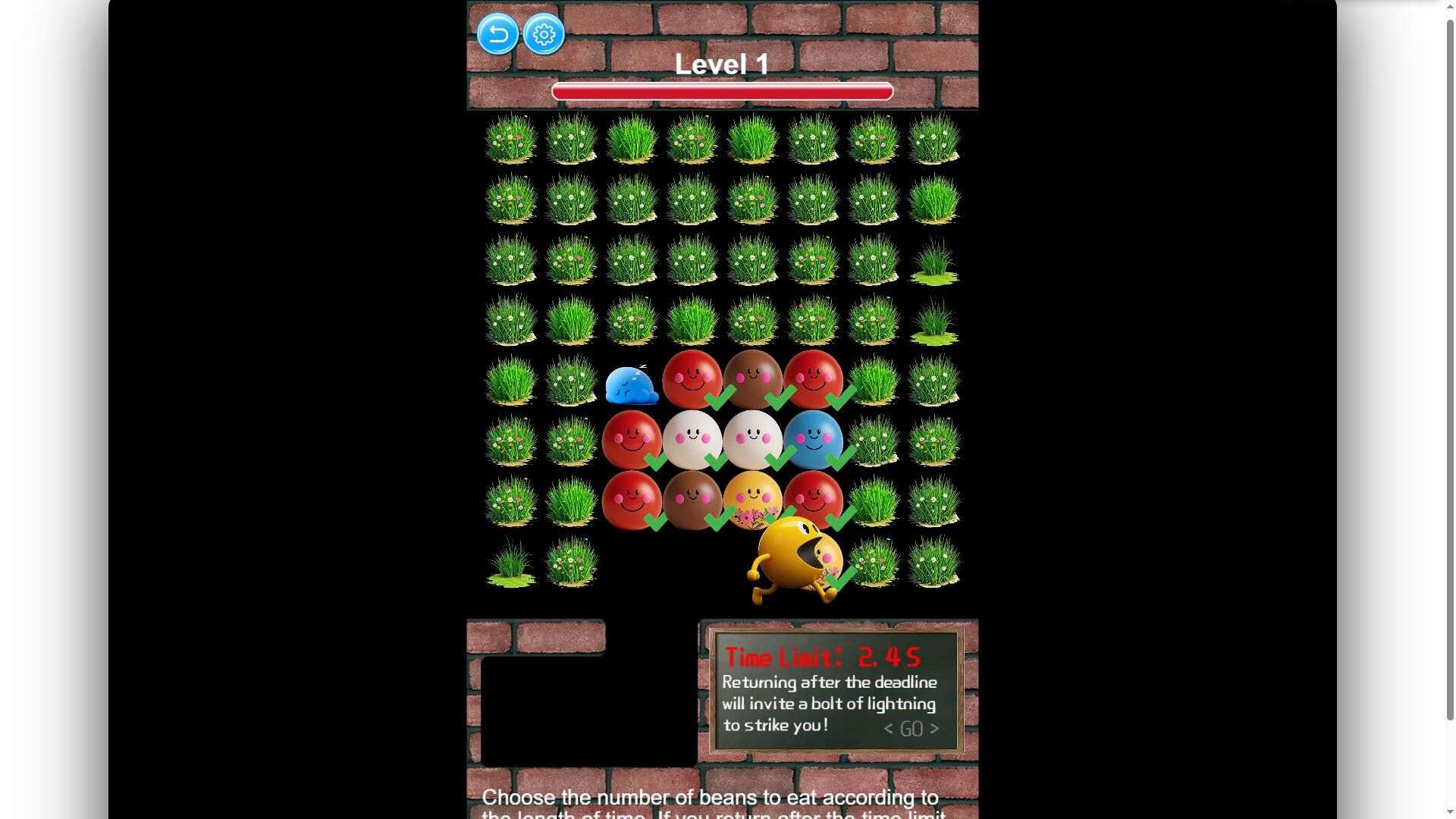
Route planning determines clearance speed. We recommend the "spiral edge-clearing method": start from the map edge and advance spirally toward the center. This not only avoids missing beans in corners but also helps you grasp the map layout in real time. For scattered bean clusters, adopt the "nearby aggregation" principle — eat surrounding beans first, then focus on isolated ones to reduce ineffective movement. In later levels with higher lightning frequency, split the map into 2-3 areas and clear them one by one to lower overall risk.

Key advanced skill: Use "checkpoint reset". When the character is trapped in a dead end by lightning, quickly swipe to the nearest cleared area and use terrain blocking to reset safely. If only a few scattered beans remain before clearance, prioritize clearing central beans first, then edge ones — avoid being struck by lightning while rushing around in the final stage.
Core principle summary: Focus on stability and practice operations in the early stage, control speed and optimize routes in the mid-stage, and prioritize evasion to ensure clearance in the late stage. Remember "stability > speed" — you can achieve efficient clearance once proficient.