
















Game Introduction
Step into the colorful grid world of Dot and Dot, where a challenging puzzle adventure awaits. As a color-matching puzzle game, your core task is to build exclusive paths for all pairs of dots with the same color in the grid—you must not only connect each pair successfully but also ensure all paths never cross, hiding endless strategic fun beneath seemingly simple rules.
The game features 300 levels, with difficulty ramping up as you progress: from easy-to-handle basic layouts in the early stages to complex grids requiring precise planning later on, each step forward tests your logical thinking and spatial reasoning skills. When you hit a roadblock, the handy hint function will light up ideas for you; a double-click triggers a smooth animation to automatically complete the last segment of the path, letting a sense of achievement burst forth alongside visual enjoyment. If you make a wrong move, a right-click quickly clears the path, allowing you to start over anytime—with maximum fault tolerance.
Whether you're using fragmented time to enjoy light puzzle-solving or immersing yourself in conquering high-difficulty levels, Dot and Dot lets you reap the dual pleasures of successful level-clearing and mental exercise in the collision of colors and logic.
Game Features
Distinctive Core Gameplay
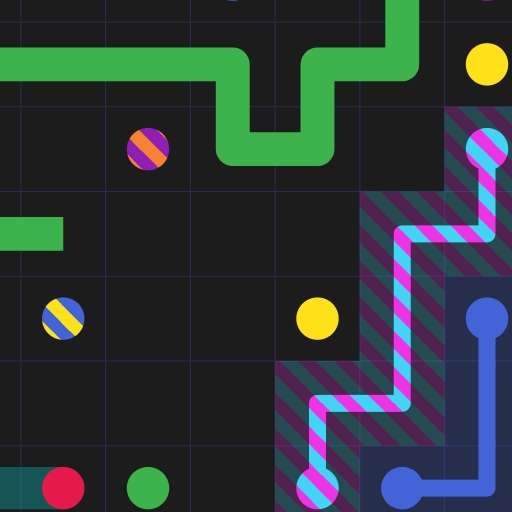
Centered around connecting dots of the same color on a grid, with the requirement that paths do not cross. Under simple rules, it contains rich strategic elements, focusing on color matching and path planning.
Convenient Features for Assistance
Equipped with a hint function to provide ideas when stuck; a double-click can trigger a smooth animation to automatically complete the last segment of the path, enhancing the sense of accomplishment; a right-click can quickly clear the path, facilitating adjustments at any time and improving operational fault tolerance and experience fluency.
Rich Level System
Includes 300 levels, with difficulty gradually increasing as progress is made. From basic layouts to complex grids, it continuously tests logical thinking and spatial reasoning abilities, meeting the challenge needs of different stages.
Balanced Diverse Experiences
Suitable for both light puzzle-solving in fragmented time and immersive tackling of high-difficulty levels. In the collision of colors and logic, it brings both the satisfaction of level clearance and the joy of mental exercise.
Gameplay and Controls
Objective
Connect all dots of the same color in the grid without crossing paths, so that all dots of the same color form complete connections.
Operations
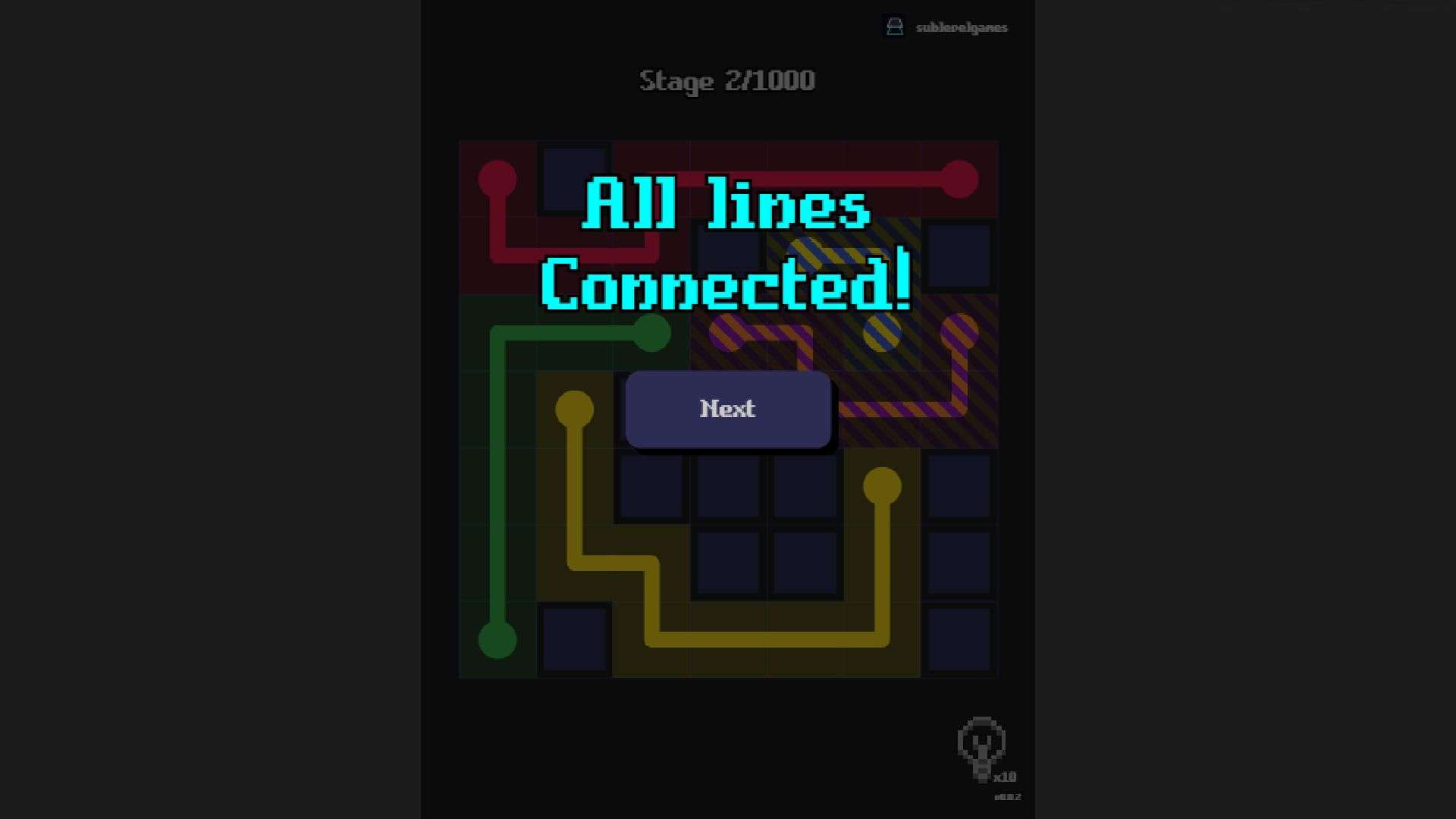
Plan routes to draw exclusive paths for each pair of dots of the same color. Use functions like hints (the light bulb at the bottom right, with a limited number of uses), double - click to automatically complete the end of a path, and right - click to clear incorrect paths for assistance. Complete level challenges, gradually conquer complex grids starting from simple layouts, and proceed to the next level after achieving “All lines Connected”.
Game Guide
Core Principles
The goal is to connect dots of the same color without crossing paths. Start by quickly identifying all colors and their corresponding dot positions, then group them by color (e.g., red, yellow, green). Prioritize groups with simple distributions and fewer dots. Use empty grid spaces to plan paths, starting with dots in corners or edges—these areas face less interference, making it easier to build a basic framework before expanding toward the center to avoid confusion.
Path Planning Tips
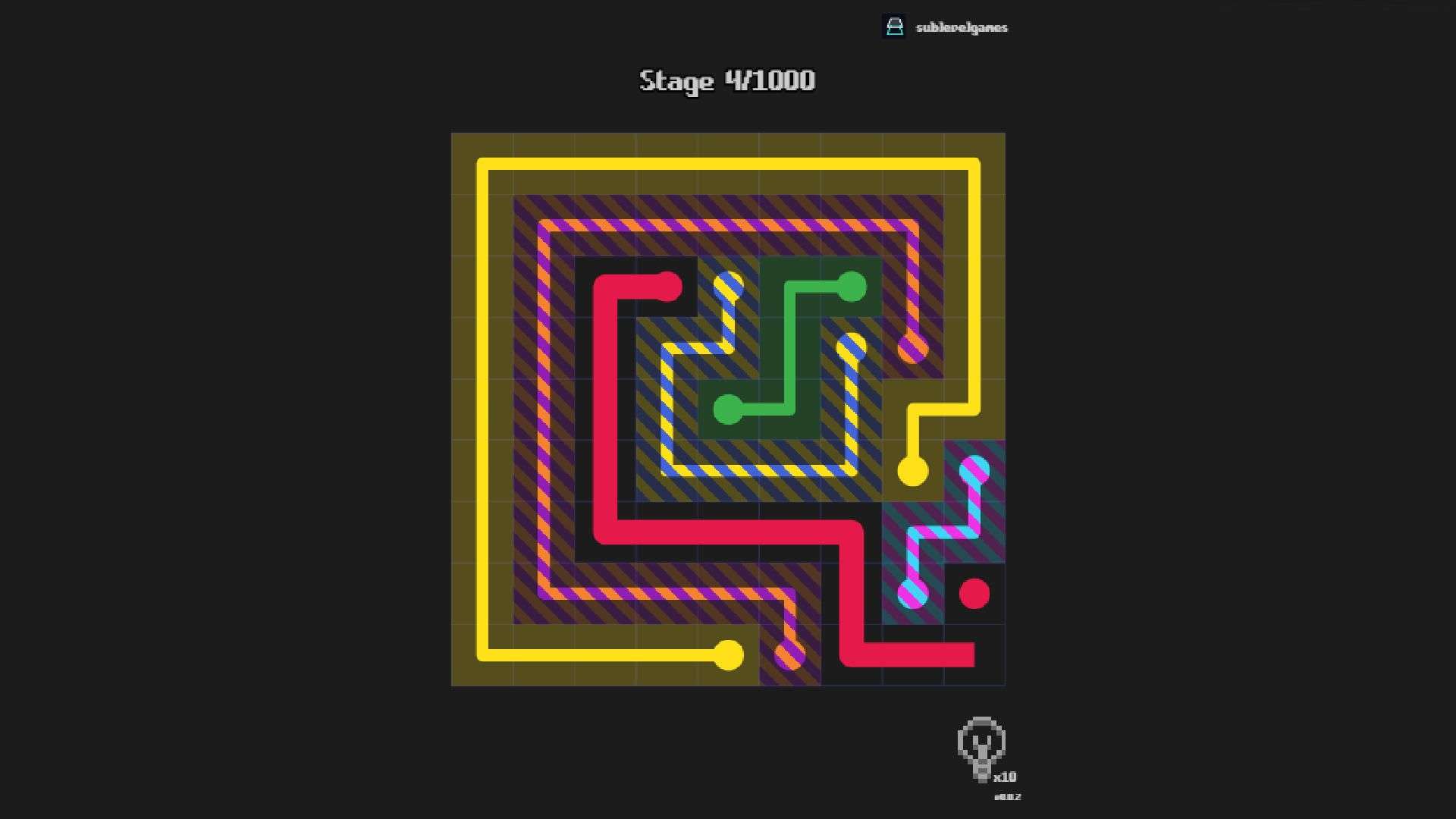
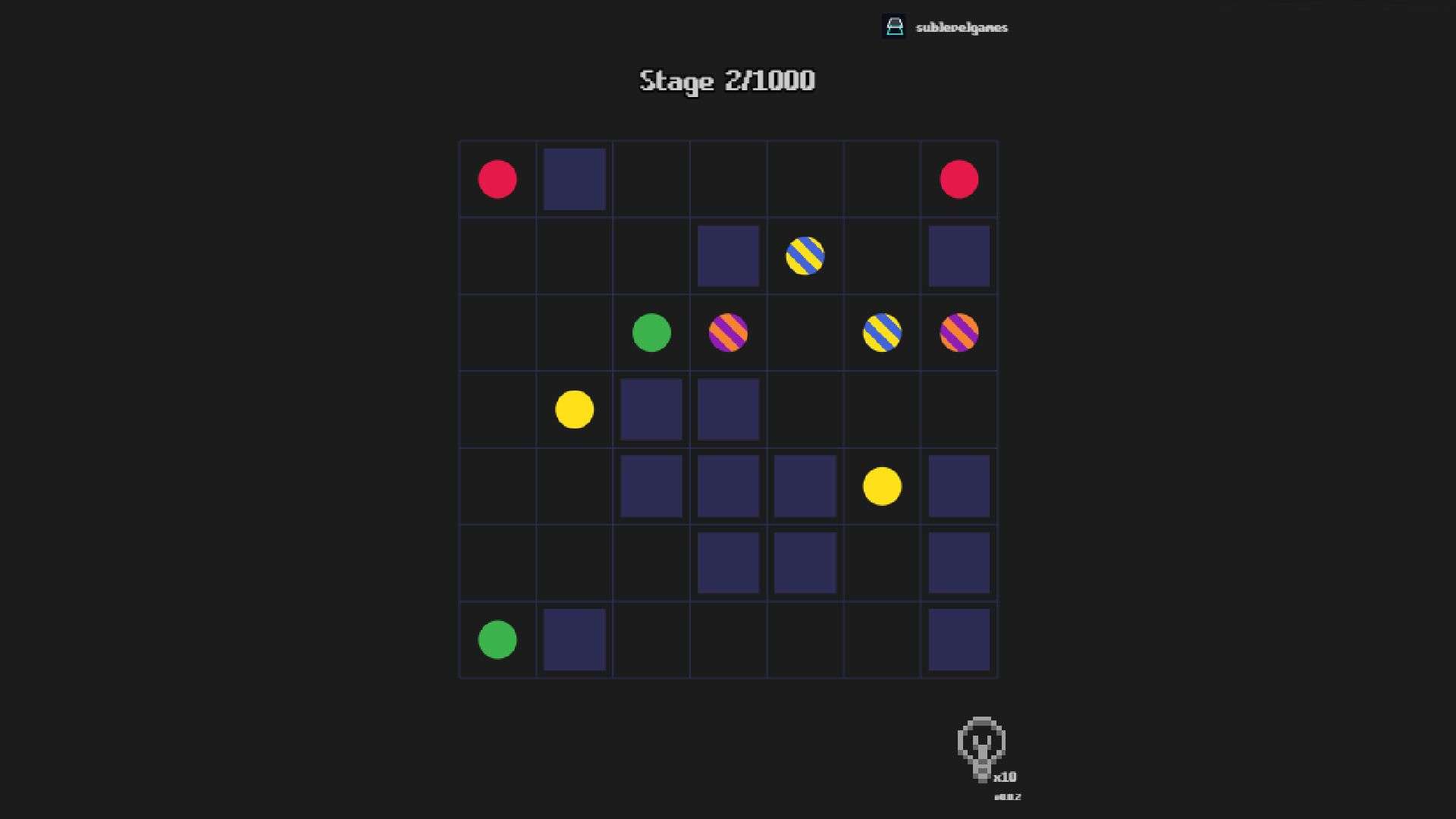
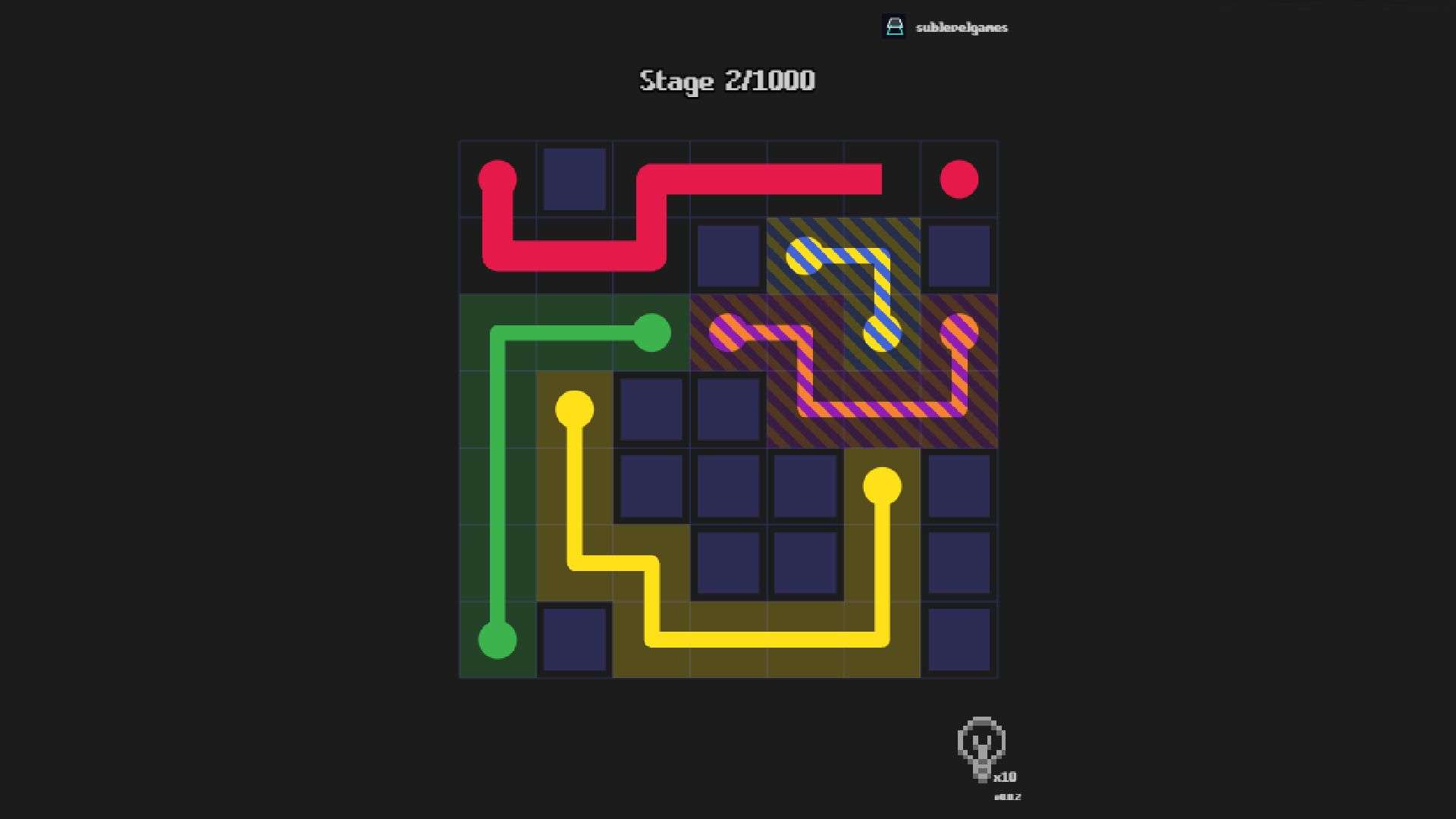
Observe the layout of dark squares (obstacles), as they restrict path directions. When paths of multiple colors conflict, make them "detour"—use empty spaces in different rows/columns to weave around each other. For special dots (e.g., striped or patterned ones), apply the same logic: plan their connection routes in advance.
Level Progression Strategies
### (1) Low-Difficulty Levels (Early Stages)
These have few obstacles and simple color groups. Focus on familiarizing yourself with spatial utilization: connect same-color dots quickly, experiment with different routes, and build intuition for path flow—laying groundwork for complex levels.
### (2) High-Difficulty Levels (Mid-to-Late Stages)
- **Split and Conquer**: Divide complex grids into small zones by color or obstacles. Solve one zone at a time to reduce overall difficulty.
- **Reverse Planning**: Start from the target dot and work backward to the starting point—especially useful when the start is surrounded by obstacles or other paths. This avoids distractions and finds more logical routes.
Handling Special Cases
### (1) Dense Multicolor Clusters
When multiple colors are packed tightly, fix one color’s path as a "baseline" first. Adjust other paths around it to prevent crossings.
### (2) Obstacle Enclosure
If dots are surrounded by obstacles, look for gaps. Extend paths through these gaps and hug obstacle edges to find a clear connection route.
Master these strategies to tackle levels from basic to complex, enjoying the satisfying challenge of weaving color paths without crossings!