

















Game Introduction
Hey kids! Get ready for a super fun free online game—Sprunki Memory Time is here just for you!
Your mission? Hunt down all the matching card pairs! Flip one card at a time, and don’t forget where each cute picture hides. When you spot two that look the same, poof—they disappear right away! Keep flipping, remembering, and matching until you clear the whole board… then it’s time to jump to the next level!
Every new level gets a little trickier (but never too hard!), so you’ll get to train your memory while having a blast. Whether you want to relax after school, practice remembering things, or just play something fun, Sprunki Memory Time is perfect for any moment.
What are you waiting for? Try it now and see how many levels you can beat—let the memory fun start!
Game Features
Stress-Free Experience
Simple gameplay that’s easy to pick up, with no intense competitive pressure
Free & Online
No payment required, playable anytime
Memory-Based Gameplay
Flip cards to find matching pairs, clear the board to pass levels
Progressive Difficulty
Levels get gradually more challenging, helping to train memory skills
Multiple Values
Combines relaxation, learning and entertainment in one
Gameplay and Controls
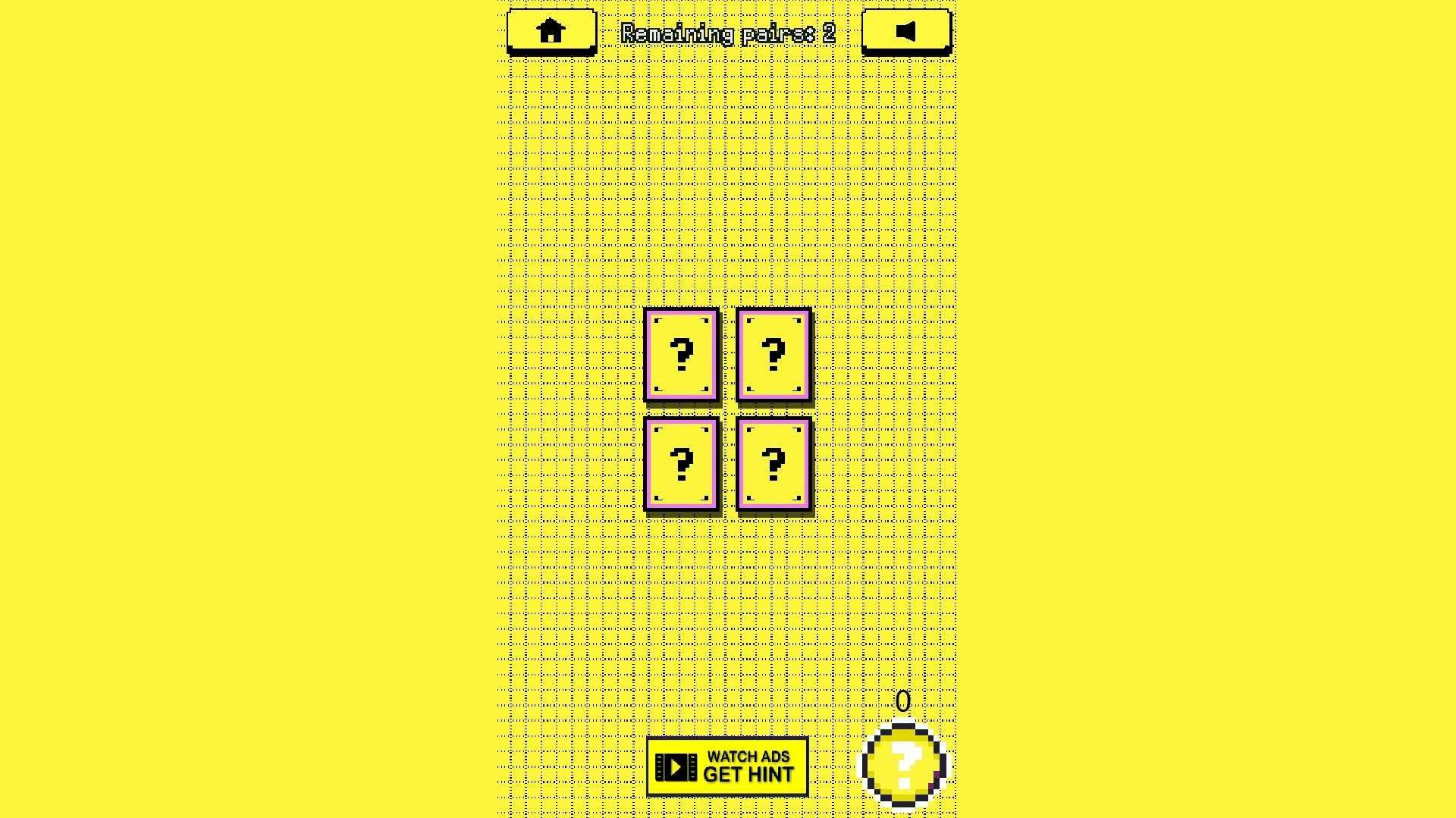
At the start of the game, all cards are randomly arranged with their backs facing up.
Click on any card to flip it over, and remember its pattern and position.
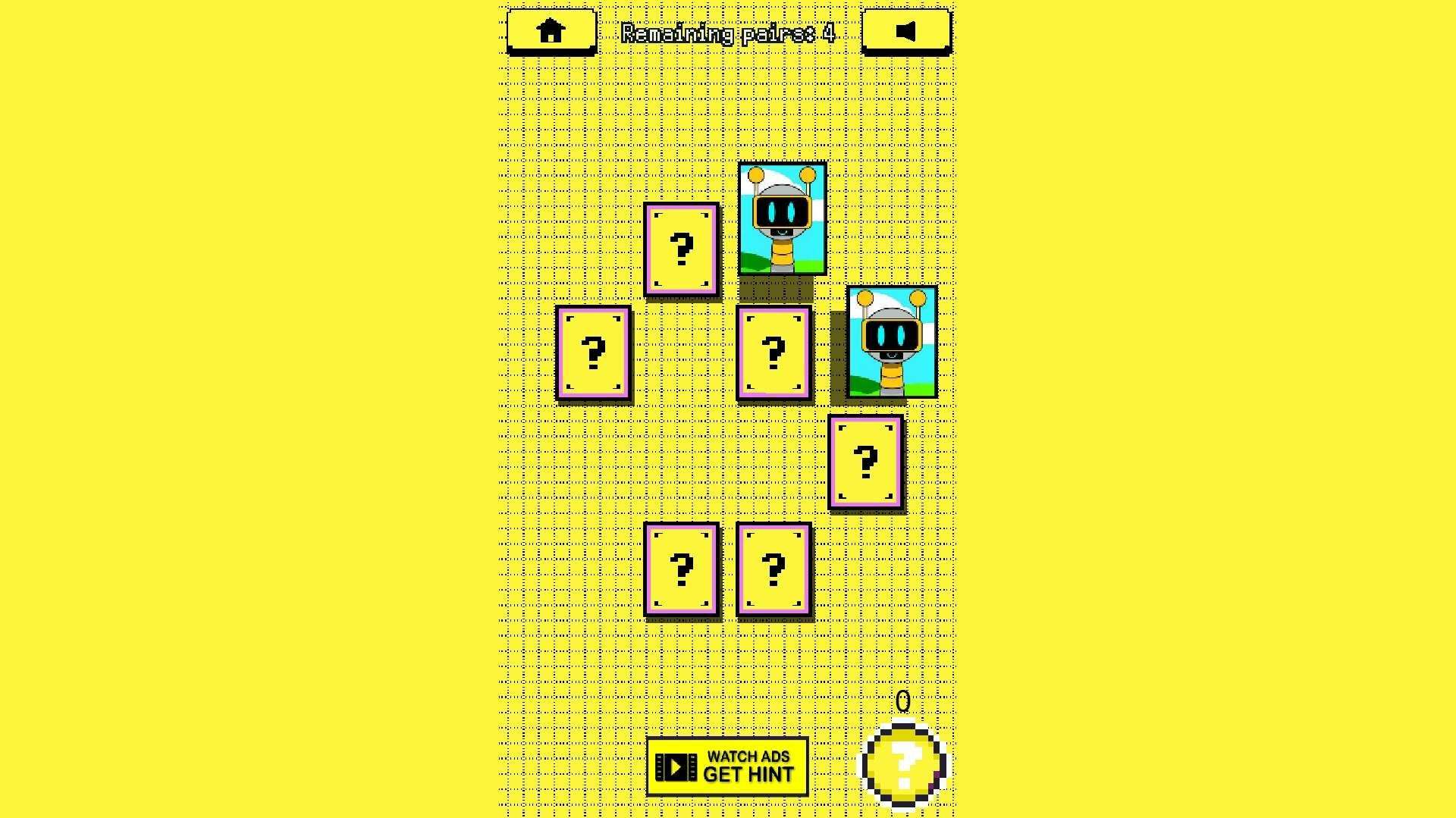
Flip another card. If it matches the pattern of the previous one, the paired cards will be eliminated.
If they don't match, both cards will automatically flip back to their backs, and you need to remember again.
Repeat the operation until the board is cleared, and you can unlock the next level.
Game Guide
As a classic memory matching game, Sprunki Memory Time may seem simple, but it actually requires scientific memory methods and strategic planning. Mastering the following tips will help you quickly progress from a novice to a clearance expert, easily tackling levels with increasing difficulty.
 1. Basic Operation Optimization: Build an Information Map
Don’t rush to flip cards at the start of the game. First, quickly scan the entire board and pay attention to the arrangement density of the cards and differences in pattern styles. It is recommended to flip the cards at the edge first—these cards have high position recognition and are more likely to form spatial memory anchors. When flipping cards, follow the "remember two points at a time" principle: after flipping two non-matching cards in a row, pause for 3 seconds to consolidate the position memory before proceeding to the next round of operations, avoiding information confusion. If there are many cards on the board, you can first divide the board into four areas: "top-left, top-right, bottom-left, bottom-right," and advance the memory area by area to reduce the memory scope.
 2. Core Memory Method: Scene Association is More Effective
Compared with mechanically memorizing positions, building scene associations based on the content of the patterns makes memory more profound. For example, if you see a "raindrop pattern" card in the second grid of the first row, you can associate it with "the raindrops in the first row are dancing under the clouds"; when you encounter a "carrot pattern" in the fourth grid of the third row, remember it as "the carrot in the third row is next to the rabbit hutch." If the patterns have story relevance (such as animals and food), you can also connect them into a short story: "The little bear (first grid of the second row) is holding a honey pot (first grid of the third row), and the little squirrel next to it (second grid of the second row) is holding a nut (second grid of the third row)." Through the logic of the story, the connection between the pattern and its position is strengthened.
 3. Advanced Strategies: Adapt to Different Level Characteristics
When facing levels with "increased number of cards," prioritize eliminating areas where no matches have been confirmed—for example, if no duplicates are found after flipping 3 cards in a row in a certain area, you can pay less attention to that area later and focus on memorizing unexplored areas. When encountering levels with "highly similar patterns" (such as the same type of fruit in different colors), focus on remembering "pattern details + position" when flipping cards, such as "the red apple with green leaves is in the top-left, and the red apple without green leaves is in the bottom-right," to avoid confusion due to similar patterns. If a level has a "time limit," quickly flip all the edge cards first to build a basic memory, then focus on matching the cards in the middle area in the later stage.
 4. Expanded Gameplay: Parent-Child Interaction and Fun Challenges
This game is also suitable for parent-child play. Parents can guide their children to use "question-and-answer memory": after flipping a card, ask the child, "Which row is this little bear card in?" or "Do you remember where the little rabbit you saw just now is?" Through interaction, the child’s enthusiasm for memory is strengthened. You can also create custom fun challenges, such as "clearing the level with one hand" or "recalling the position of flipped cards with eyes closed," to add freshness to the conventional gameplay while further training memory and concentration.
5. Mindset and Rhythm: Avoid Memory Fatigue
Prolonged gaming can easily lead to memory fatigue. It is recommended to rest for 1 minute after clearing 2-3 levels, look at the distance or move your fingers to give your brain a short break. If you flip the wrong card of the same pattern 3 times in a row, you can temporarily skip this type, deal with other patterns that are easier to remember first, and then come back to tackle it when your state recovers, avoiding the impact of anxiety on subsequent performance.
After mastering these tips, you will find that the increasing difficulty of the levels is no longer a challenge, but rather an interesting process of training your memory. Whether you are clearing levels alone or playing with your child, you can gain both fun and ability improvement in the game.