
















What Is CropLink, Really?
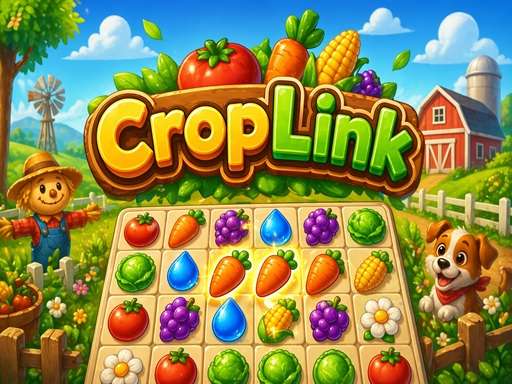
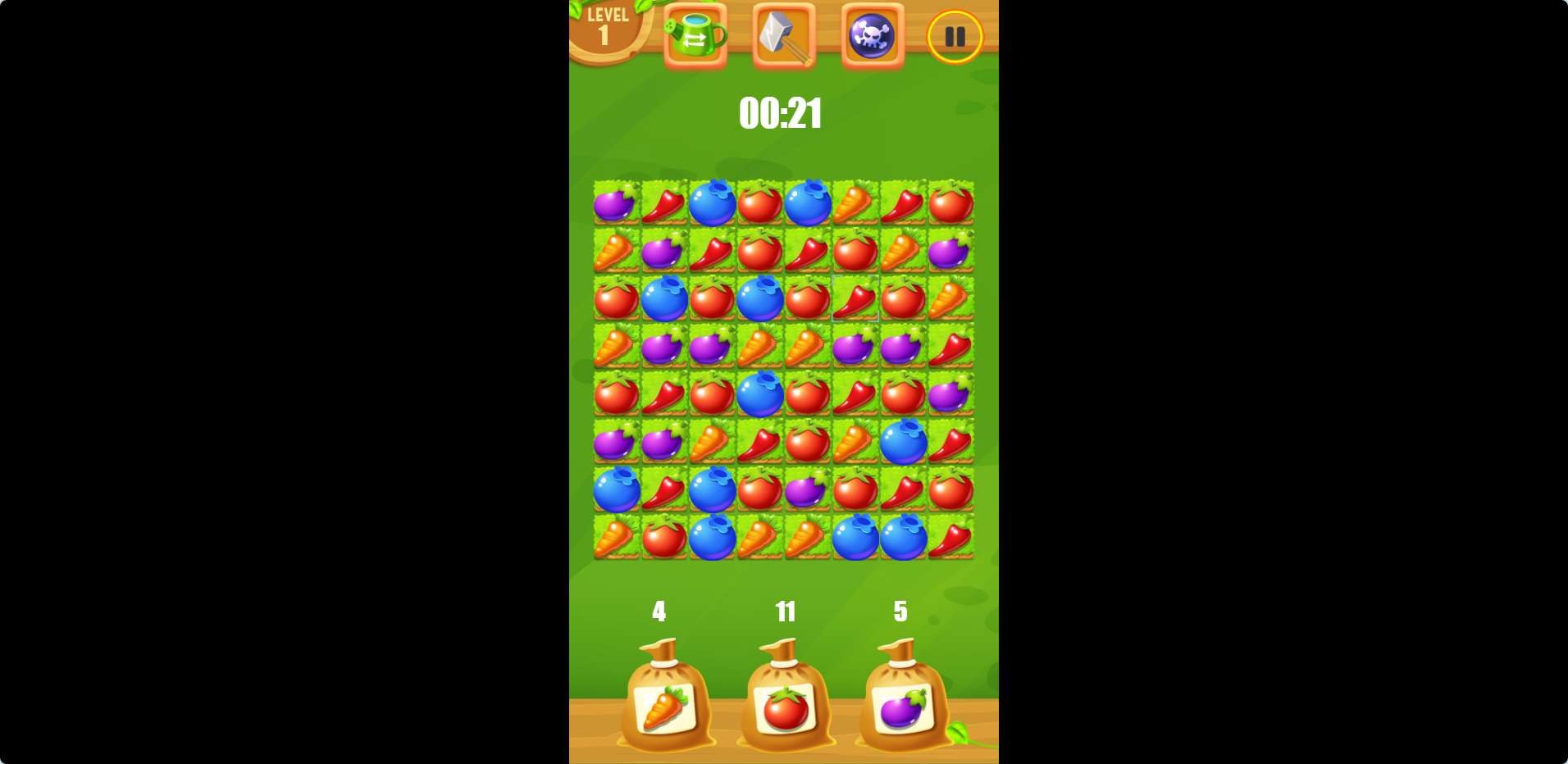
CropLink is a match-3 puzzle game set on a cheerful little farm. You’re looking at a grid full of vegetable tiles — carrots, tomatoes, corn, peppers, the usual suspects. Your job is to click groups of three or more identical tiles to clear them and rack up points. Nothing revolutionary, but it doesn’t need to be. The farm theme is light and pleasant, and the game moves at a relaxed pace that doesn’t punish you for thinking.
What sets CropLink apart from the flood of generic match-3 games is its chaining mechanic. When you clear a group, the tiles above drop down, and sometimes that creates another match automatically. The game rewards you for setting up these cascades, which is where the real scoring happens.
Getting the Basics Right
If you’ve played any match-3 game before, you’ll feel right at home. You click on a group of matching tiles, they pop, you get points. But there’s a subtle difference here: you don’t swap tiles. You simply select them. That means you’re not moving anything around the board — you’re scanning for existing groups and clicking them. It’s a bit more like a hidden-object puzzle combined with matching.
New players often miss groups that are larger than three. Always check for groups of four or five — they give bonus points and clear more space. Also, don’t rush. There’s no timer in the standard mode, so take a moment to scan the whole board before clicking.
Chain Reactions Are Everything
Here’s where CropLink gets interesting. When tiles fall into place after a match, they can form new groups. If you plan your moves carefully, you can set off a chain that clears half the board in one go. The trick is to clear tiles from the bottom of the board first. That way, more tiles drop further, increasing the chance of accidental matches.
Another thing: don’t just grab the first group you see. Look for groups that are isolated or sitting on top of other large groups. Clearing those can open up the board and create opportunities for bigger combos.
Power-Ups and When to Use Them
CropLink has a few power-ups that appear after certain score thresholds. You’ll get a bomb that clears a 3x3 area, a shovel that removes a single stubborn tile, and a shuffle that rearranges everything. Here’s the editorial bit: most players hoard these for the final stretch, but that’s a mistake. Use the bomb early if you see a clump of mismatched tiles blocking progress. It’s better to clear a path than to save it for a moment that may never come.
The shuffle is the most underrated power-up. If you’ve been staring at the same board for a minute and can’t find anything, just shuffle. It resets the layout and often creates instant matches. Don’t feel bad about using it — the game doesn’t penalize you.
Common Mistakes and How to Avoid Them
The biggest mistake new players make is clicking too fast. CropLink’s relaxed pace means you can take your time, but some people still rush and miss obvious groups. Another common error is focusing only on large groups. Sometimes clearing two separate small groups is better than waiting for one big group that may not form.
Also, don’t ignore the edges. Tiles at the edges are harder to match because they have fewer neighbors. If you see a group near the edge, take it — it’s likely the only chance you’ll get to clear that tile for a while.
Who Is CropLink For?
This is a solid casual puzzle game for anyone who wants something low-stakes but still mentally engaging. It’s not going to challenge hardcore puzzle fans, but it’s perfect for a coffee break or winding down. The farm theme is cute without being saccharine, and the lack of a timer keeps it from feeling stressful. If you liked games like Bejeweled but wish they were a little more laid-back, CropLink is worth a try.
Just don’t expect endless variety. The core loop stays the same, and that’s fine — it’s a comfort game, not a saga. Play it for ten minutes or an hour; it works either way.