


















Game Introduction
Step into the world of Long Hand Escape — a spellbinding mix of puzzle and casual fun that puts your observation sharpness and quick thinking to the ultimate test! Here, freedom lies in the stretch of your hand — your most powerful tool to reach the exit and break free.
Your hand has a unique gift: it can extend endlessly to weave through gaps, but caution is your best ally. Touch any obstacle, and it snaps back instantly. Every move needs a plan — you’ll have to map out the safest path, twist through narrow spaces, and avoid collisions that reset your progress.
And don’t let your guard down — patrolling sentries are everywhere. One wrong stretch that catches their eye, and your escape attempt ends. It’s a thrilling balance of careful planning and split-second judgment: stretch smart, stay hidden, and edge closer to freedom with each move.
Ready to embrace the challenge? Long Hand Escape calls for you to stretch beyond limits, outwit obstacles, and slip past guards. Find your exit, claim your freedom, and lose yourself in the addictive thrill of this one-of-a-kind escape puzzle! Let the escape begin!
Game Features
1. Unique Core Gameplay: Use the infinitely stretchable hand as the core tool to navigate through gaps and find the exit. The hand retracts immediately upon touching obstacles, testing your path-planning skills.
2. Dual Upgraded Challenges: Not only avoid various obstacles but also evade the detection of patrolling guards, requiring both strategy and reaction speed.
3. Lightweight & Easy to Learn: Combines puzzle and casual elements with simple operations yet profound strategic depth, suitable for different players.
4. Full Immersion: Every precise stretch and stealthy move brings a sense of accomplishment, creating a unique escape puzzle thrill.
Gameplay and Controls
1. Core Operation: Long-press any position on the screen and drag it toward the target direction. The dragging range determines the stretching length of the hand, and the dragging track controls the stretching direction. When you release your finger, the hand stops stretching immediately and maintains its current state, allowing you to observe the surrounding environment before continuing to operate.
2. Obstacle Avoidance: All static obstacles in the game will trigger the retraction mechanism, so you need to observe the distribution of obstacles in advance. If your hand accidentally touches an obstacle, it will quickly retract to the initial position. There's no need to panic at this time; you can re-plan a detour path based on the obstacle's position and try again.
3. Guard Response: Guards will patrol along a fixed route and have a clear field of vision. You can first stay still to observe their movement cycle and line of sight direction. When the guard turns around or their sight deviates from the target area, quickly stretch your hand to move. Once you enter their field of vision, the game will immediately fail and you need to restart.
4. Clear Goal: The exit is usually marked with a clear identifier. You need to control your hand to start from the initial position, avoid all obstacles and the guard's sight, and gradually approach the exit. When the tip of the hand completely touches the exit area, the system will determine that the level is cleared and unlock the next level.
Game Guide
As a casual game that combines puzzles and strategy, *Long Hand Escape* may seem simple to operate, but it actually requires precise judgment and planning. Master the following strategy tips, and you can easily break through various levels and achieve the escape goal efficiently.
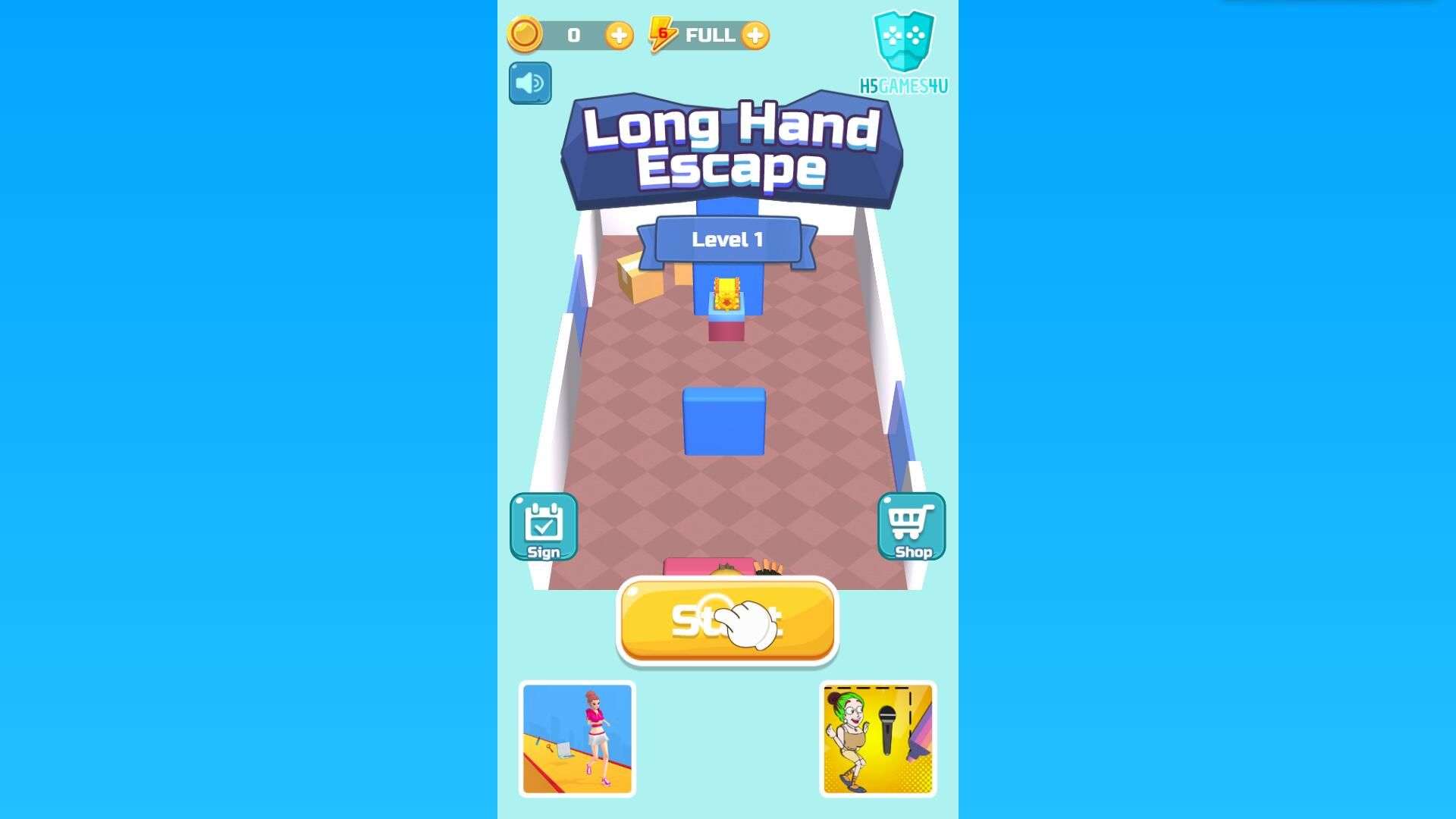
Refining core operations is fundamental. When long-pressing and dragging, it is recommended to adopt the strategy of "small-scale exploration + phased pauses" to avoid touching obstacles due to large-scale stretching at one time. Especially for beginners, it is best to control the dragging range within 1/3 of the screen. Pause and observe after each stretch segment—this not only allows precise control of the length but also helps detect hidden obstacles in corners (such as raised wall edges and small spikes) in time. When encountering narrow gaps, you can first simulate the trajectory 2-3 times by dragging your finger on the blank area of the screen. Only when the route completely matches the gap should you perform the official operation, which reduces the number of retractions and rework. In addition, for single-hand operation, you can use finger joints for positioning to improve the stability of the dragging trajectory; for two-hand operation, you can divide the work—one hand fixes the screen, and the other performs precise dragging.
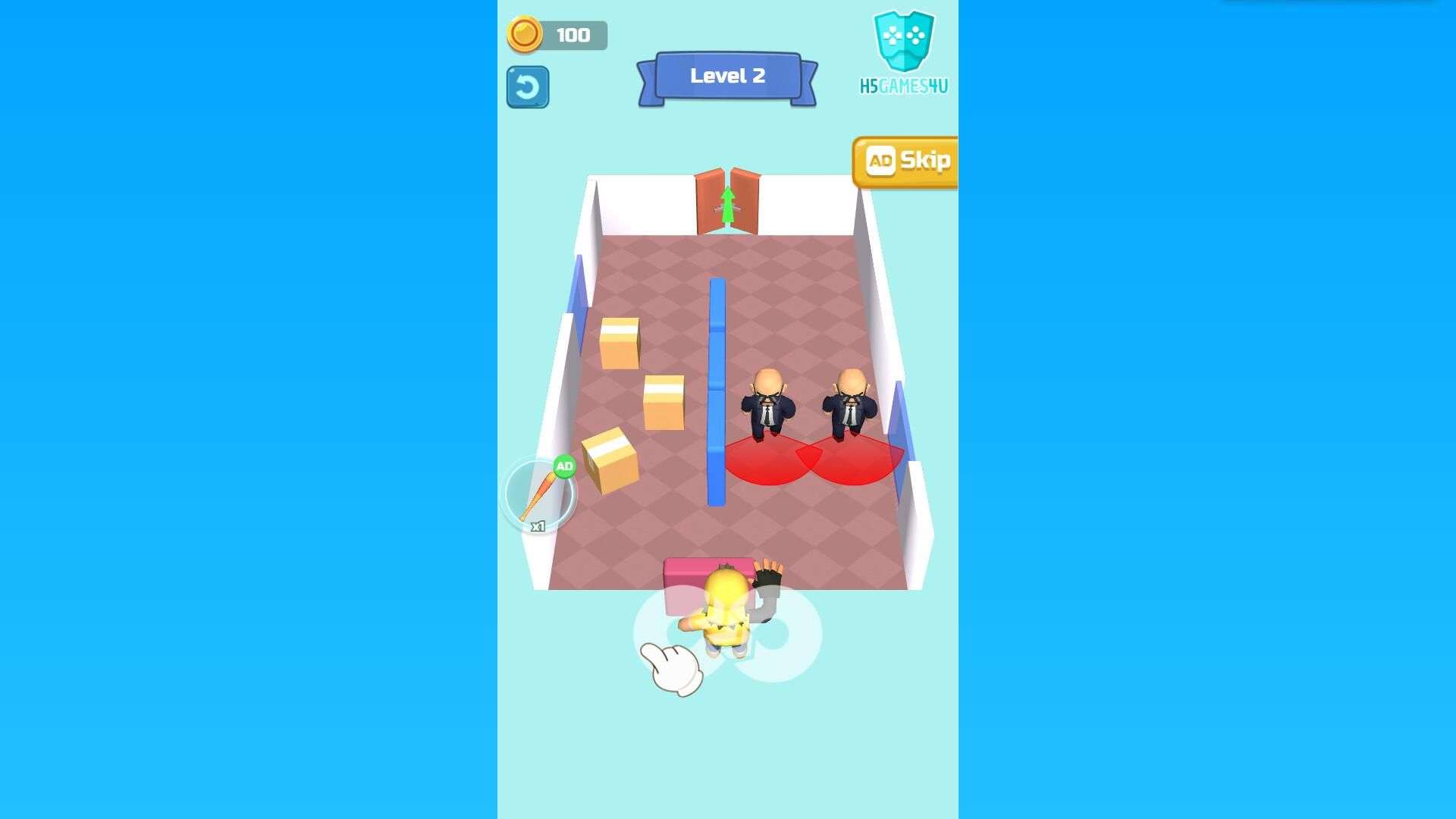
For obstacle avoidance, make good use of the "path prediction method". After starting the level, stay still for 3 seconds. During this time, observe the distribution of obstacles in the entire map. Distinguish between fixed obstacles and triggerable obstacles by the depth of color (some levels have hidden moving obstacles that do not appear when stationary), and clearly mark the "safe passages" and "dangerous areas". For densely arranged obstacles, adopt the "Z-shaped detour" strategy. Utilize the flexibility of hand stretching to move in a serpentine manner through the gaps between obstacles. Maintain a constant speed while dragging to avoid deviations caused by sudden acceleration. If you accidentally touch an obstacle and retract, do not rush to retry. Instead, zoom in on the screen to check the details of the obstacle contact point and analyze whether it is a route deviation or an undiscovered hidden obstacle. Adjust the detour angle in 15° increments—usually, a deviation of 15°-30° can avoid risks, while large adjustments may easily cause new problems.
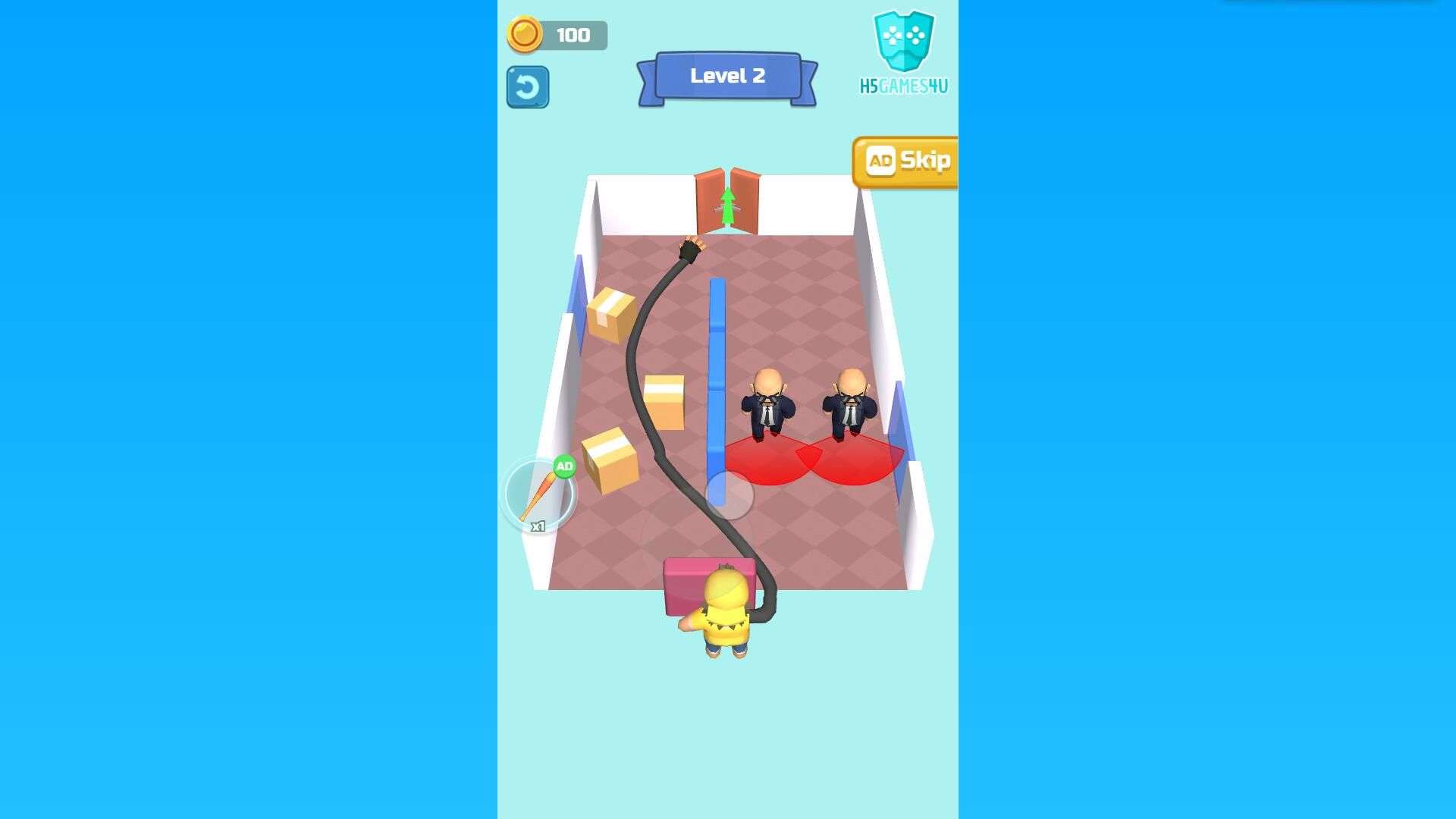
Dealing with guards is the key to clearing the level. Remember the three-step method: "Observe - Wait - Raid". First, observe the guard's patrol route and field of vision. Judge the direction of the field of vision by the direction of the guard's head—there is usually a faint light and shadow prompt in the field of vision area, and the darker the light and shadow color, the higher the alert level. Record the guard's round-trip cycle: guards patrolling in a straight line usually have a 5-second cycle, while those patrolling in a polygonal path require additional recording of the turning time (usually 1-2 seconds). The best time to start stretching is when the guard turns around and the light and shadow disappear. If guards are in an overlapping field of vision area, you can first stretch your hand to a middle obstacle (such as a box or pillar) and pause. At this time, even if detected by a guard on one side, it will not trigger a failure. Wait until the visions of the guards on both sides are staggered at the same time, then move quickly. It is safer to keep your hand in the shadow of the obstacle while moving.

The advanced skill for clearing levels lies in "rhythm control". You can advance quickly in simple levels, but need to slow down the rhythm in complex levels, prioritizing the safety of your hand. There is often a "final line of defense" near the exit, which may be a combination of obstacles and guards. At this time, you need to combine the previous skills: either break through the obstacles first and then avoid the guards, or rush to the exit in one go during the guard's patrol gap. Remember, patience and precision are more important than speed. By proficiently using the above methods, you can easily achieve efficient escapes in various levels.