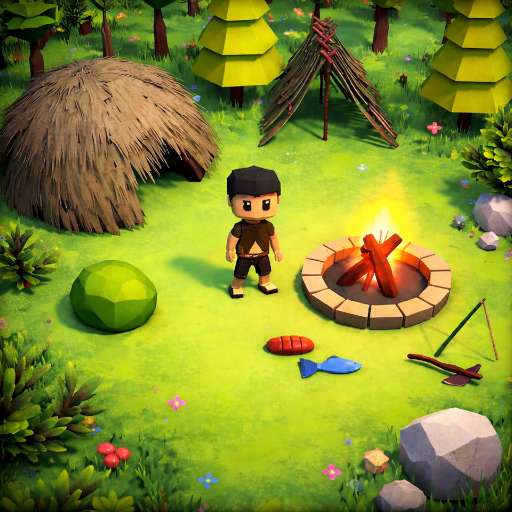

















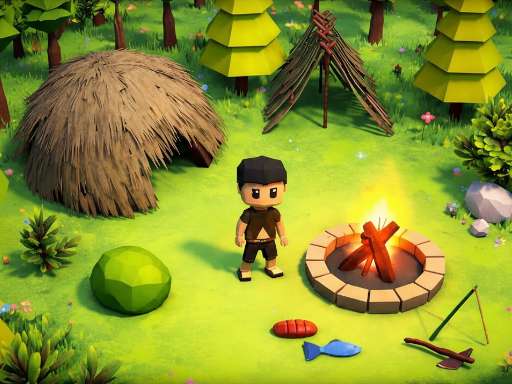
Stranded and Scrapping for Basics
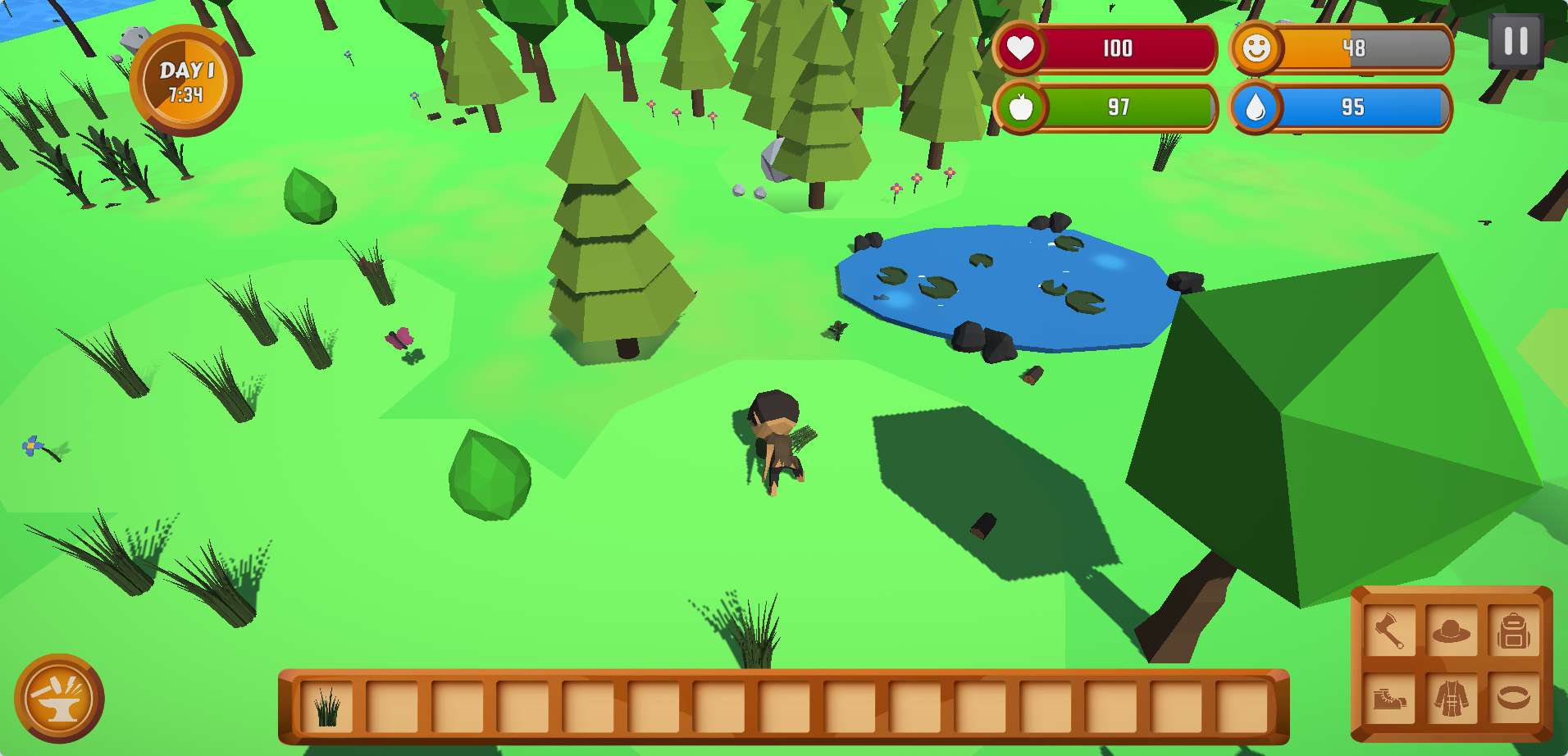
Everwild Survival drops you into a forest with nothing but the clothes on your back. No tutorial, no hand-holding. Just you, a small patch of wilderness, and a set of blinking meters that remind you how close you are to collapsing. It’s a familiar premise for anyone who’s played survival games before, but here it’s stripped down to the essentials—no skill trees, no crafting menus with a hundred recipes. You chop wood, gather stone, fish, and hunt. That’s it.
The game runs entirely in the browser, which is both its biggest strength and its most obvious limitation. It loads fast, runs smoothly, and doesn’t ask for a download. But the world is small, and the textures are simple. This isn’t a sprawling open-world epic. It feels more like a survival sandbox diorama—compact, repeatable, and direct.
How Survival Works (And How It Doesn’t)
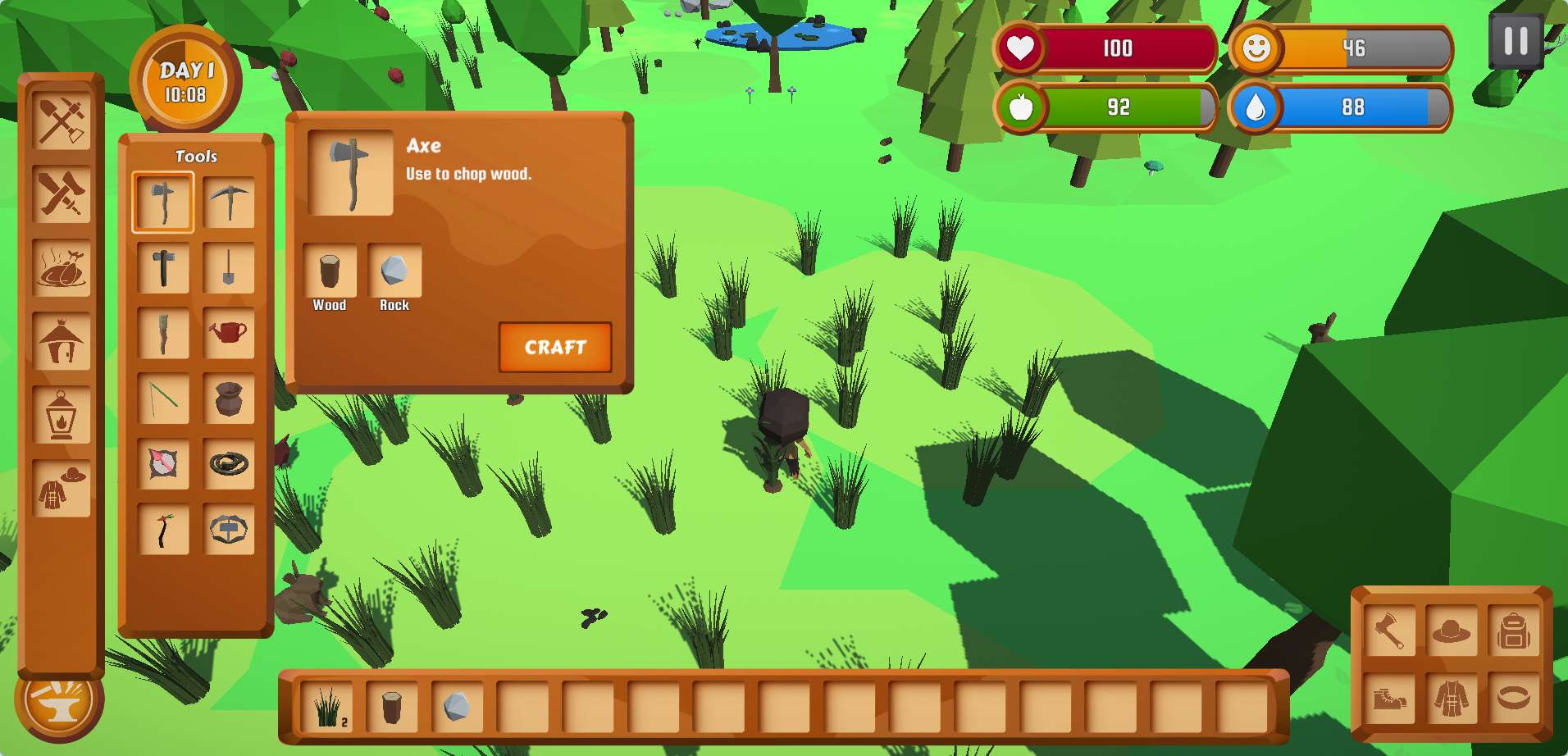
The core loop is clear: keep your hunger, thirst, health, and happiness bars from hitting zero. You do this by gathering resources and using them to craft tools or cook food. Chop a tree, get wood. Mine a rock, get stone. Fish in the river, get fish. Hunt a deer, get meat. The game responds to your actions quickly, which makes it easy to get into a rhythm.
But here’s the catch—animals fight back. A boar or wolf can take a chunk of your health, and if you’re already low on food or water, that can spiral fast. Nighttime is worse. Predators become more aggressive, and the dim lighting makes it harder to see threats. Your shelter becomes a necessity, not a luxury. Building walls and a roof isn’t just about aesthetics; it’s the difference between surviving the night and starting over.
That said, the game does start to feel repetitive after an hour or so. The map doesn’t change much between runs, and the resource nodes respawn in the same places. Once you’ve built a decent shelter and stocked up on food, the challenge flattens. You’re left maintaining status bars rather than facing new threats. It’s still engaging in short bursts, but don’t expect deep progression.
What Stands Out (And What Might Bug You)
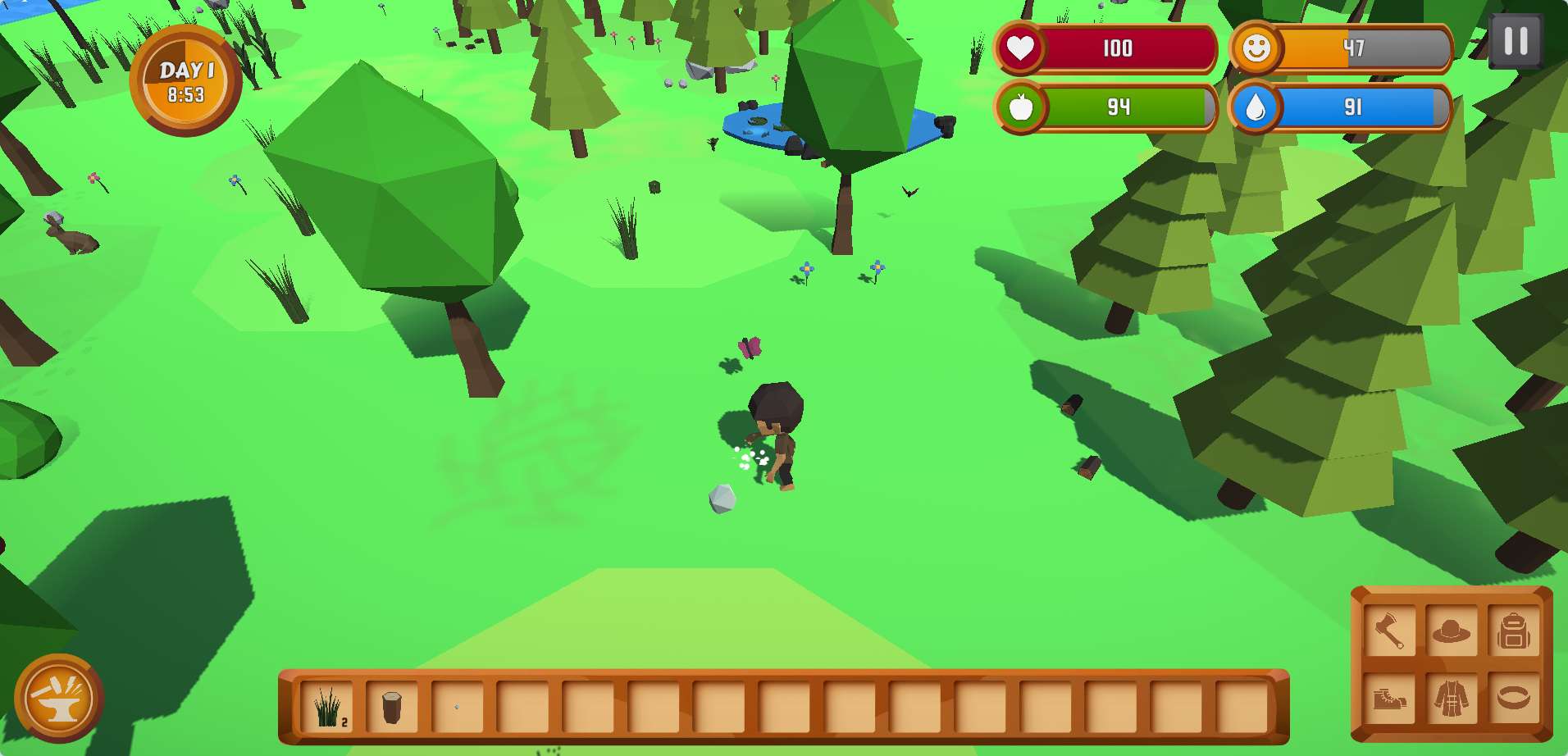
What surprised me was how tense the first few nights feel. There’s a genuine panic when you realize you haven’t gathered enough wood for a proper shelter and the sun is setting. That feeling of scrambling is something many bigger survival games lose after the early hours, but Everwild Survival keeps that pressure alive—at least for the first few play sessions. The happiness meter is a nice touch too. It forces you to pay attention to more than just food and water. Cooked meals, warm fires, and a decent shelter all contribute to it, giving you a reason to do more than just survive blandly.
On the flip side, the controls take a little getting used to. WASD movement is standard, but rotating the camera with Q and E feels slightly clunky compared to a mouse-drag system. Also, there’s no save feature that I could find. If you close the tab, you lose your progress. That’s a big deal for a game that asks you to invest time building a shelter. It makes the experience feel more like a run-based challenge than a persistent world.
Who Should Play This?
If you have ten minutes to kill and want a quick survival fix without launching a full game, Everwild Survival fits that niche well. It’s perfect for players who enjoy the early-game scramble of survival titles like Don’t Starve or The Forest but don’t want the time commitment. It’s also a good entry point for anyone curious about the genre—simple mechanics, low stakes, and immediate feedback.
But if you’re looking for depth, variety, or a long-term progression system, this isn’t it. The repetition sets in fast, and the lack of saving means you’re always starting from scratch. For what it is—a free, browser-based survival sim—it works. It just doesn’t ask much of you beyond the basics. And sometimes, that’s enough.
Final Thoughts
Everwild Survival works best as a quick, low-pressure browser game. It may not hold everyone for long sessions, but it does a solid job at delivering a simple and accessible play experience.