
















What Is Math Game 3D?
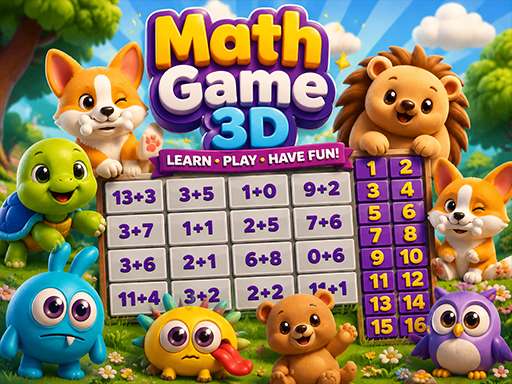
Math Game 3D blends basic arithmetic with a picture-reveal puzzle mechanic. It’s not a speed-runner or a complex brain trainer. Instead, it’s a relaxing, tile-clearing game where you match numbered cubes to math expressions. Every correct answer removes a gray tile, slowly uncovering an image underneath.
The presentation is straightforward: bright cubes, simple backgrounds, and calm background music. There’s no timer pressure, no lives, and no penalties for wrong answers. It’s designed to be a low-stakes way to practice math while getting a small visual reward as you go.
How to Play: Drag, Drop, and Solve
The main mechanic is drag and drop. You’ll see a grid of gray tiles on the left side of the screen. Each tile covers a piece of a hidden picture. On the right side, there’s an expression (like 5 + 3 or 12 ÷ 4) along with a set of numbered cubes. Your job is to drag the correct cube onto the expression.
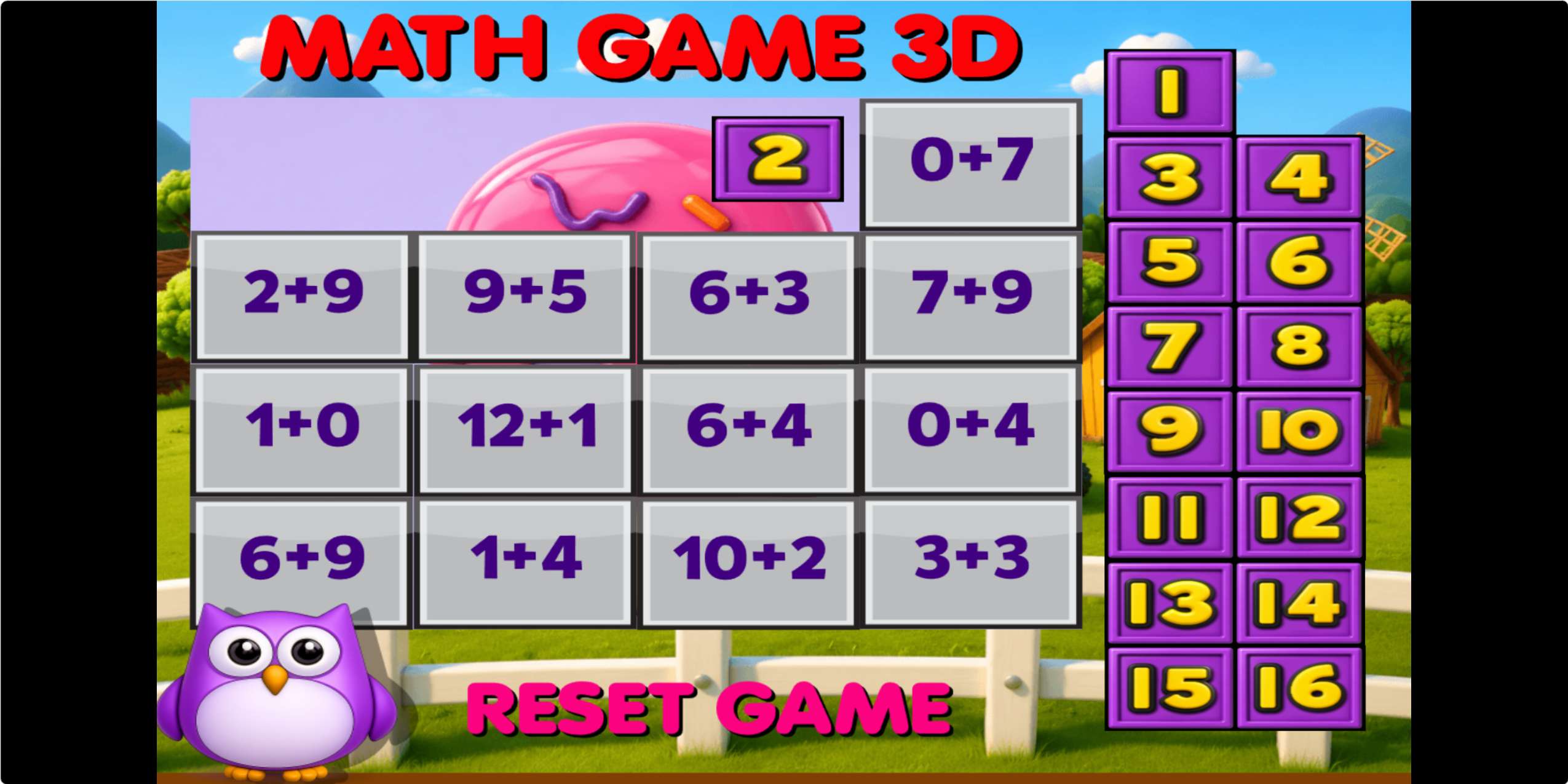
If you pick the right number, the tile disappears. If you pick wrong, nothing happens—you just try again. The game gives you immediate feedback, so you never get stuck for long. As you clear more tiles, the hidden picture becomes clearer, which adds a nice layer of curiosity.
Controls are simple: tap or click to drag. On mobile, it works fine too, though the cubes can feel slightly small on a phone screen. The game doesn’t require fast reflexes, so take your time.
Practical Tips for New Players
If you’re just starting out, here are a few things that might help:
- Read the expression carefully. Some expressions look similar (like 8 + 4 vs. 8 × 4). Double-check before you drag.
- Use the process of elimination. If you have multiple cubes with the same number, only one will be the correct answer. Try one, and if it doesn’t work, try the other.
- Don’t rush. There’s no time limit. Speed doesn’t matter, so focus on accuracy.
- Keep an eye on the picture. The hidden image gives you a sense of progress. If you feel stuck on a hard expression, clearing easier ones first might help you guess based on what the image looks like.
These aren’t game-breaking strategies—they’re just small ways to avoid frustration and keep the experience smooth.
What Stands Out and What Might Feel Repetitive
I’ve played a lot of educational math games, and Math Game 3D does one thing that caught my attention: the picture reveal isn’t just a generic background. Each puzzle has a distinct image—like a cartoon animal or a landscape—that feels like a small reward. It’s not a massive incentive, but it does make you want to keep clearing tiles to see the full picture.
On the flip side, the math itself stays at a basic level—addition, subtraction, multiplication, and division. If you’re looking for something that challenges your mental math or introduces algebra, this isn’t it. The repetition of the same operations across different puzzles can feel a little monotonous after a while. But for a casual session of five to ten minutes, it’s fine.
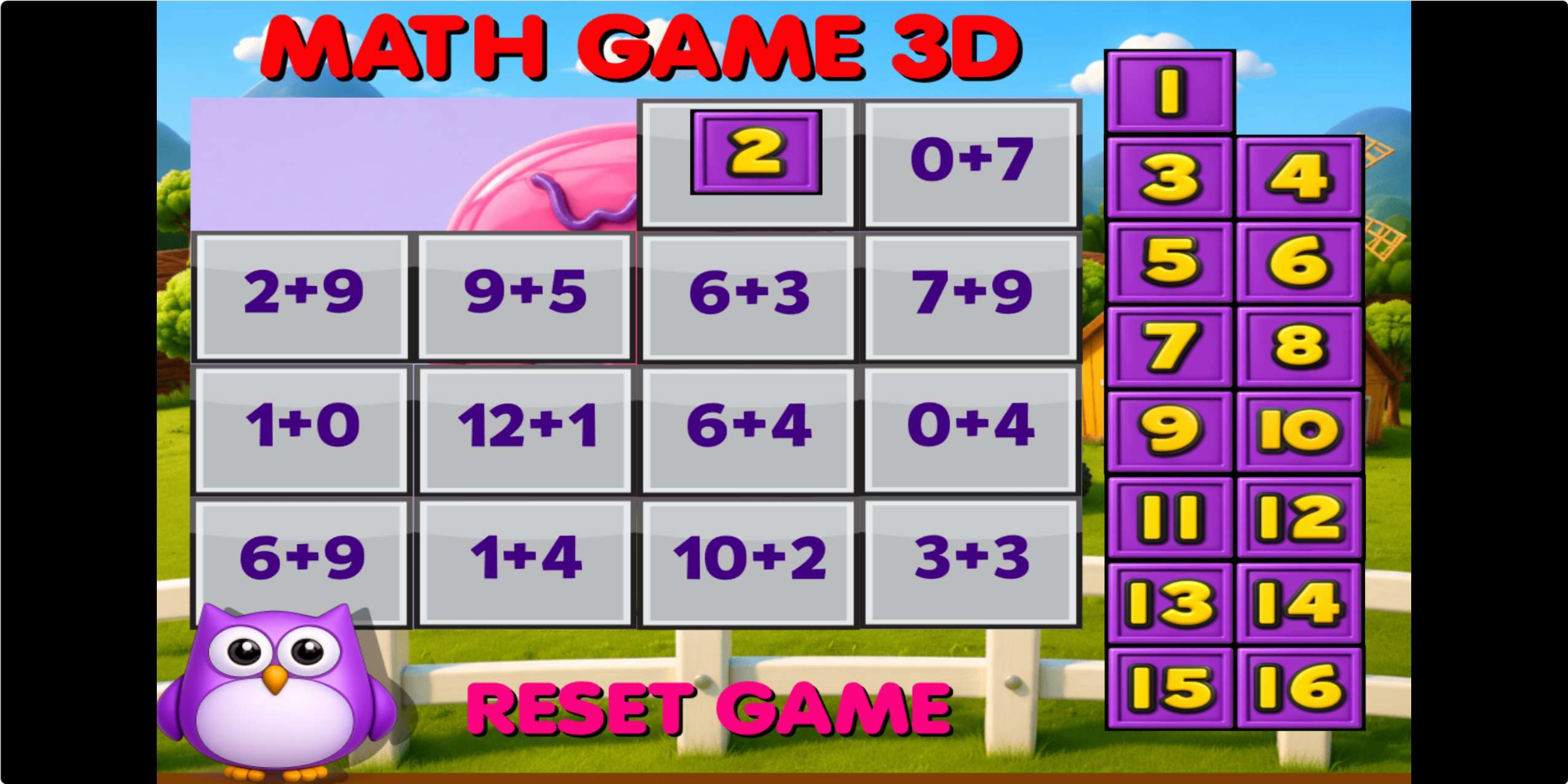
The game also doesn’t ramp up difficulty. The expressions stay similar throughout, so don’t expect a steep learning curve. It’s more of a steady, meditative activity than a brain workout.
Who Will Enjoy Math Game 3D?
This game fits best for younger players practicing basic arithmetic or adults who want a low-pressure, quick mental break. It’s also suitable for people who enjoy simple puzzle games with a visual payoff. If you’re looking for something competitive or time-sensitive, you’ll probably get bored. But if you want a calm, no-stress math activity with a gentle reward system, Math Game 3D delivers exactly that.
It’s not trying to be more than it is, and that’s okay. Sometimes you just want to drag a cube, solve a problem, and see a nice picture.