

















Game Introduction
In the world of Stretch Man, every level is a fun challenge that tests your flexibility and judgment. You need to control the character to stretch its limbs, navigate through complex levels, and keep a close eye on surrounding obstacles—one wrong move, and you might hit a trap, bringing your adventure to an abrupt end.
What's more crucial is that you have to grasp the extent of stretching: overextending can lead to limb tearing, making all previous efforts go to waste. This sense of balance—needing to stretch boldly yet cautiously—is exactly the secret that makes the game so addictive.
Whether you're looking for some casual fun in your fragmented time or a way to pass the leisure moments, Stretch Man has got you covered. With its easy-to-understand gameplay and engaging puzzle designs, it creates a joyful adventure that you can start anytime, anywhere. Every stretch and every obstacle avoided is filled with a sense of accomplishment and surprise.
Game Features
Distinctive Core Gameplay: Centered around the core mechanism of "stretching limbs", the length and direction of the character's limbs can be freely controlled to move flexibly through levels with undulating terrain and tortuous paths. This intuitive operation mode is not only easy to get started with, but its unique physical feedback—such as the elastic tension when limbs are stretched and the inertial rhythm when moving—makes every manipulation full of freshness.
Hidden Challenges: Levels are filled with various obstacles such as spikes, moving baffles, and narrow passages. A little carelessness will trigger the failure mechanism. What's more strategic is that there is a "limit threshold" for limb stretching; over-stretching will lead to tearing and breaking. This requires repeated weighing between "stretching to avoid obstacles" and "controlling the stretching amplitude to prevent breaking", with a sense of tension hidden in every decision.
Highly Attractive Experience: It deeply integrates fun and addictiveness. The clever puzzle design makes the difficulty of levels progress step by step—from simple paths for getting familiar with operations in the early stage to complex puzzles that require predicting the stretching angle of limbs and combining multi-stage stretches in the later stage. The escalating desire for challenges continuously connects with the desire for exploration. Coupled with the brisk sound effects and bright colors, the sense of immersion is constantly upgraded.
Wide Range of Applicable Scenarios: It is perfectly suitable for various leisure scenarios. Whether it's 10 minutes of fragmented time during commuting or a relaxing moment on a weekend afternoon, it can quickly enter the game state. Its low-threshold operation and stress-free failure mechanism (which can be restarted immediately) allow beginners to get started easily, and also enable experienced players to find fun in repeatedly challenging high scores, covering the needs of players of all ages.
Gameplay and Controls
Limb Control: The length and direction of the character's limbs can be freely adjusted. Through dragging or sliding operations, the limbs can be extended towards the target direction, so as to cross gaps in the level and bypass obstacles.
Movement and Traversal: Use the extension of limbs to gain support points and push the character to move in levels with ups and downs and tortuous paths. The elastic feedback of the limbs will affect the movement rhythm, and the stretching strength needs to be adjusted according to the scene.
Obstacle Avoidance: When facing obstacles such as spikes and moving baffles, it is necessary to accurately control the stretching angle and range of the limbs to prevent the limbs from contacting the obstacles. If necessary, the limbs can be contracted to pass through narrow passages in a more flexible posture.
Stretching Limits: There is a stretching limit for the limbs. Over-stretching will lead to tearing and breaking. During operation, it is necessary to always pay attention to the stretching degree of the limbs and find a balance between avoiding obstacles and controlling the stretching range to ensure smooth progress.
Game Guide
 Limb Control Tips
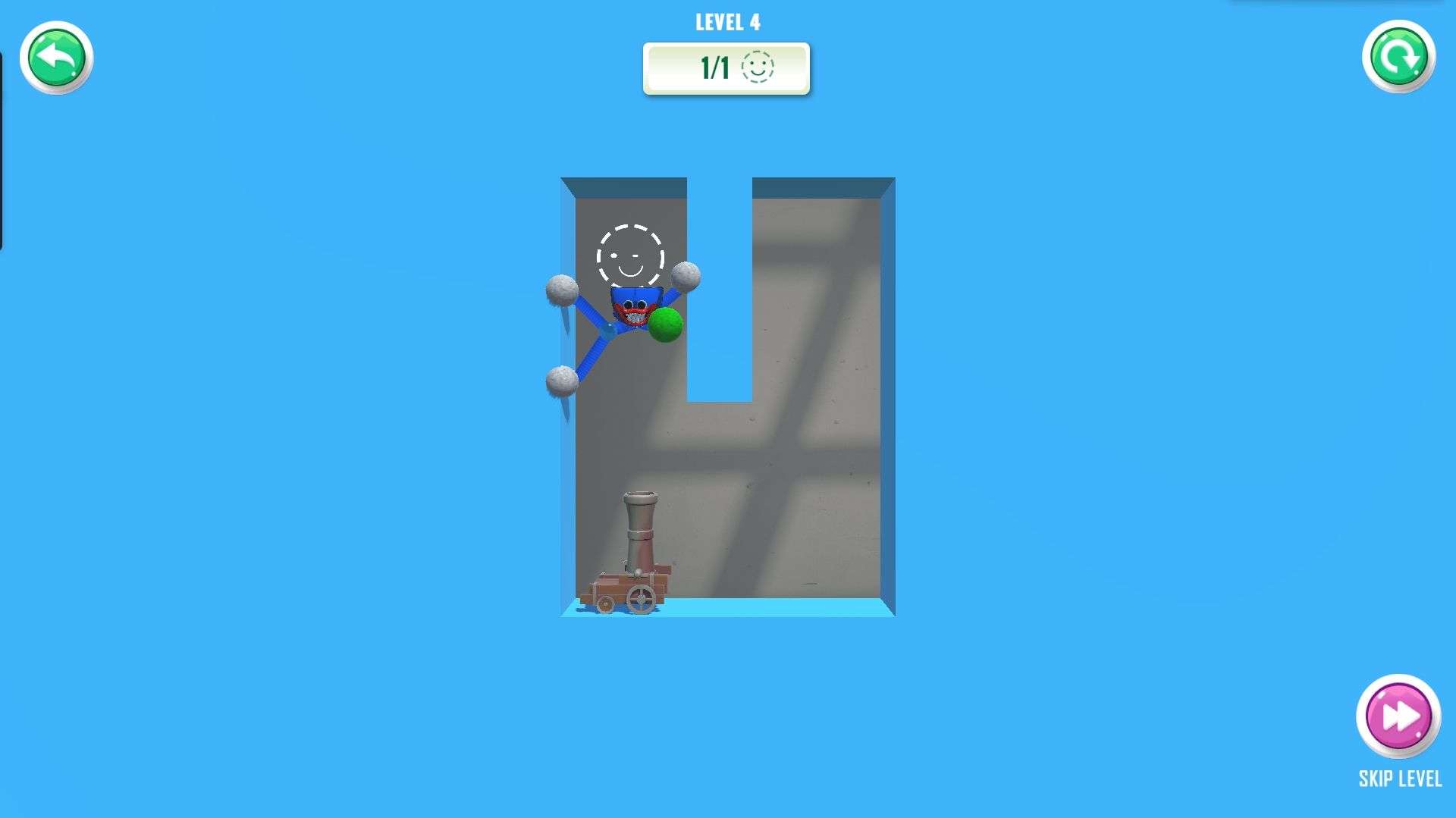
Precise dragging is fundamental. When facing gaps, control the length of limbs to avoid over-stretching and touching traps; it’s best to just reach the supporting point. Fine-tuning the direction is equally crucial. When encountering spikes arranged at angles, make slight adjustments to let limbs pass through the gaps between spikes. Before complex levels, you can preview the operation path, plan the stretching order and angle to improve operation efficiency.
 Key Points for Movement
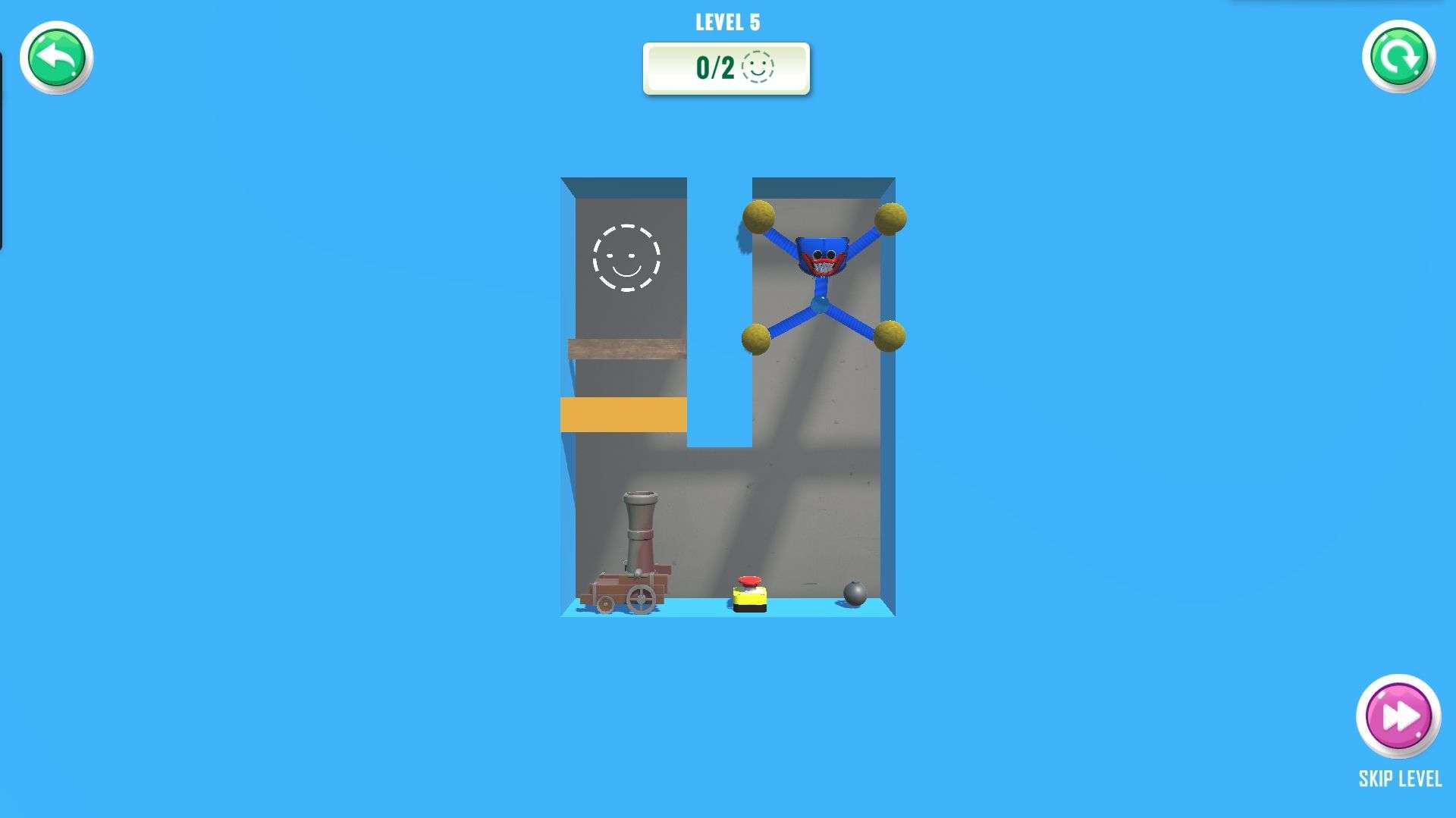
When moving using supporting points, grasp the rhythm. On undulating terrain, first stretch slowly to find stable support, then push the character steadily to avoid losing balance due to moving too fast. Contract limbs in narrow areas and stretch appropriately to move in large steps in open spaces; when encountering climbable walls or ropes, stretch limbs to grab them for leverage, saving energy.
 Obstacle Avoidance Methods
Before approaching obstacles, observe the movement rules, speed and cycle of moving baffles. For example, for baffles moving back and forth, quickly pass when they reach the extreme position. In narrow passages or dense obstacles, contract limbs to pass sideways, then stretch again after passing. If failing once, analyze the reasons, adjust the angle or timing and try again; multiple attempts can break through difficulties

Strategies for Dealing with Stretching Limits
Pay attention to the state of limbs. When the color darkens or cracks appear, it is close to the limit, so stop stretching. For long-distance crossing, adopt segmented stretching: first reach the bulge in the middle of the gap to fix, then continue extending to avoid over-stretching at one time. If limbs tear, find repair items or reset the level as soon as possible, and be more cautious in subsequent operations.