















Game Introduction
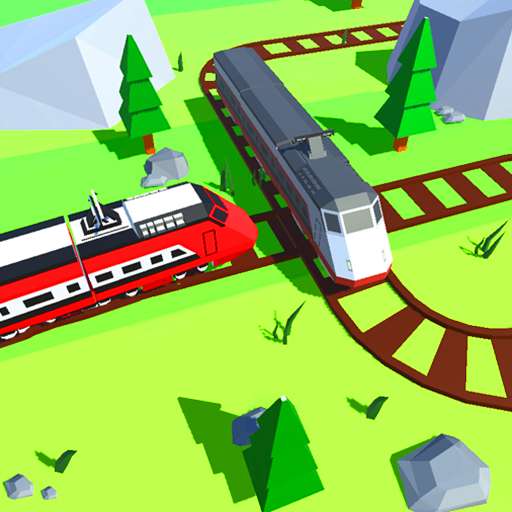
《Train 3D Puzzle Game》is a fun and casual idle - type game. Here, you can deeply explore the mysteries of trains, build exclusive tracks, solve complex puzzles, and gradually develop your railway business, growing from a novice to a railway tycoon. By controlling the train to travel and completing transportation tasks, you can immerse yourself in a realistic train simulation journey, experience the dual pleasures of building and operating railway lines, and start your own railway empire journey in interesting puzzles and operations.
Game Features
Puzzle Gameplay
Centered around 3D train track puzzles, it requires route planning and train dispatching to solve complex track layout problems, testing spatial thinking and strategic planning.
Business Elements
Integrates the idle game business logic. By completing transportation tasks and expanding railway operations, resources are accumulated to develop a railway empire, evolving from basic operations to tycoon cultivation.
Simulation Experience
Creates a realistic train simulation scenario. Links like train traveling and cargo loading/unloading replicate real railway operations, delivering an immersive railway operation experience.
Level Challenges:Features multi - level stages with gradually increasing difficulty, continuously providing freshness and motivation to clear levels.
Gameplay and Controls
Track and Train Dispatching
Observe the 3D track layout. Click or slide to adjust the train's traveling route, making the train move along the planned path, avoiding track conflicts and ensuring orderly passage.
Task Execution:According to the level objectives, dispatch trains to complete tasks like cargo transportation and passenger transfer. Obtain resources by finishing tasks, which are used to expand railway operations, and unlock new tracks and train types.
Business Development
Use resources from tasks to upgrade track facilities, increase the number of trains, and gradually build a larger and more efficient railway network. Improve the operation scale and revenue, advancing towards becoming a railway tycoon.
Level Progression
Start from low - level stages. As puzzle - solving and business capabilities improve, challenge higher - difficulty levels, unlock more complex track puzzles and business scenarios, and continuously expand the gaming experience.
Game Guide

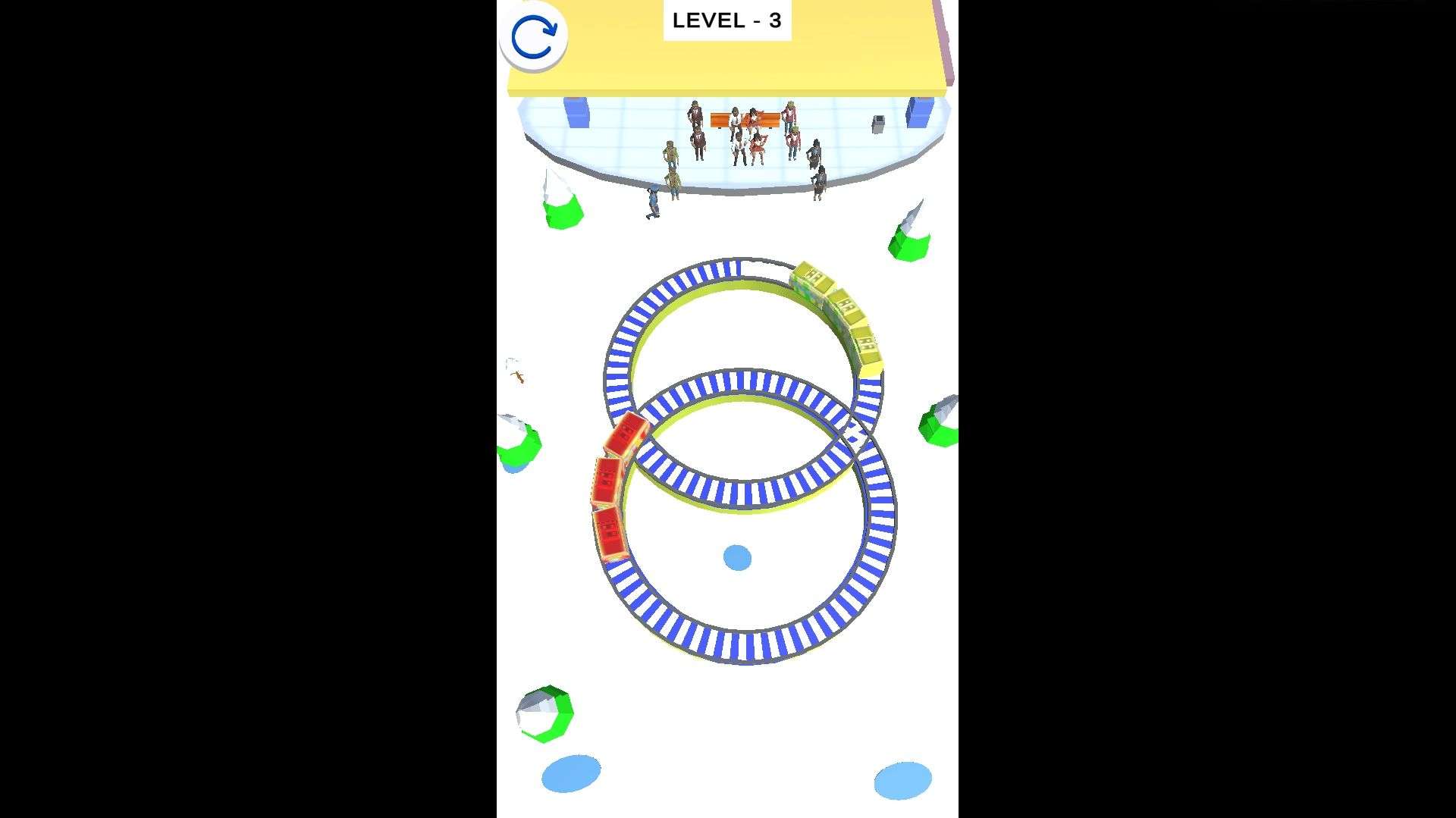
Each level has a unique track layout, evolving from basic single-loop tracks to double-loop intersections, cross-shaped intersections, multi-branch networks, and high-low layered 3D tracks. Track connections grow more complex, with more forks and intersections (from single to multiple), offering greater flexibility in train routing but raising collision risks significantly.
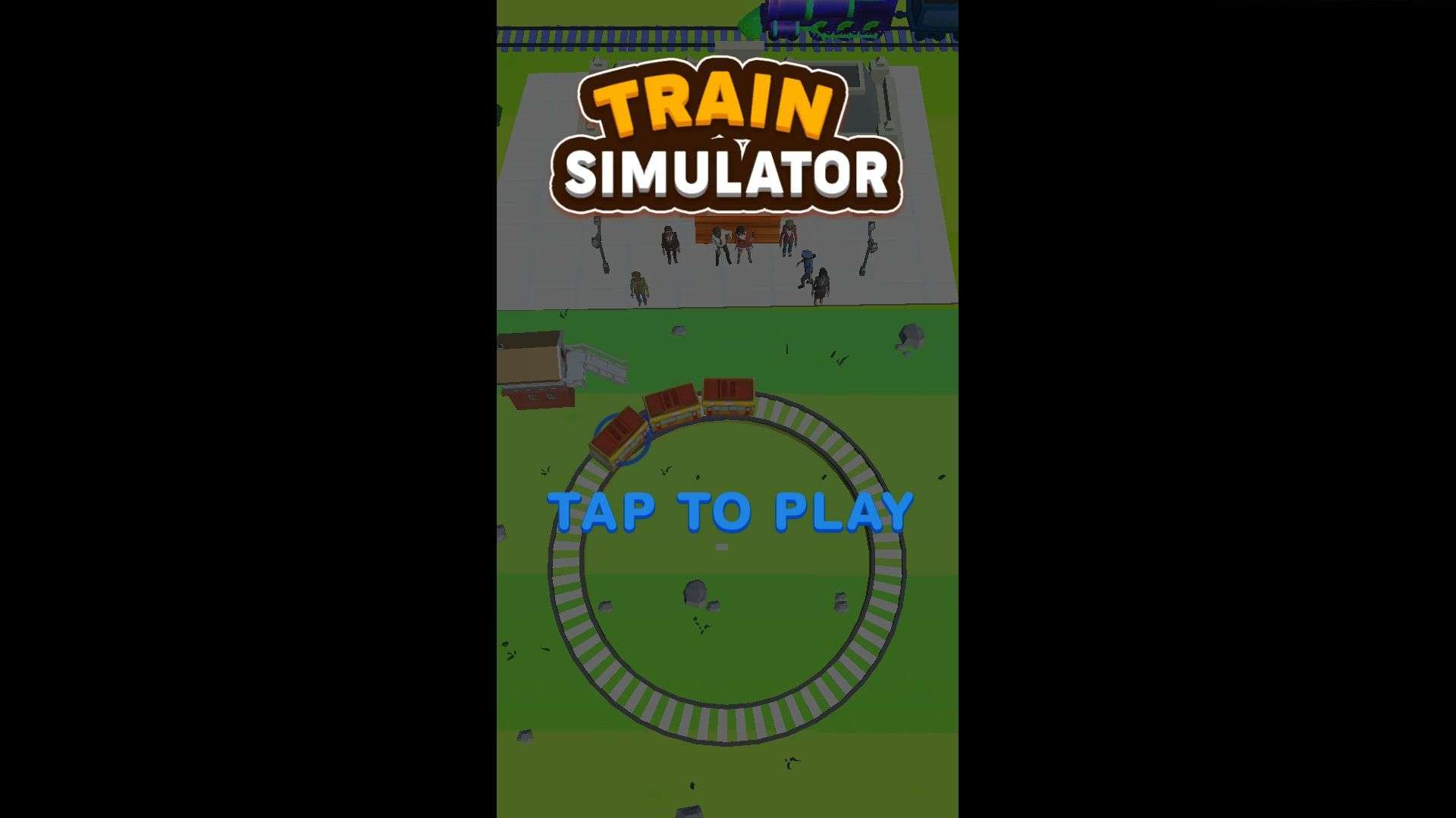
The core for handling track changes is a "separated track management" logic. For single-loop tracks, check if they’re one-way. If two-way, pre-plan passing points
use long straight sections to let one train pause, starting the other after it passes. In double-loop intersections, set inner/outer loop priorities—usually let outer loop trains pass first; inner loop trains wait at intersections until the outer loop is clear to avoid head-ons.
For cross-shaped intersections, "timing scheduling" prevents collisions. Mark intersection idle times: let horizontal trains pass first, then vertical ones once they’ve fully left the area. If multiple trains wait, prioritize by distance from the intersection—closer ones go first, farther ones start later—ensuring only one train uses the intersection at a time.

In multi-branch networks, set "one-way rules" for each branch (e.g., Branch A
left to right; Branch B: right to left) to reduce conflicts via fixed directions. Add "virtual checkpoints" at branch-main line connections: branch trains pause there, merging into the main line only when it’s clear, stopping sudden entries that cause collisions.
Across all layouts, avoid "multiple trains on the same track section". When tracks branch, diverge trains early: send one via the main road, the other via the branch. After the main road train reaches its destination, dispatch the branch train to merge, using spatial separation for safe travel.