

















Game Introduction
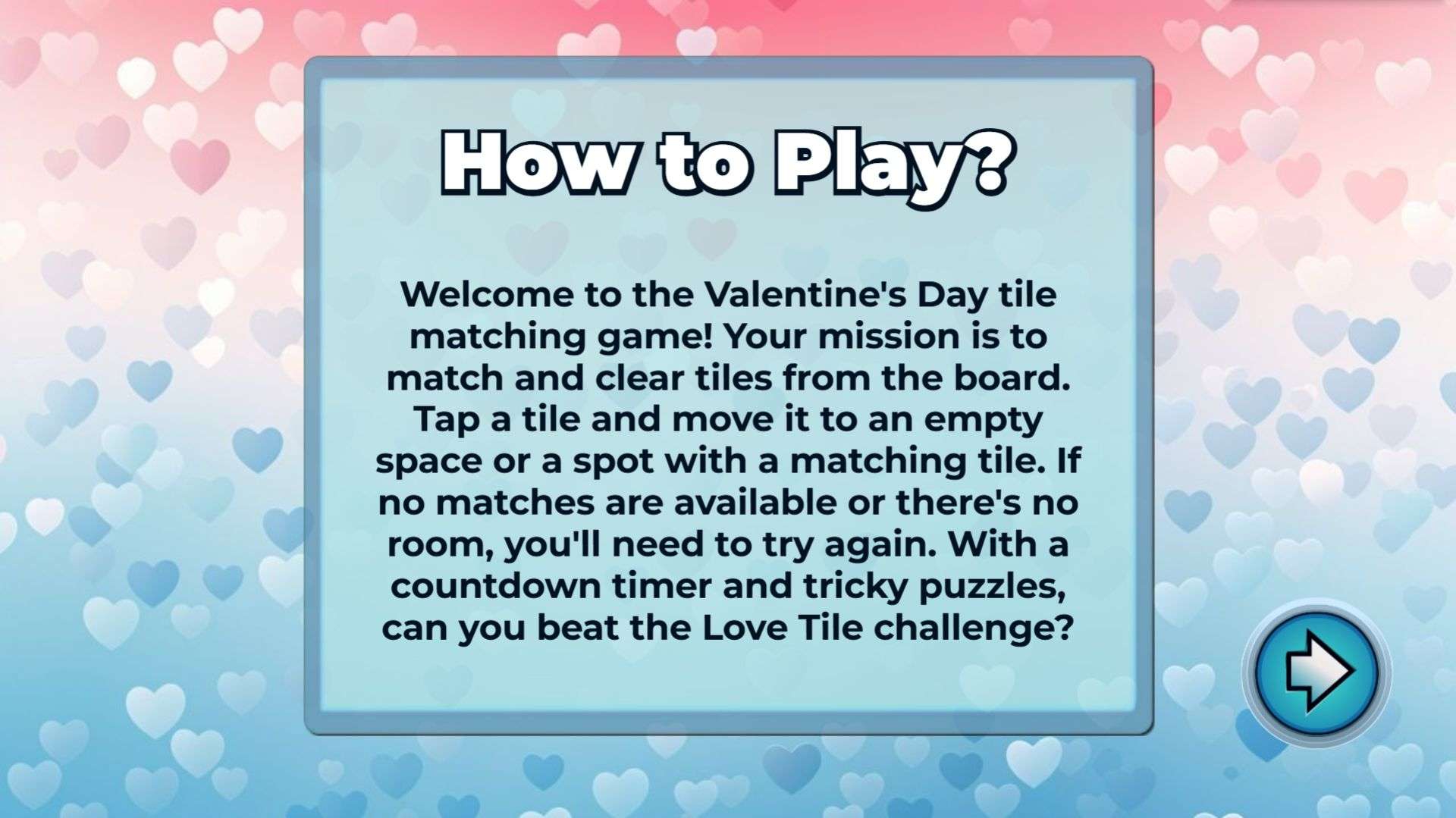
Welcome to the brain-teasing arena of *Love Tile*!
As the countdown timer starts ticking, every tile becomes a puzzle testing your wits—you’ll face ever-shifting boards with no fixed solutions. Free from tedious rules, the game demands precise timing and strategy: How to create matching opportunities in limited space? How to avoid deadlocks with no moves left? From simple layouts to tricky levels, each round is an extreme test of logical thinking. Immerse in the crisp sounds of tile collisions and the satisfying feedback of chain clears. Can you break through the countdown pressure with agile thinking and become the "Tile Master" who conquers all puzzles in this intellectual showdown?
Game Features
1. **Time-Limited Challenges**
The game features a countdown timer, adding a thrilling sense of urgency to each matching adventure. Players must race against the clock to complete tasks under time pressure, testing their reaction speed and on-the-spot adaptability.
2. **Diverse Puzzles**
With a wide variety of chessboard layouts, the levels progress from easy to complex. Each round presents brand-new tricky puzzles to solve, ensuring the game remains fresh and challenging.
3. **Strategy Reigns Supreme**
There are no fixed winning formulas. Players need to think flexibly and plan ingeniously, searching for the optimal matching solutions within limited space. This fully exercises logical thinking and strategic planning abilities.
4. **Immersive Experience**
The crisp sound of tiles colliding and the satisfying feedback from chain clears create an immersive gaming experience, making every successful clearance a rewarding achievement.
Gameplay and Controls
1. Basic Operations
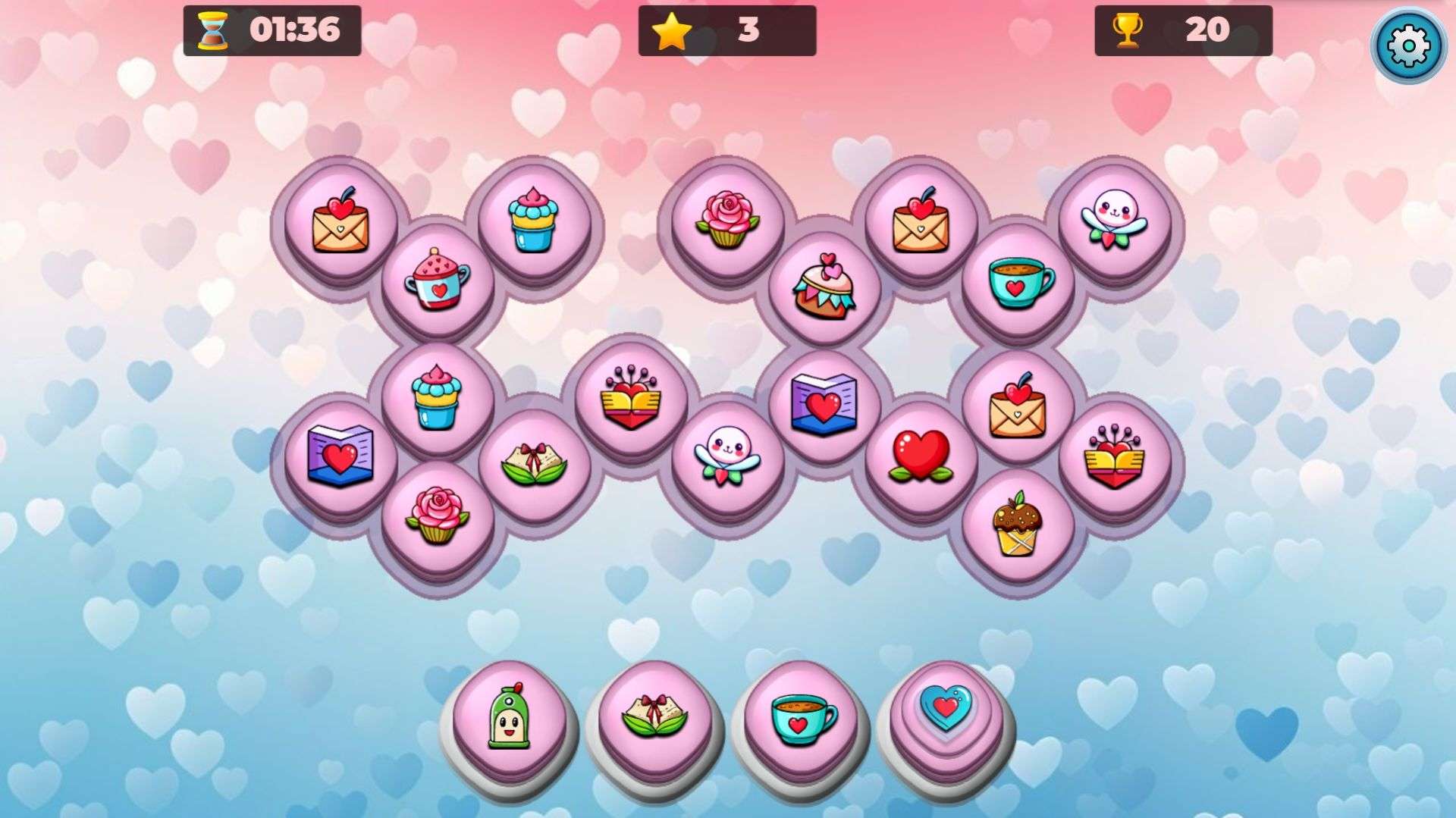
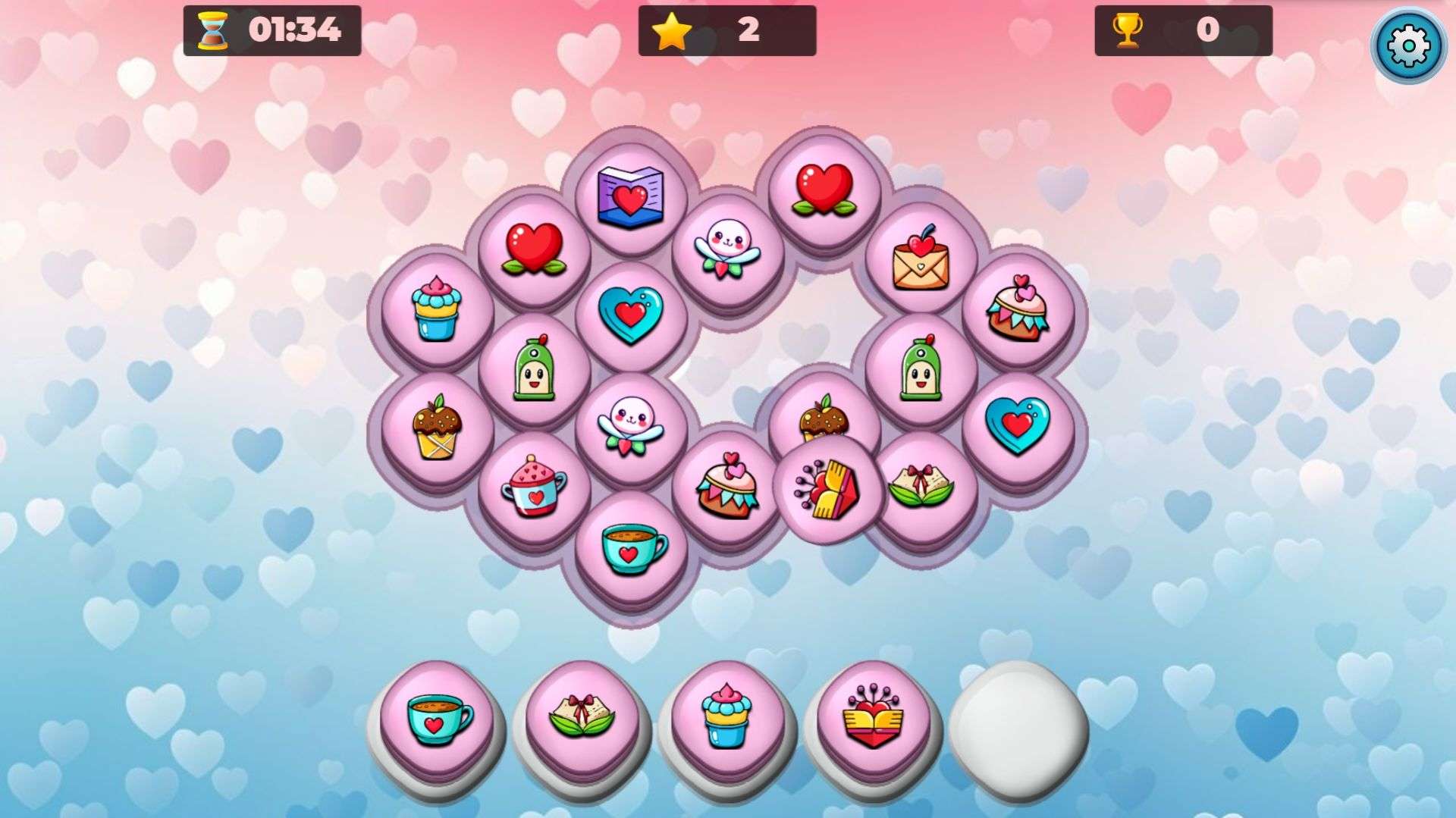
Tiles on the game board are stacked. Tap the top - layer tiles to pick them up, and you can place a maximum of 6 tiles in the lower slot. When there are **3 tiles with the same pattern** in the slot, they will be automatically eliminated and removed from the slot. If the slot is full and there are no combinable tiles for elimination, the game ends.
2. Clearance Rules
Continuously pick tiles from the board and place them in the slot. Achieve three - in - a - row matches of the same pattern to gradually clear all tiles. Pay close attention to the number of tile layers on the board and the state of the slot. Prioritize eliminating tiles that block the lower - layer tiles to avoid slot congestion, which could lead to the end of the game.
3. Time Limit
Once the game starts, a countdown timer will appear on the screen. You need to clear the entire board before the time runs out. If the time expires, the game is considered failed, and you need to start a new challenge.
4. Advanced Tips
**Observation Priority**: First, observe the top and middle layers of tiles on the board. Anticipate patterns that can form three - in - a - row matches to avoid random picking.
**Slot Management**: When the slot is nearly full, prioritize finding tiles with the same pattern as those already in the slot to reduce slot occupancy. Try to keep empty spaces in the slot for subsequent pickups.
**Chain Elimination**: Take advantage of the board layout to trigger multiple three - in - a - row eliminations in a row, quickly clearing a large number of tiles and increasing the efficiency of clearing the level.
Game Guide
## I. Basic Preparation
Before starting the game, it is essential to familiarize yourself with the characteristics of the tile patterns to quickly identify differences. At the same time, know the position and capacity of the slot and the countdown area clearly. This ensures smooth operation and prevents missing opportunities due to unfamiliarity with the interface.
## II. Core Operation Techniques
### 1. Starting Strategy
At the beginning of the game, first observe the distribution of tiles on the top and middle layers of the board. Identify tile combinations that are likely to form three - in - a - row matches to determine the initial operation direction. Avoid picking up tiles blindly, which may lead to chaos in the slot.
### 2. Space Management
Prioritize eliminating upper - layer tiles that block lower - layer tiles to free up space on the board. For example, when there are multiple tiles stacked below a certain tile, eliminate it in a timely manner to create conditions for subsequent operations.
### 3. Slot Utilization
- **When not full**: You can collect tiles of different patterns, but pay attention to the existing tiles in the slot and prioritize looking for patterns that can form three - in - a - row matches. For instance, if there are two heart - patterned tiles in the slot, focus on the heart - patterned tiles on the board.
- **When nearly full **: Make elimination the top priority. Quickly match patterns already in the slot to prevent the slot from being filled with useless tiles and getting into a deadlock.
### 4. Chain Elimination
Pay attention to multiple adjacent groups of tiles with the same pattern on the board. Trigger chain reactions through a reasonable order of picking up and eliminating tiles. Eliminating a large number of tiles at once can significantly reduce the remaining tiles on the board and advance through levels efficiently.
## III. Coping with Difficult Situations
### 1. Full Slot
If the slot is full and there are no eliminable combinations, first check for key tiles that are about to be covered or difficult to pick up. Free up space in the slot by eliminating tiles in other areas, and then deal with the key tiles.
### 2. Time Pressure
When the countdown is running out, abandon complex combinations and focus on patterns that can quickly form three - in - a - row matches. Increase your operation speed while maintaining accuracy to avoid failure due to hasty mistakes.
### 3. Complex Layout
When facing a multi - layered and messy board, start clearing from the edge areas to gradually sort out the structure. Alternatively, look for areas with a large concentration of tiles of the same pattern to break the situation and reduce the difficulty of the game.

## IV. Path to Improvement
After each game, review the operation process. Analyze successful strategies and summarize the causes of mistakes, such as misjudgments that led to slot blockages or missed opportunities for chain eliminations. Through continuous practice, improve your tile pattern recognition speed, operation proficiency, and on - the - spot adaptability, and conquer levels with ease.