

















Game Introduction
 A glass vessel stands empty, as if stripped of its purpose—only when filled does it reclaim meaning and radiate contentment. In *Filled Glass 3 Portals*, dive into a whimsical puzzle adventure where you’ll wield magical portals to guide vibrant spheres into waiting containers.
But precision is key: each vessel is marked by a blue dotted line, a critical threshold that demands your spheres reach exactly to this level. Master the art of calculating angles and timing portal activations, leveraging physics to stack spheres with surgical accuracy. One miscalculation could topple your progress, making every move a test of spatial reasoning and strategic finesse.
As levels advance, containers morph into intricate shapes and portals appear in trickier configurations, escalating the challenge. Immerse yourself in a world where every successful fill unlocks a satisfying rush of accomplishment—because in this game, perfection lies in the precise harmony of color, physics, and the sweet satisfaction of a vessel finally fulfilled.
Game Features
1. **Innovative Portal-based Puzzle Mechanism**
With portals as the core gameplay, players must skillfully maneuver colorful spheres through space to precisely fill containers. This breaks away from traditional puzzle game models, presenting imaginative strategic challenges.
2. **Precise Physics Simulation Challenges**
Deeply integrating physical laws, the movement trajectories, landing points, and stacking effects of the spheres all adhere to real - world physical rules. Players need to accurately calculate angles and timings, using their intelligence to meet the strict target marked by the blue dotted line. Each level is an ultimate test of spatial thinking and operational skills.
3. **Progressive Difficulty Level Design**
The levels gradually increase in complexity, starting from basic container filling and advancing to complex, irregularly - shaped vessels and tricky portal arrangements. This continuously stimulates players' desire to explore and maintains the game's freshness and challenge.
4. **Dual Visual and Sensory Delight**
The colorful spheres contrast beautifully with the crystal - clear glass containers. Coupled with smooth animation effects, it creates a highly visually appealing feast during the puzzle - solving process, providing an immersive gaming experience.
5. **Achievement - Driven Gaming Experience**
Every successful container fill brings a unique sense of accomplishment, satisfying players' pursuit of perfection and motivating them to keep challenging themselves.
Gameplay and Controls
1. **Plan Portal Placement and Angles**
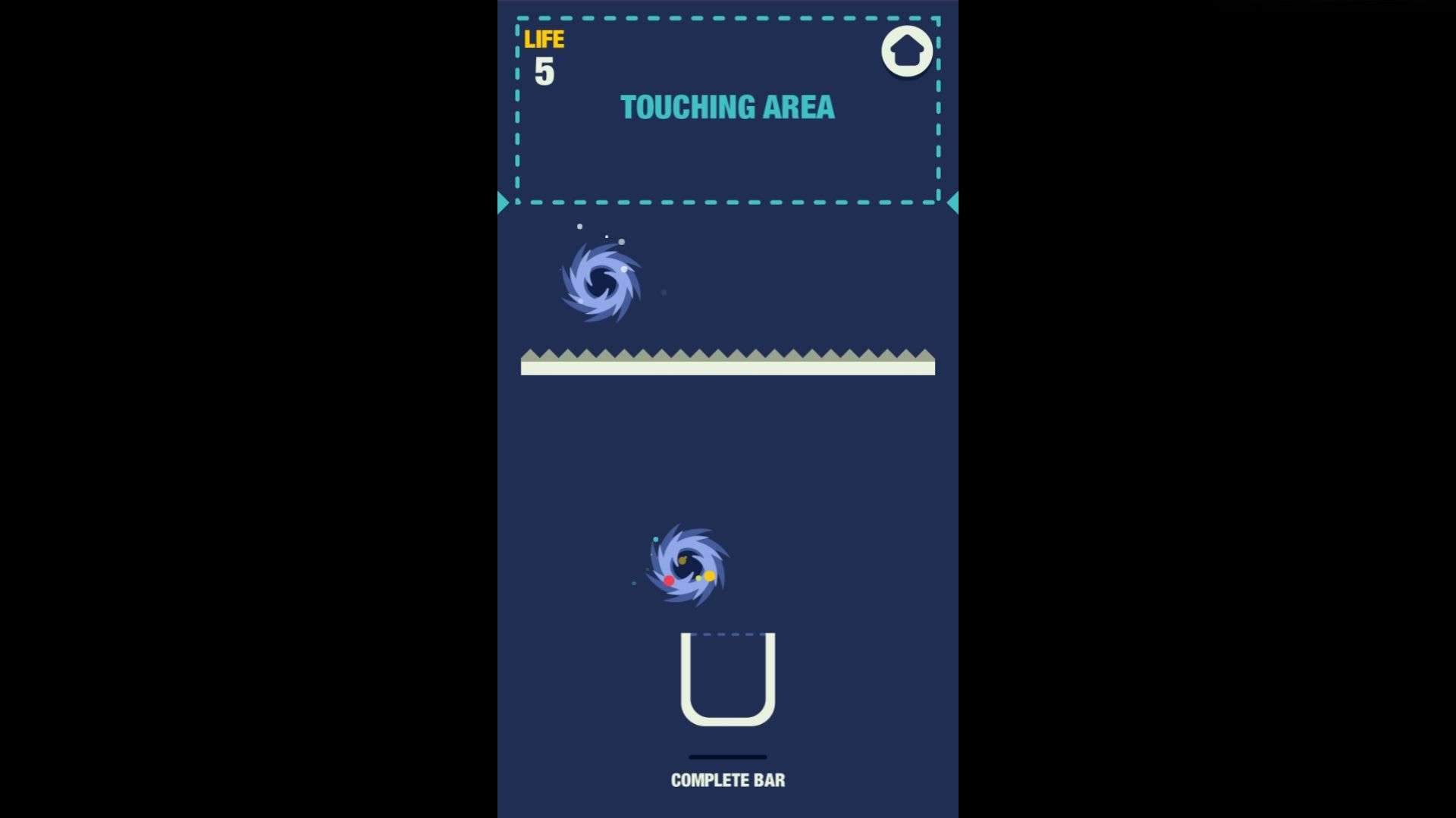
Areas where portals can be placed will appear in the level scenes. Players need to position portals at suitable points and adjust their directions according to the shape and location of the containers, as well as the initial positions of the spheres. By doing so, they can map out the spheres' transit routes and ensure they smoothly enter the containers.
2. **Control Sphere Launching**
After finalizing the portal layout, tap or slide in the designated area on the screen to launch the spheres. When launching, pay close attention to controlling the force and angle. Excessive or insufficient force, as well as angular deviations, may prevent the spheres from accurately falling into the containers or reaching the target height.
3. **Adjust Using Physical Laws**
Given the game's in - depth simulation of physical rules, the spheres will behave according to real - world physics during transit, collisions, and stacking. Players should observe the spheres' trajectories and stacking conditions. In case of any deviations, they can readjust the portal angles, change the launching force and timing, and utilize physical properties such as rebounds and rolls to make the height of the stacked spheres meet the blue dotted line standard.
4. **Handle Complex Levels**
As the levels progress, container shapes become more intricate and portal arrangements trickier. Players need to flexibly combine multiple portals to devise complex sphere movement routes. Additionally, they should consider how different container surface materials affect the spheres' movement—for example, differences in friction can lead to variations in rolling distances—and continuously experiment with new strategies to complete the filling tasks.
Game Guide

I. Portal Placement Techniques
Initial Observation: After entering a level, don't rush to place portals. First, carefully observe the shape and position of the container, as well as the initial distribution of the spheres. For irregularly - shaped containers, think about how to use portals to guide the spheres so that they can fill the interior of the container evenly and efficiently. For example, for a container with a narrow neck, place the portal as close to the neck as possible to ensure that the spheres can enter smoothly and avoid getting stuck outside.
Multi - Portal Coordination: As the level of difficulty increases and a single portal is no longer sufficient, be good at combining multiple portals. You can set one portal to change the horizontal direction of the spheres and another to adjust the vertical direction, creating a complex path. In some levels, first teleport the spheres to a specific area through one portal, and then use a second portal to make them fall precisely into the container, achieving precise control over the spheres' movement trajectories.
Angle Fine - Tuning: Slight differences in portal angles can lead to significant variations in the landing points of the spheres. After placing a portal, fine - tune it using the rotation function. If the spheres always deviate to the left of the container, rotate the portal counterclockwise slightly; if they deviate to the right, adjust it clockwise. Each adjustment should not be too large; optimize step by step according to the actual landing points of the spheres.
II. Sphere Launching Strategies
Force Control: The force applied is directly related to the flight distance of the spheres. In simple levels, when the container is close to the spheres, gently tap or slide the launch area to give the spheres a small initial velocity. As the levels progress and the container moves farther away or is blocked by obstacles, increase the launch force appropriately, but be careful not to apply too much force, which may cause the spheres to fly out of the scene or lose control due to excessive bouncing off the container walls.
Angle Calibration: Determine the launch angle of the spheres based on the position and angle of the portals. If the portal entrance is at a higher position, the launch angle can be raised slightly; if the entrance is lower, lower the angle. You can visualize the flight arc of the spheres before launching and estimate whether they can enter the portal smoothly. At the same time, pay attention to the auxiliary lines or reference marks in the level and use them as a basis for adjusting the launch angle.
Batch Launching: For levels that require a large number of spheres for filling, don't launch all the spheres at once. Divide the spheres into several batches. Observe the filling effect of each batch before deciding on the launch parameters for the next batch. This allows for better control over the stacking height and distribution of the spheres, avoiding difficulties in adjustment caused by launching too many spheres at once.
III. Optimization Using Physical Properties
Rebound Utilization: The containers and scene elements in the game have different rebound coefficients. When the spheres hit the container walls or other obstacles, plan subsequent operations based on the rebound angle and force. If the rebound direction of the spheres after the first impact on the container wall is not ideal, you can readjust the portals or launch the next batch of spheres, using the impact of the subsequent spheres to change the movement trajectory and ultimately make the spheres enter the container and reach the target height.
Rolling Control: When the spheres roll on a flat surface, they are affected by friction. For containers with smooth surfaces, the spheres will roll a longer distance; for rough surfaces, the spheres will decelerate rapidly. When planning the movement path of the spheres, take the rolling factor into account. For example, when the spheres need to roll a long distance to enter the container, increase the launch force appropriately to overcome the loss caused by friction and ensure that the spheres can reach the destination smoothly.
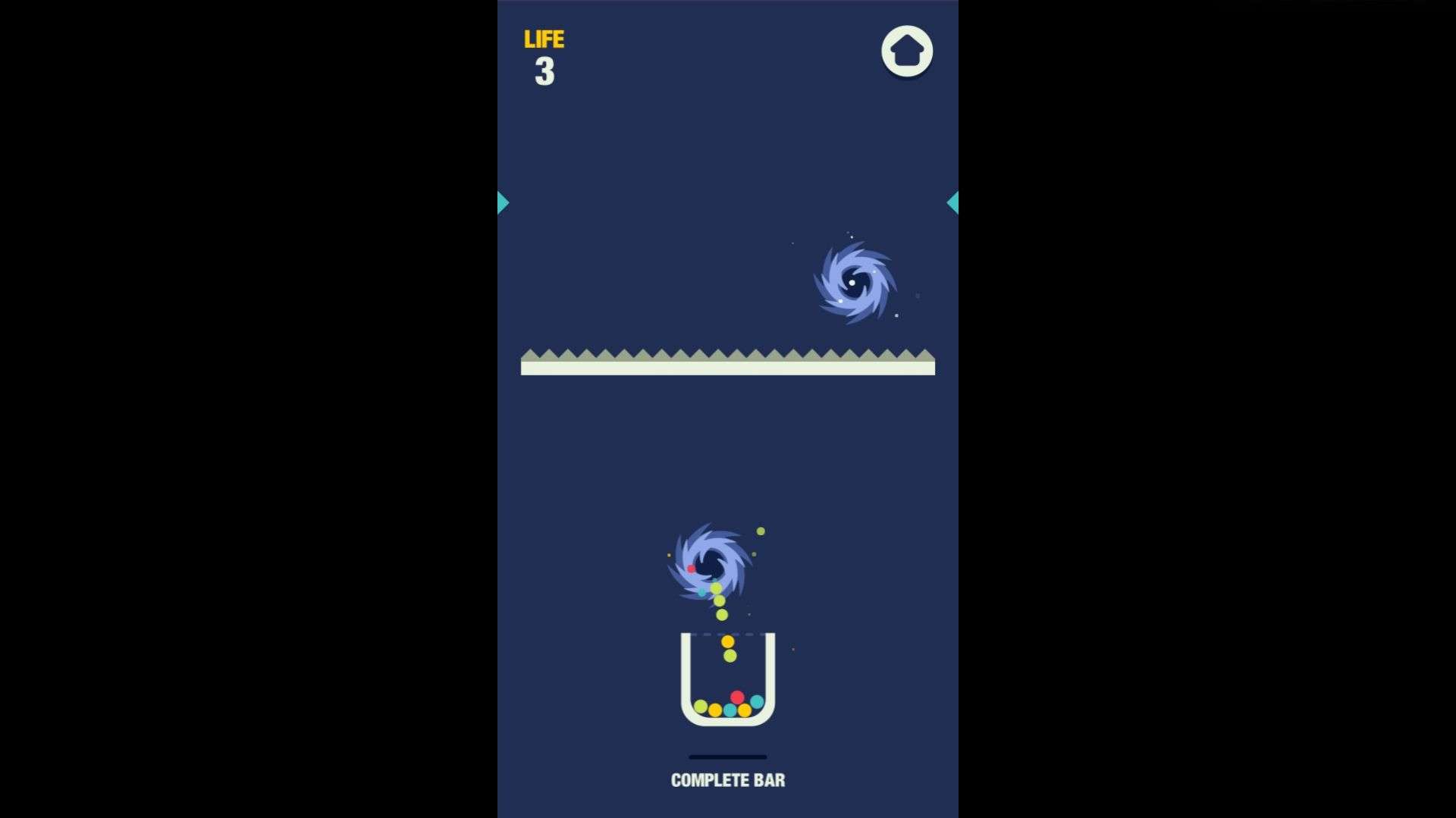
Stacking Skills: The stacking of spheres follows the rules of gravity and physical collisions. When there are already some spheres stacked in the container, consider the existing stacking situation for the landing points of the subsequent spheres. Try to make the newly launched spheres fill the empty positions and avoid excessive stacking in the same area. If one side of the sphere stack is too high, adjust the launch angle to guide the subsequent spheres to the other side, making the overall stacking more even and easier to reach the height marked by the blue dotted line.
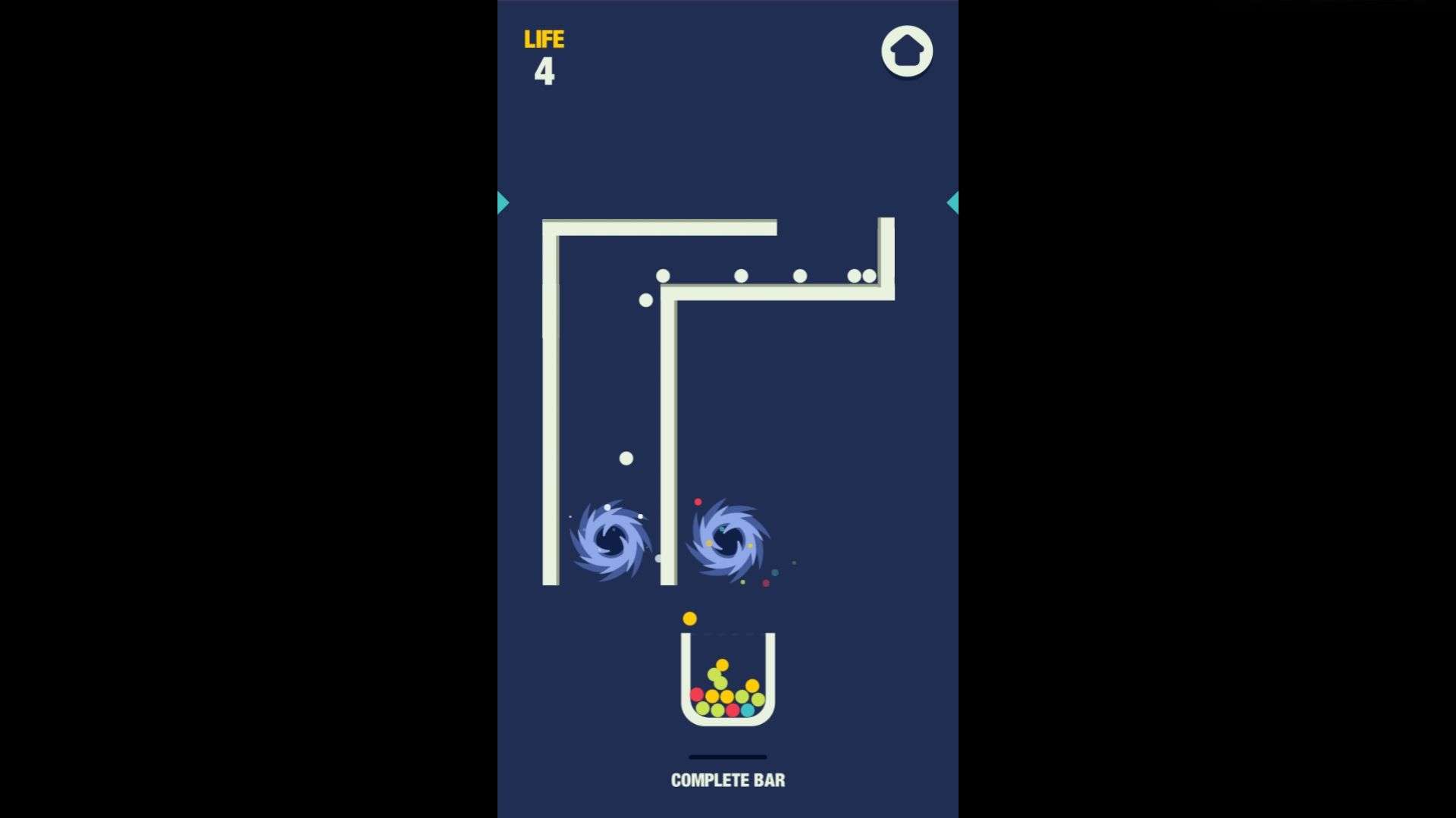
IV. Approaches to Complex Levels
Container Analysis: When faced with complex and irregularly - shaped containers, break them down into multiple simple shapes for analysis. For example, an "L" - shaped container can be regarded as a combination of two rectangles. First, consider how to fill one of the rectangular parts, and then use portal and sphere launching strategies to guide the spheres to the other part, gradually completing the filling of the entire container.
Innovative Portal Layouts: Portal layouts in complex levels are often unexpected. There may be nested portals or portals hidden behind obstacles. When encountering such layouts, break free from conventional thinking. For nested portals, plan the sequence and path for the spheres to pass through each portal; for hidden portals, carefully observe the hint elements in the scene, such as changes in light and shadow or special marks. After finding the position of the portal, design a reasonable usage plan based on the container shape and the initial position of the spheres.
Multiple Attempts and Summarization: Complex levels may not be completed successfully on the first try. Don't be discouraged. After each failure, carefully review the movement trajectory of the spheres and the operation process to analyze where the problem lies. Was the portal angle wrong, or was the sphere launch force off? Summarize the experience and lessons, adjust the strategy, and try again. With each additional attempt, your understanding of the level will deepen, and the probability of success will increase significantly.