

















Game Introduction
Craving a playful, hands-on airport management adventure? Look no further than Airport Simulator: Plane Tycoon—where the busy hub is entirely in your control!
Ever daydreamed of crafting your very own international airport, from a tiny start-up to a global landmark? This game turns that fantasy into reality with endless, addictive fun! You’ll build your aviation kingdom from the ground up: design and lay out runways, craft smart flight schedules to keep planes moving, upgrade terminals and facilities to wow passengers, hire and manage a top-notch team of staff, and stay on top of every detail to keep the entire airport running like a well-oiled machine—even when passenger crowds start booming!
You won’t just oversee the big picture, either: dive into the nitty-gritty of airport life, from managing smooth check-ins and efficient baggage transport to keeping security tight and hassle-free. Best of all, this is one of those simulator games unblocked—so you can jump in and start building, managing, and growing whenever the mood strikes!
Rise to the challenge of keeping up with soaring passenger demand, tweak your strategies to fix bottlenecks, and watch as your small airport transforms into the busiest, most beloved travel hub in the whole world. Ready to take the reins and become an airport tycoon?
Game Features
Immersive Airport Management: Build your airport from scratch and take control of the entire process, including runway design, flight scheduling, and facility upgrades
Detailed Operations: Manage all aspects such as check-in, baggage transport, and security checks to ensure the airport runs efficiently
Progressive Growth Experience: Handle surging passenger flow, optimize strategies, and witness your small airport evolve into a global hub
Barrier-Free Gameplay: As one of the "simulator games unblocked", you can start managing your airport anytime
High Playability: Turn the fantasy of "building an international airport" into reality, combining strategy and addictiveness
Gameplay and Controls
1. Basic operations: Click on passengers to guide them to facilities like check-in counters and security checkpoints to complete procedures; click on facilities to upgrade them.
2. Facility interaction: When there are interaction prompts on facilities such as check-in counters and security equipment, click to speed up the passenger service process and improve efficiency.
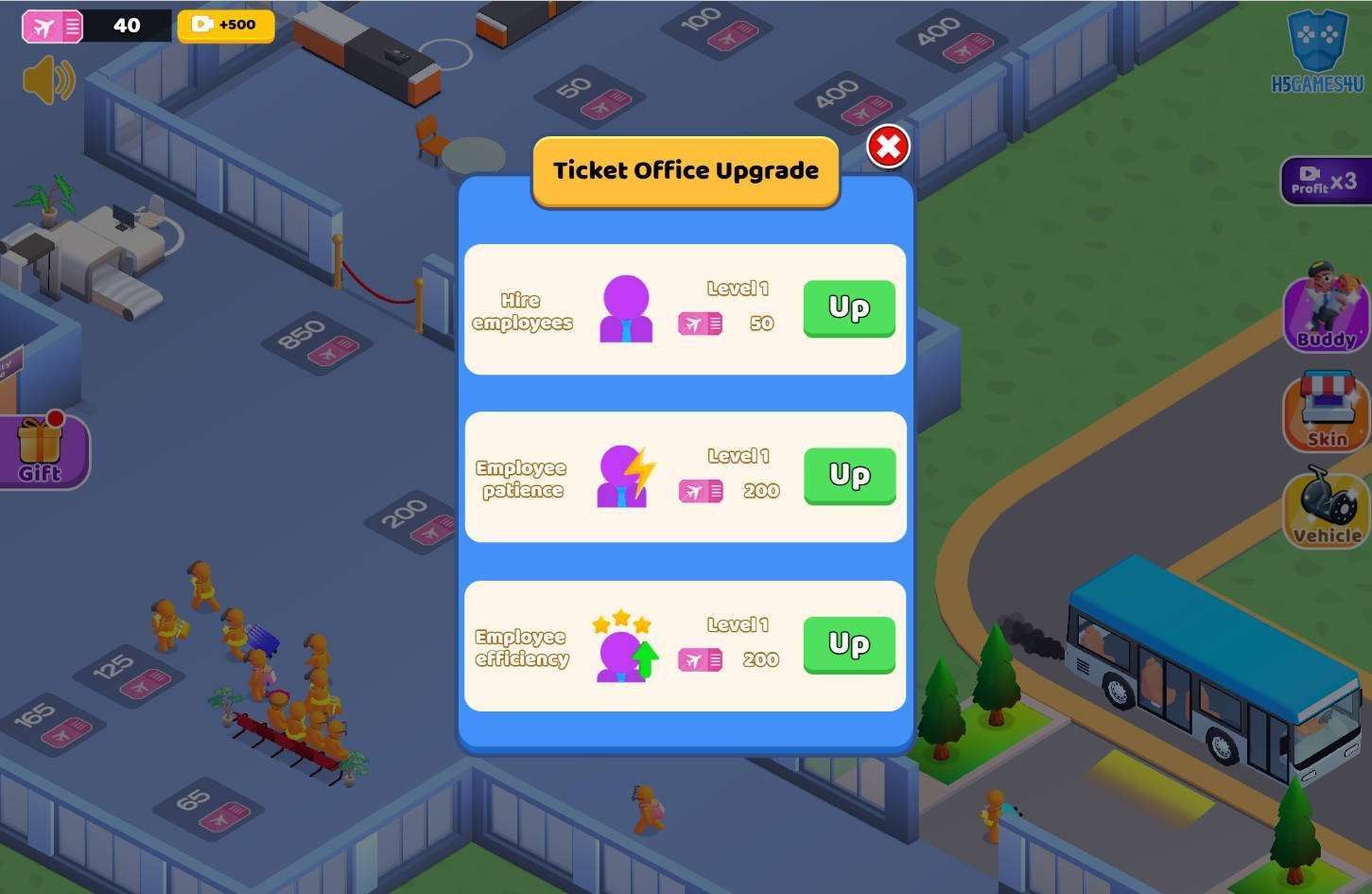
3. Upgrade management: When facilities show "Upgrade" prompts, click to enter the upgrade interface and consume resources to enhance attributes like the number of employees, their patience, and efficiency.
4. Resource acquisition: Obtain resources by completing passenger services, watching ads, etc., and use them for facility construction and upgrading.
Game Guide
When you first start the game, focus on mastering basic operations and core processes. Click on passengers to accurately guide them to key facilities such as check-in counters, security checkpoints, and boarding gates, helping them complete the full process from arriving at the airport to boarding smoothly. Click on various facilities to access the upgrade interface, laying a solid foundation for the airport’s efficient and large-scale operations later on.
In the facility interaction phase, it is crucial to click promptly when interactive prompts appear on facilities like check-in counters, security equipment, and baggage check-in areas. Take check-in counters as an example: during peak passenger hours such as morning and evening rushes, clicking check-in counters quickly not only allows passengers to finish check-in faster and reduces queuing congestion but also improves overall service efficiency. This is vital for maintaining the airport’s smooth operation order and passenger satisfaction. The same applies to security checkpoints—quick interactions can speed up the security process and prevent passengers from feeling dissatisfied due to long waits.
Facility upgrades are the core driver of airport development. When an "Upgrade" prompt pops up on a facility, click decisively to enter the upgrade interface. Consume resources to increase the number of employees, which can effectively handle the growing passenger flow and avoid service delays caused by insufficient staff. Enhancing employee patience helps reduce issues like complaints from passengers who get anxious while waiting, creating a more harmonious service atmosphere. Improving employee efficiency makes every service—such as check-in, security checks, and baggage handling—faster, significantly shortening the time passengers spend at each stage. In the early stage, when resources are limited, prioritize upgrading critical facilities that all passengers must use, such as check-in counters and security checkpoints. This ensures the smooth flow of basic service processes and lays the groundwork for expanding other facilities later.
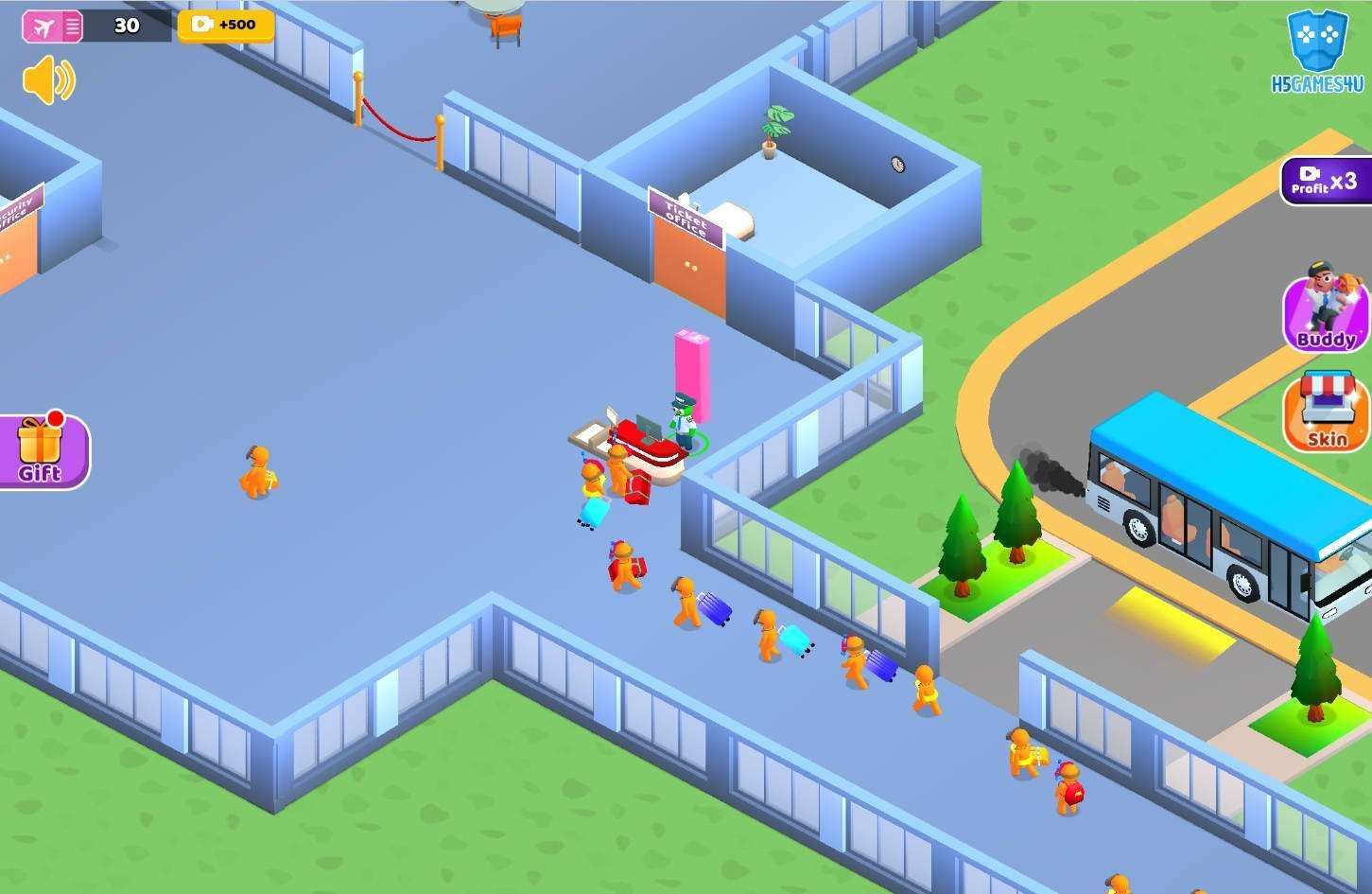
There are many tips for resource acquisition. On one hand, complete passenger services carefully and efficiently. Each time you successfully guide a group of passengers through the entire process from entering the airport to boarding, you will receive a certain amount of resource rewards. Generally, the higher the service efficiency and passenger satisfaction, the more resources you will get. On the other hand, watching ads is a convenient way to obtain resources quickly. If you want to upgrade facilities and expand the airport scale rapidly, using ad resources properly can help you achieve twice the result with half the effort and significantly accelerate the airport’s development.
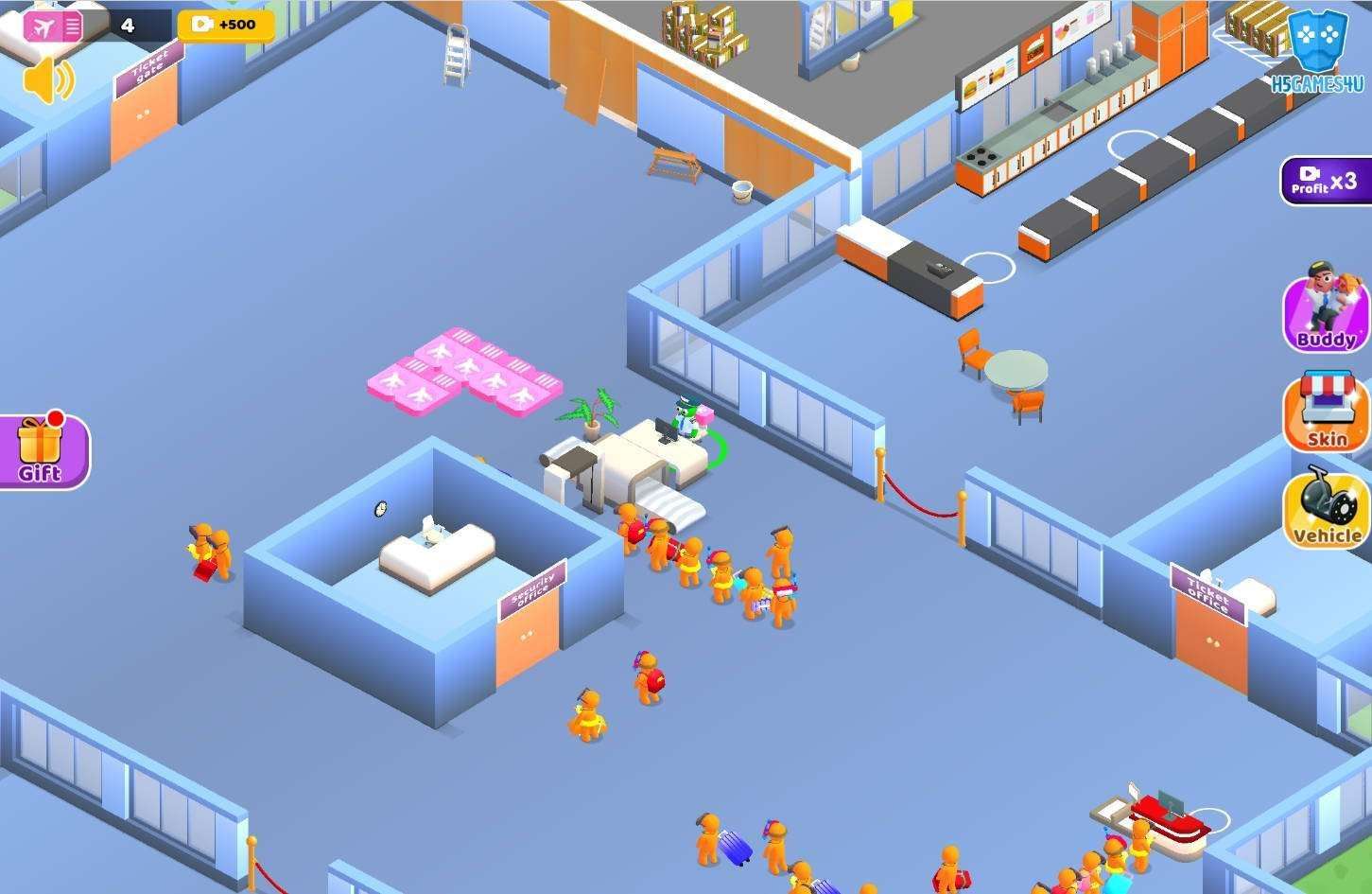
Additionally, you need to always pay attention to the airport’s overall layout and real-time passenger flow changes. Based on the distribution of passengers in different time periods and areas, flexibly guide them to corresponding facilities to avoid overcrowding in a single area, which could lead to service breakdowns. At the same time, combined with your resource accumulation, expand airport facilities in a planned and phased manner. For example, add more check-in counters to meet the check-in needs of more passengers, expand the security area to increase security throughput, or build more boarding gates to support the takeoff and landing of more flights. Gradually develop the airport into an efficient, comprehensive, and influential aviation hub.