

















Game Introduction
Dive into the ultimate store organizing puzzle with The Sorting Mart! Step into a bustling mart filled with messy shelves, where your mission is to tidy up by rearranging items—match three identical goods on one shelf to clear it, and watch the upper shelves come crashing down to reveal new combinations.
Clear entire stacks to shift neighboring shelves into place, opening up fresh matching opportunities. Race against the clock to keep sorting before time runs out, and when you hit a slump, use the shuffle tool to mix up the shelves and uncover hidden matches.
As you progress, the puzzles get trickier—more items, tighter time limits, and clever shelf layouts that test your sorting strategy. Whether you’re here for relaxing organization or thrilling challenges, this game turns tidying into an addictive adventure that hones your skills with every level!
Game Features
1. Innovative Combination of Sorting + Match-3 Gameplay
Core mechanics blend "shelf organizing + match-3 elimination" — drag and rearrange items, match three identical goods to clear a shelf, and watch upper items fall automatically. Clearing entire stacks triggers adjacent shelf movement, breaking the limitations of traditional flat elimination.
2. Dual Challenge of Strategy and Rhythm
Test your observation and spatial planning skills within a limited time. You need to quickly judge item placement logic. Difficulty ramps up gradually with more item types and complex shelf layouts, fitting both quick fragmented sessions and satisfying deep strategy players’ desire for challenge.
3. Practical Props to Beat Stalls
A built-in shuffle prop lets you quickly mix up item distribution on shelves when stuck, easily unlocking hidden matching combinations. No complicated conditions for use — it reduces frustration without undermining the game’s core fun.
4. Immersive Store Scene Experience
Set in a bustling mart, the game features clear item models and shelf layouts that mirror real shopping scenarios. The organizing process delivers a visual sense of neatness and healing, with upbeat sound effects paired with elimination feedback to enhance the sense of accomplishment.
5. User-Friendly Design for All Ages
One-finger drag controls make operations simple — no complex rule barriers. Kids can practice classification thinking, while adults can enjoy stress relief. Players of all ages will find joy in the game.
Gameplay and Controls
1. Basic Operation: Drag items to any shelf, match 3 identical ones to clear them, and upper items fall automatically.
2. Key Mechanic: Clear an entire shelf to trigger adjacent shelf movement, unlocking new matching opportunities.
3. Prop Usage: Tap the "Shuffle" button when stuck to mix up item distribution on shelves.
4. Clearance Tip: Keep eliminating within the time limit — difficulty increases as levels progress.
Game Guide
The core of "The Sorting Mart" lies in "strategic sorting + time-limited match-3". Blind dragging will only waste time. Mastering observation priority, making use of shelf movement and prop timing is the key to easily coping with increasing difficulty. Below are phased practical skills:
Opening Core: Prioritize Observation, Establish Sorting Logic. Spend 3 seconds scanning the entire screen when entering a level, focusing on marking two points: first, high-frequency items (categories accounting for over 30%), prioritize placing them on the same shelf to quickly complete match-3; second, empty shelves or shelves with only 1 item—these "transfer slots" can temporarily store items to be matched, avoiding interfering with key sorting. For example, if 5 beverages are scattered on different shelves, first concentrate them on empty shelves on both sides, then add 1 more to eliminate, which is far more efficient than random dragging.
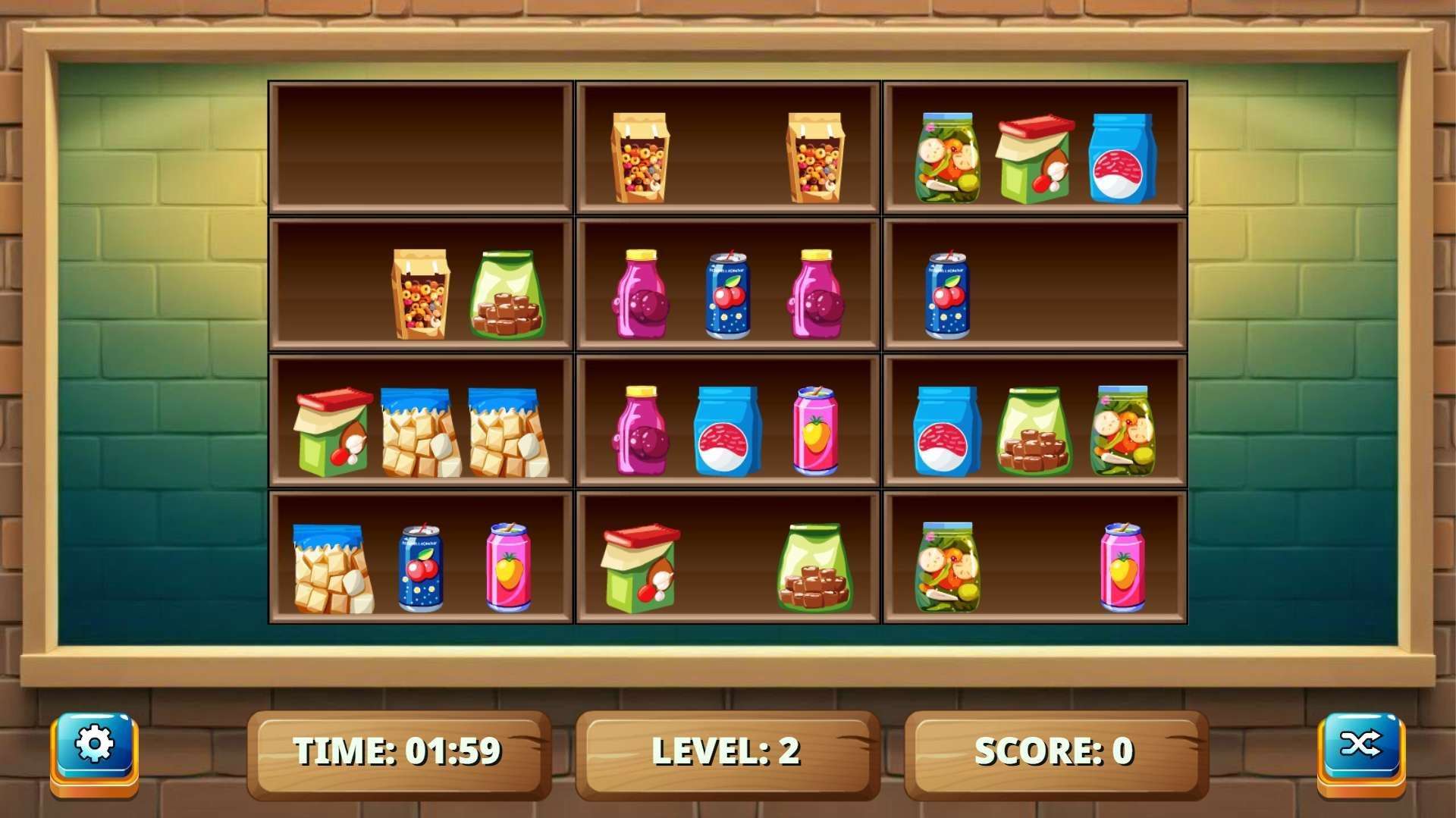
Advanced Key: Make Good Use of Movement to Trigger Chain Eliminations. The adjacent movement triggered by clearing an entire shelf is the core to breaking deadlocks, requiring active planning of elimination order. It is recommended to first clear short edge shelves (such as layers with only 2 items); after movement, scattered items in the middle layer will automatically return to place. If an area has dense items, reserve 1 empty shelf—after clearing the adjacent layer, use movement to split the dense area and expose hidden matching combinations. Practical tests show that this "edge-breaking method" increases the probability of chain eliminations by 40%.
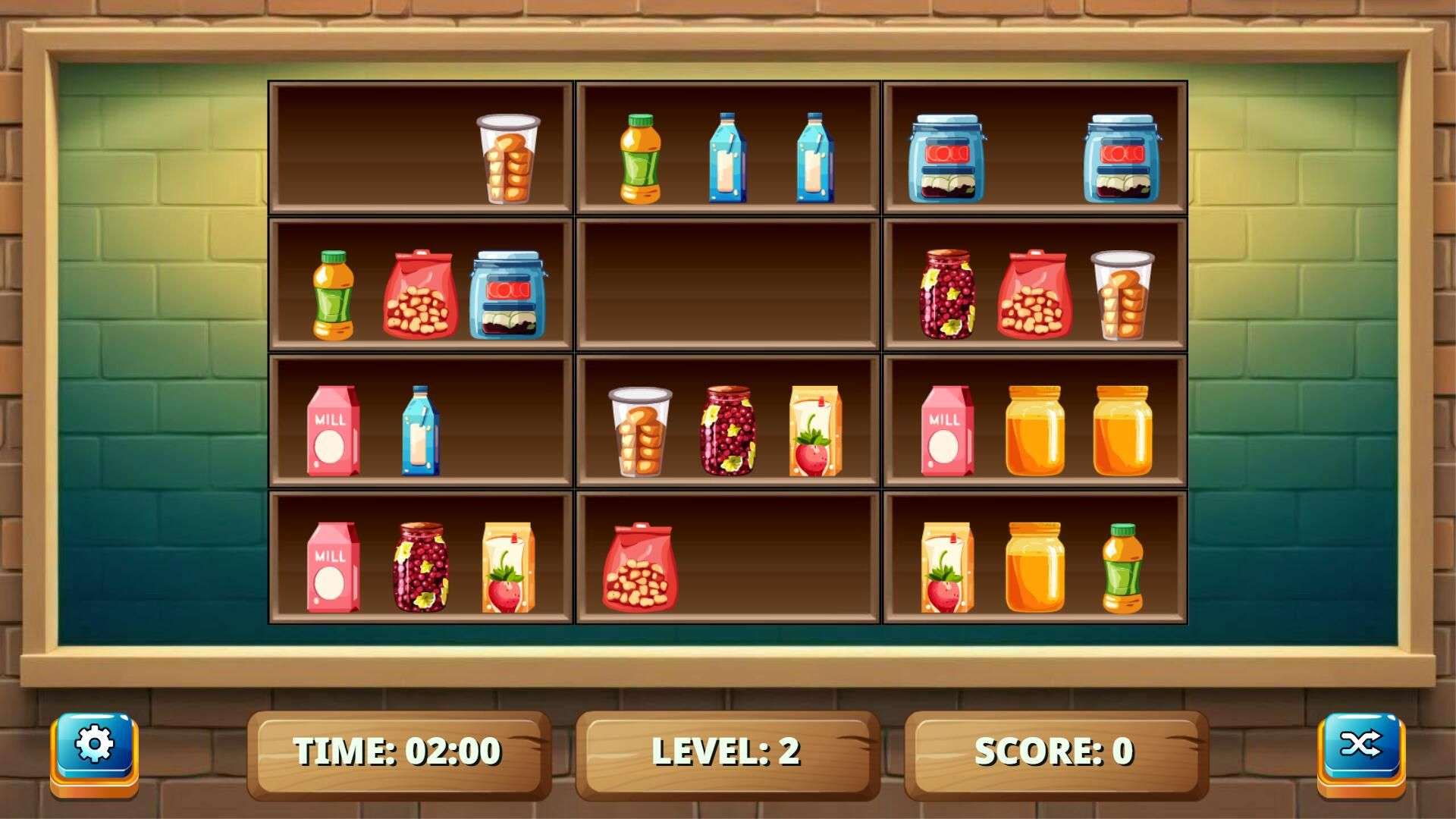
Props & Time Limit: Precise Control, Avoid Waste. The shuffle prop is never for random clicks when stuck. The best time to use it is in the "semi-organized state"—first manually place 2-3 groups of potential matches (such as moving 2 loaves of bread to the same shelf), then click shuffle, which has a high probability of completing the third one. Under time pressure, prioritize handling easy-to-match high-frequency items in the first 30 seconds to save time, and focus on remaining difficulties in the last 20 seconds. If only 1-2 groups are left uneliminated, decisively use shuffle to save the situation.

High-Difficulty Response: Categorization & Zoning, Counter Complex Layouts. When the level upgrades, the number of item types increases to more than 5. You can zone by categories such as "food/daily necessities/toys", and use fixed shelves to place similar items to reduce memory burden. When encountering "multi-layered interleaved shelves", first clear the middle layer to trigger movement between upper and lower layers, and use gravity to make upper items fill vacancies and create new matching opportunities.
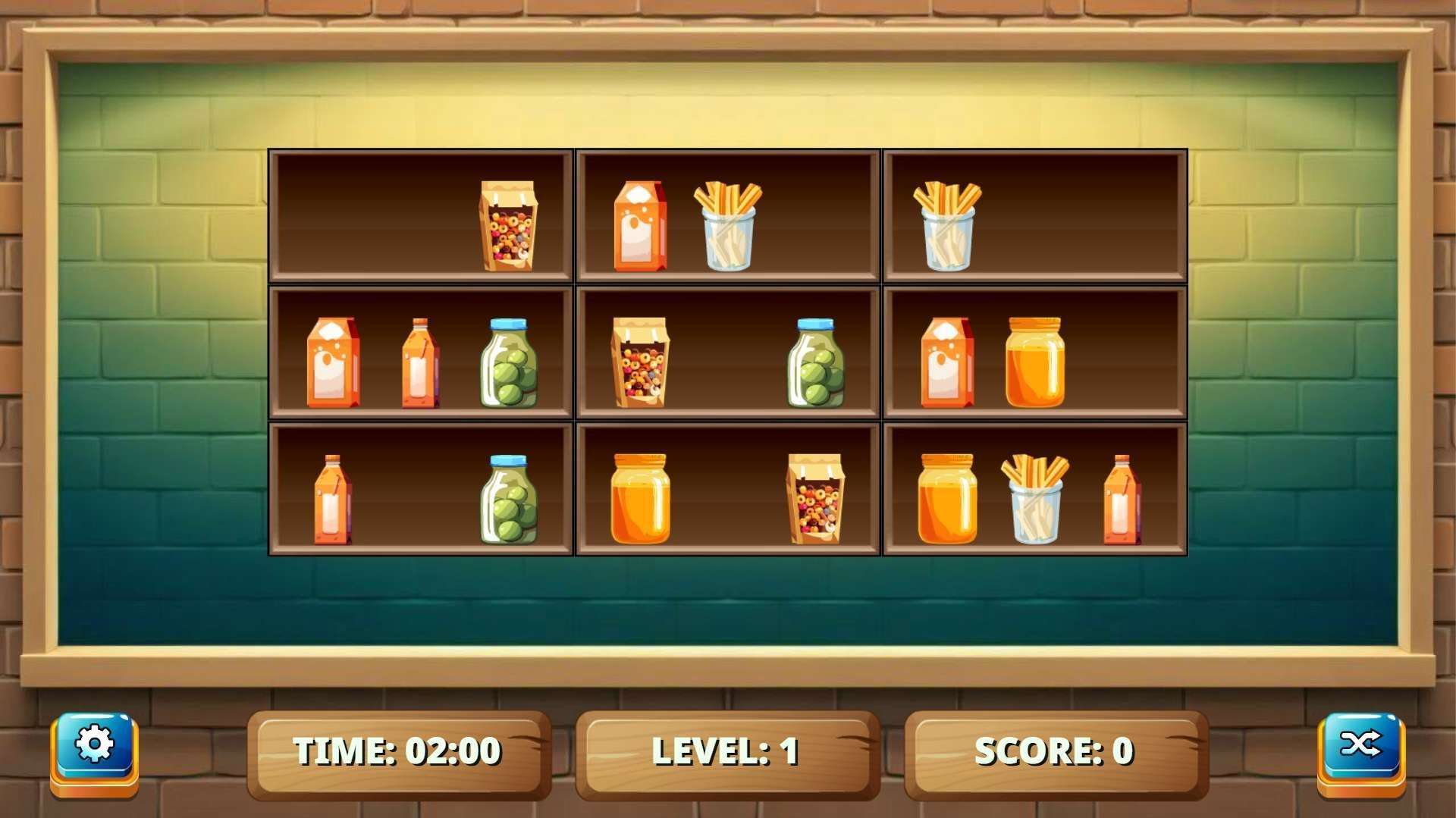
Core Principle: "Planning > Blind Dragging". Every drag should pave the way for subsequent matches. Proficient use of the above skills allows you to quickly clear levels to gain experience in the early stage and calmly cope with the dual pressures of time and layout in high-difficulty levels.