

















Game Introduction
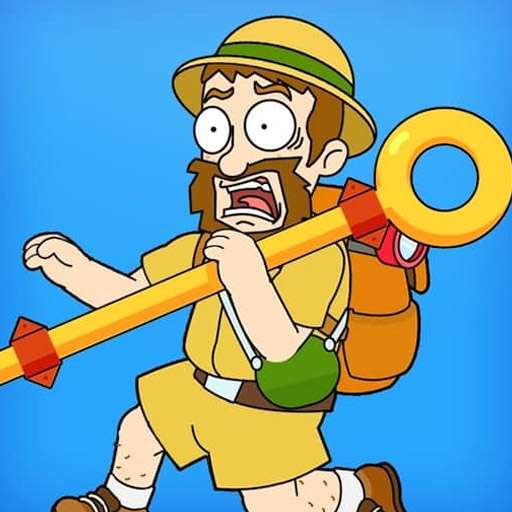
Save The Uncle is a free online adventure game tailored for boys. Your mission is to rescue the uncle trapped in danger, with giant spiders and deadly traps lying in wait at every turn. Every pin holds the key to his survival — pull them in the right order to clear the path to safety. The gameplay is packed with thrills and excitement, as each level’s unique puzzles challenge and sharpen your critical thinking. Flex your brain, unwind, and dive into the ultimate pin-pulling rescue adventure!
Game Features
1. Strategic Pin-Pulling Puzzle Gameplay
Every pin is crucial to the rescue. Accurately judge the pulling order to avoid traps and giant spider threats — a single mistake could foil the mission, testing logical reasoning and on-the-spot decision-making skills.
2. Immersive Thrilling Adventure Atmosphere
Authentically recreates dangerous scenes. Giant spider ambushes and hidden trap activations create an intense rescue vibe, letting players experience the joy of adventure firsthand.
3. Dual Experience of Brain Training and Entertainment
Level puzzles balance fun and challenge. Enhance observation skills and mental agility while gaining a strong sense of accomplishment from successful rescues, achieving a win-win of stress relief and brain training.
4. Progressive Level Design
Difficulty increases gradually from basic to complex. Beginners can get started quickly, while veteran players can enjoy brain-teasing challenges, suitable for players of different skill levels.
5. No-Threshold Anytime Gameplay
Start the rescue adventure without complicated preparations. Enjoy the fun of clearing levels even in fragmented time, easily fitting into various scenario experiences.
Gameplay and Controls
1. Select Pins: Tap or long-press the target pin to prepare for pulling.
2. Determine the Order: Prioritize pulling pins that avoid giant spiders and traps to prevent danger.
3. Complete the Rescue: Ensure the uncle safely escapes the dangerous area to clear the level.
Game Guide
The core of "Save The Uncle" lies in "prioritizing anticipation and winning through sequence". The seemingly simple pin-pulling operation actually hides a tight logical chain. Mastering the following skills will enable you to easily tackle all levels from basic to advanced and rescue the uncle efficiently.

Key to Beginner's Entry: Observe first, act later, and lock onto risk sources. Don't rush to pull pins at the start—spend 3 seconds scanning the entire scene: mark the positions of giant spiders, the triggering mechanisms of traps (such as spikes and falling rocks), and the uncle's escape route. The core principle is "control dangers first, then open the path". For example, when a spider blocks the escape exit, first find the "restraining pins" that trap the spider—usually the fixed pins near both sides of the spider; after pulling them out, the spider will be lured to a harmless area. If a trap is linked with a path pin, pull the "trap-locking pin" first to avoid triggering a fatal mechanism when pulling the path pin. Initial levels are low-difficulty, so you can familiarize yourself with the difference between "dangerous pins" and "safe pins" through trial and error to accumulate judgment experience.
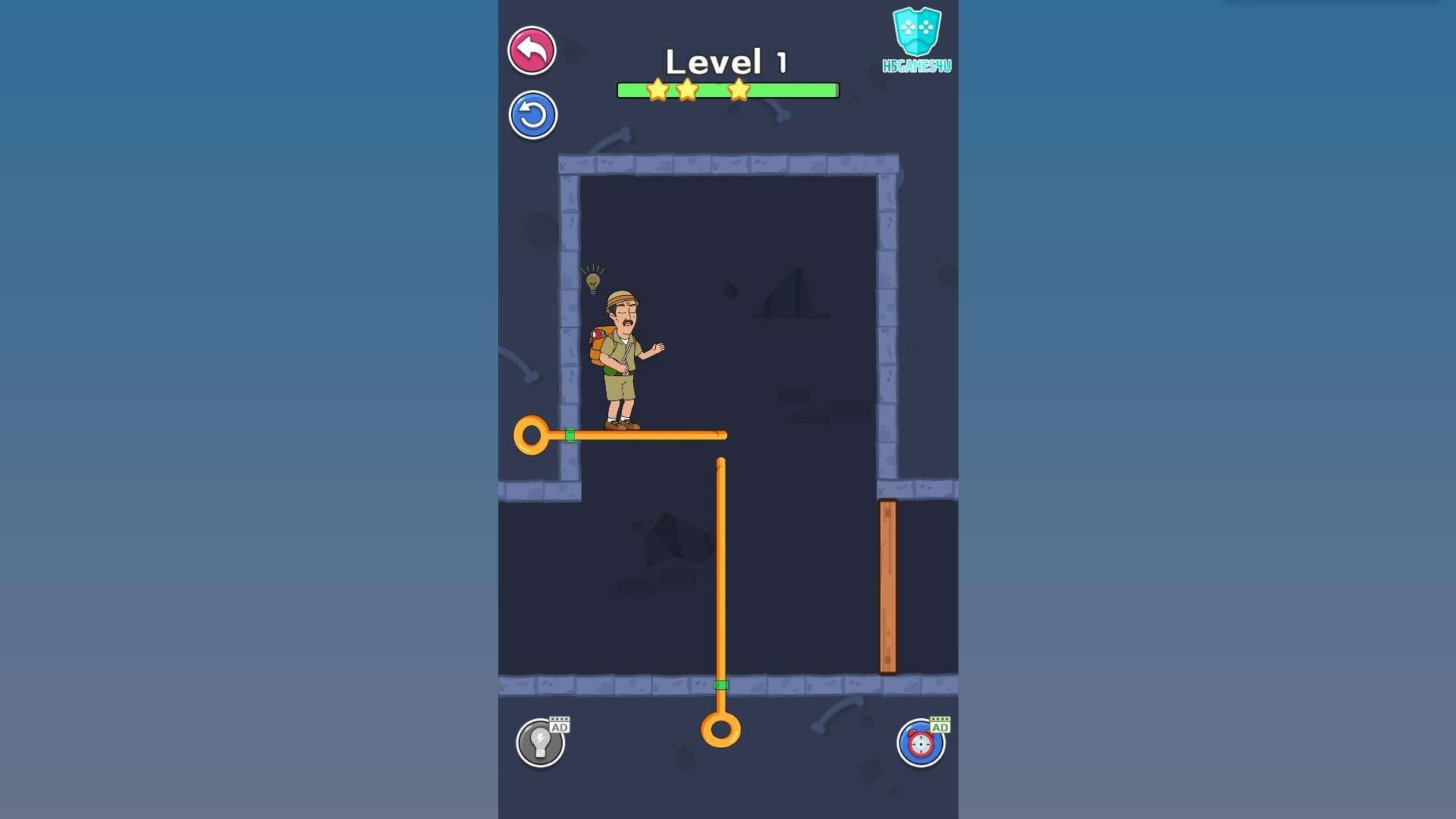
Advanced Skills: Make good use of links to resolve complex scenarios. Mid-levels will feature "multiple overlapping risks" such as the "spider + double traps" combination, where you need to sort out the linkage relationships. A typical scenario: the uncle is trapped on a high place, with spikes below, a spider on the right, and an exit on the left. The correct steps are: first pull the "baffle pin" at the top left to make the stone slide down and press the spike trap; then pull the pin restraining the spider on the right to guide it away from the exit; finally pull the path pin below the uncle to complete the escape. In addition, some pins have "sequential dependency"—for example, you need to pull Pin A first to move an obstacle before you can reach Pin B. Such hidden linkages need to be anticipated by observing changes in the obstacle's position.
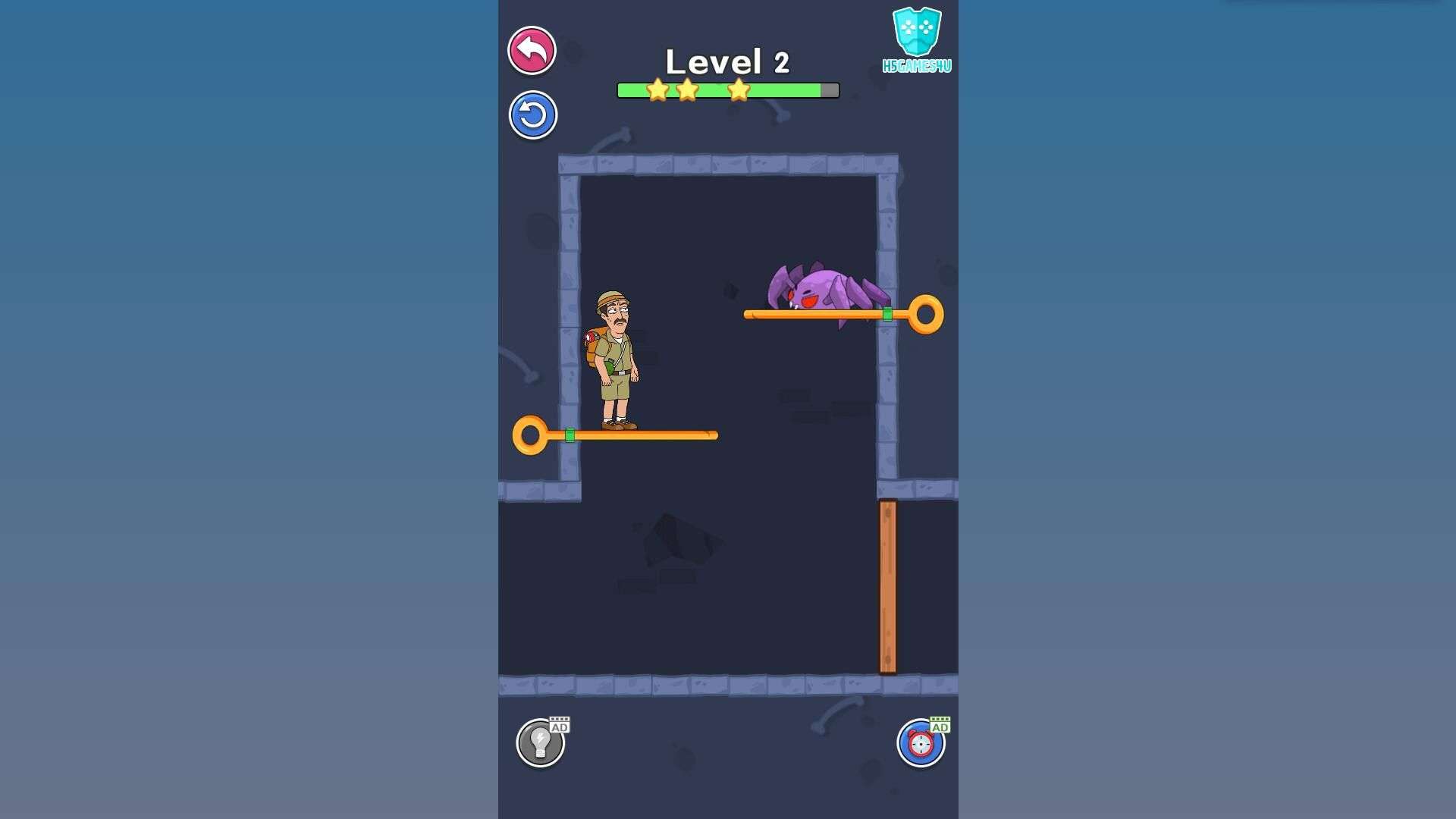
Advanced Strategy: Reverse deduction to reduce trial-and-error costs. High-level levels have extremely low error tolerance—one mistake leads to failure. You need to use the "reverse method" to plan the path: deduce backward from the uncle's escape destination to the starting point and mark the key pins that must be pulled. When facing a "dilemma", prioritize keeping "buffer pins": if you're unsure whether a pin is safe, pull other irrelevant pins first and make a decision after observing changes in the scene. At the same time, maintain a steady rhythm. When encountering sudden situations like spider ambushes, don't click in a panic—prioritize pulling the nearest restraining pin. If danger is already triggered, quickly judge whether there are "remedial pins" (such as backup path pins in some levels).
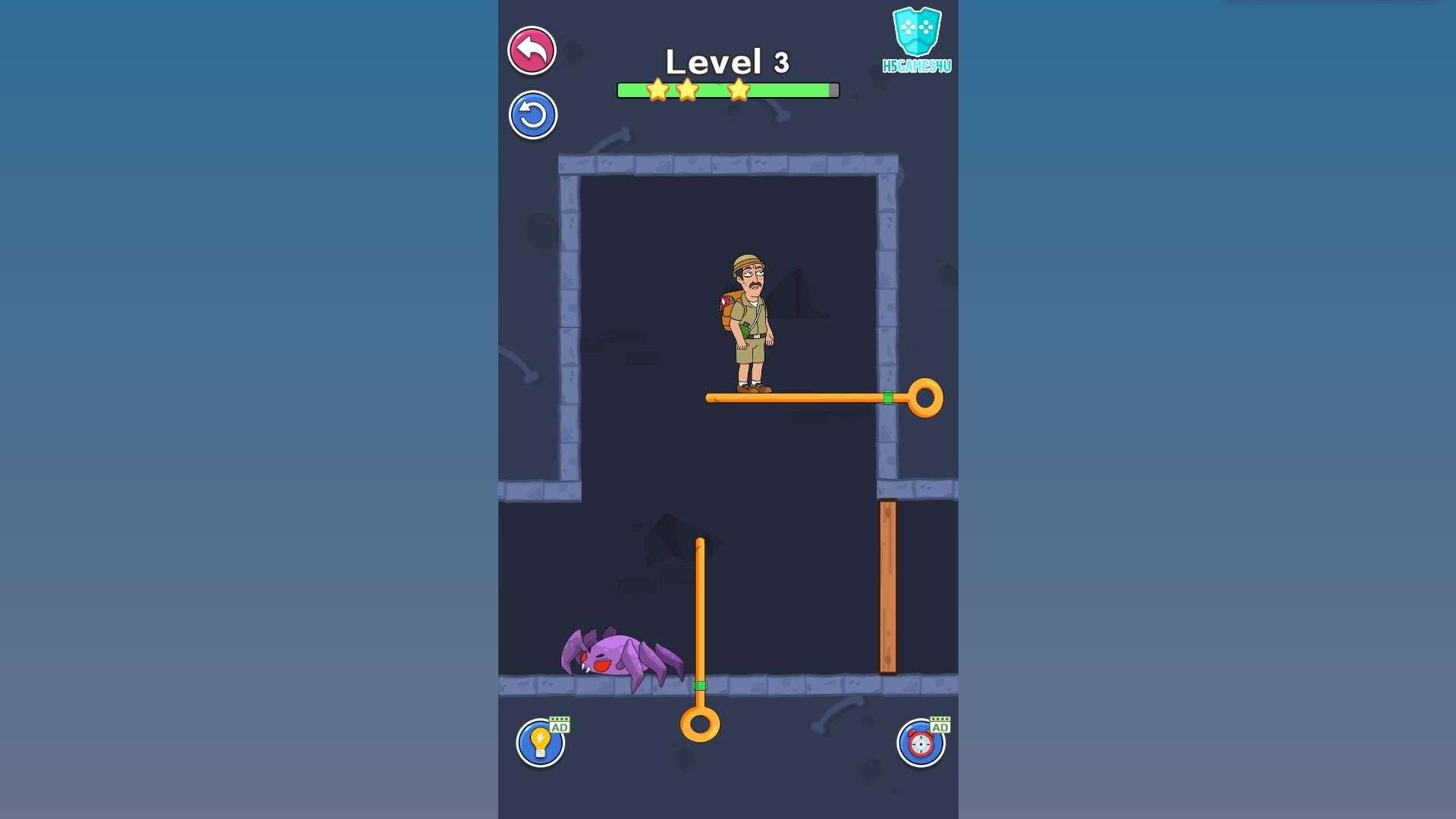
Core Summary for Clearance: Observe → Anticipate → Prioritize → Execute. No matter how the level changes, always focus on "the uncle's safety"—deal with dynamic threats (spiders) first, then resolve static traps, and finally open the path. Proficiency in reverse deduction and linkage thinking will greatly improve clearance efficiency, allowing you to easily succeed in brain-teasing challenges.