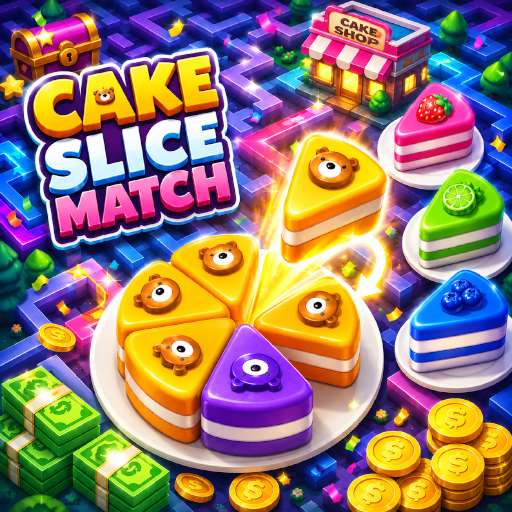

















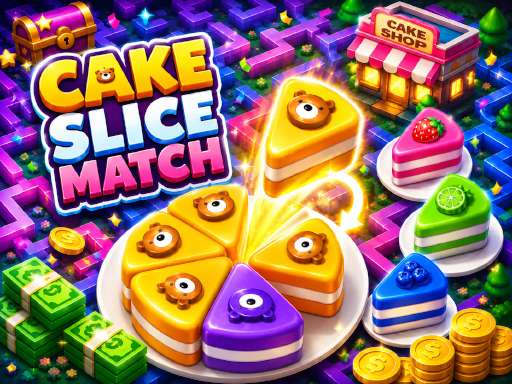
What Cake Slice Match Actually Asks of You
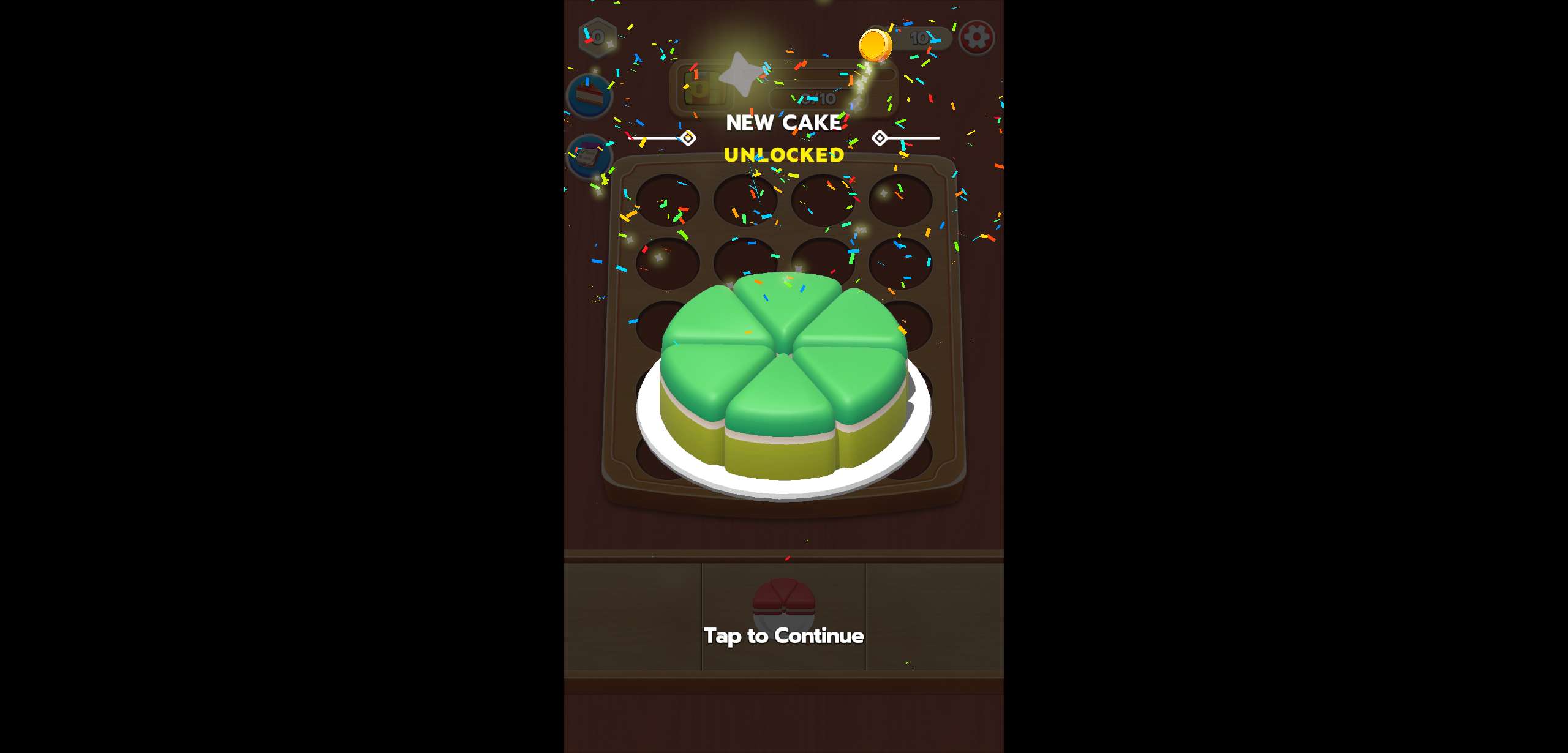
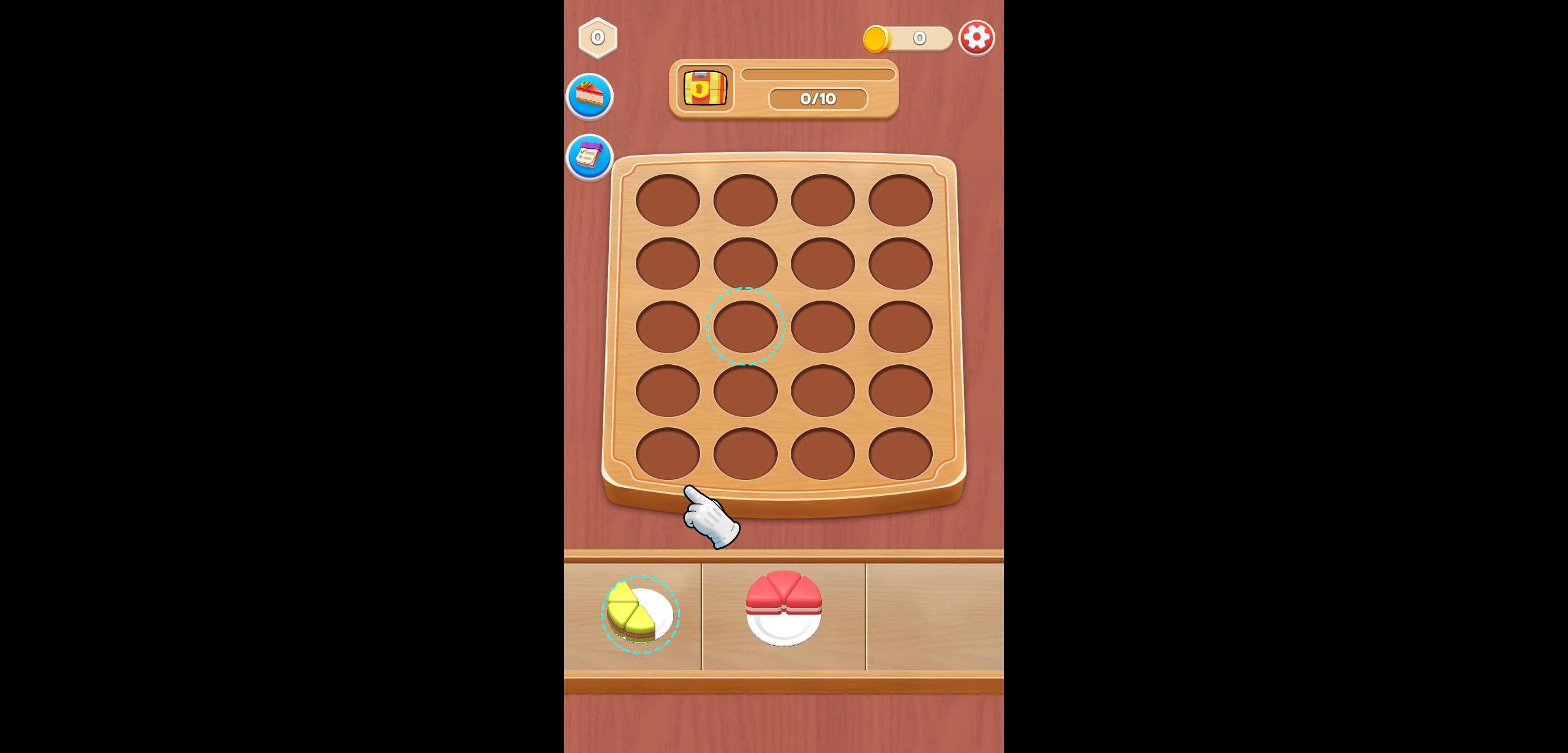
Cake Slice Match looks like a simple color-matching game at first glance, and honestly, the core loop is simple. You drag colorful cake slices around a grid, and when two slices of the same color touch, they merge onto the same plate. Keep adding matching slices to that plate, and eventually you complete a full cake. Completed cakes turn into coins, and coins unlock new boards and layouts.
But here is the thing: the game is less about matching and more about planning. Every board has limited space. You cannot just slap slices wherever they land. The layout of each level forces you to think two or three moves ahead, because once a plate is full, it disappears, and the space it occupied opens up. That space is often exactly what you need to line up another merge.
If you have played games like Merge Mansion or even 2048, the general idea will feel familiar, but Cake Slice Match has its own rhythm. It is faster, more colorful, and the pressure comes from space management rather than a timer.
The Core Rules, Explained Without Fluff
You start each level with a set of cake slices scattered on a board. Your goal is to combine slices of the same color until they form a full cake. A cake is complete when a plate reaches its maximum slice count, which is usually around four or five slices, depending on the level.
Merging works by adjacency. You place a slice next to a matching slice on the same plate. You cannot merge diagonally, and you cannot stack slices on top of each other. Each plate holds one stack of slices, and you grow that stack by placing matching neighbors next to it.
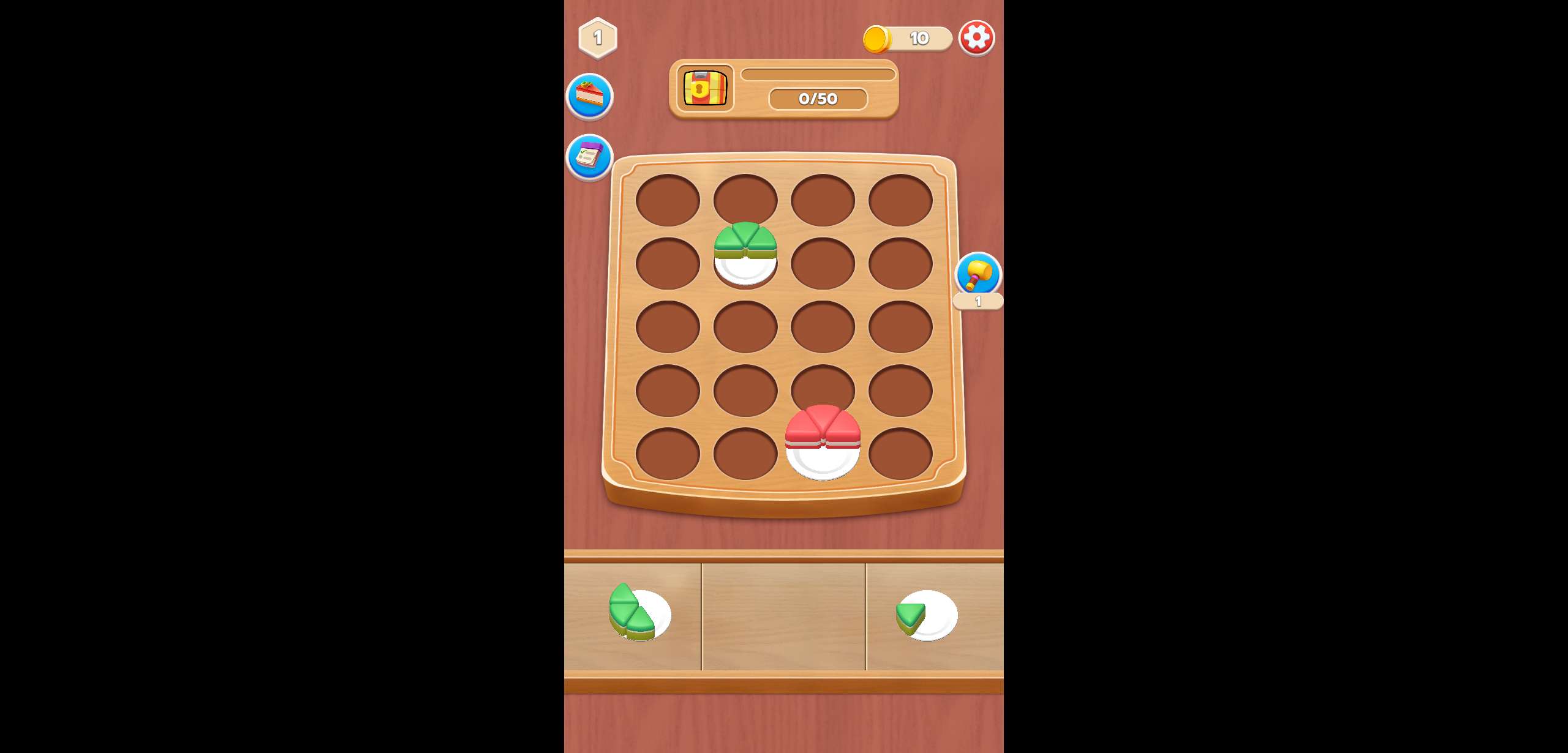
Coins are your reward for completing cakes. The bigger the cake, the more coins you get. Coins are also the only currency that matters, since they unlock new levels. You do not need to worry about lives or energy, which is nice for a casual browser game. You can replay a level as many times as you want, though replaying a completed board does not always give you the same coin payout.
Practical Tips for Getting More Coins Per Board
Here is where the game gets more interesting than it looks. If you just merge randomly, you will finish boards, but you will finish them slowly and with fewer coins. The trick is to chain merges.
When you complete a cake, the space opens up, and any slice that was adjacent to that plate can potentially be moved into that space. So, try to arrange slices so that completing one cake opens a spot that lets you immediately place a slice to start or finish another cake. This is called chaining, and it is the difference between earning 50 coins per board and earning 150.
Another practical tip: do not rush to complete a cake just because you can. If a plate is one slice away from being complete, it is tempting to finish it and collect the coins. But sometimes leaving that plate incomplete is smarter, because it acts as a holding spot for a slice that you cannot place anywhere else yet. Use incomplete plates as temporary storage. This is especially useful in the mid-game levels where the grids get cramped.
Finally, pay attention to the order in which slices appear. The game feeds you new slices based on how many you have placed, not randomly. If you keep track of what colors are coming, you can set up your board to receive them. That sounds harder than it is, but after a few rounds you will start to notice the pattern.
Common Mistakes New Players Make
The most common mistake is treating every slice like it is urgent. It is not. You have no timer, so the only thing you are racing against is your own patience. Slices do not expire, and the board does not reset if you take a while.
The second mistake is ignoring the edges. New players tend to build cakes in the middle of the board, which looks nice but blocks your own movement. Edges are your friends. Building along the edges keeps the center open, and the center is where you need space to maneuver slices around.
The third mistake is over-merging. Yes, that is a thing. If you keep adding slices to a plate past the point where it is full, the game will not let you, but you can also create a situation where you have too many slices of the same color and nowhere to put them. Spread your merges out. Do not commit to one color early just because it is easy.
What Actually Makes This Game Worth Playing
Let me be honest with you. Cake Slice Match is not a deep puzzle experience. It is not going to challenge your brain the way a true logic puzzle will. What it does well is offer a satisfying, low-pressure puzzle loop that is easy to dip into for five minutes and just as easy to keep playing for an hour.
The visual feedback is the real star. Seeing slices stack onto a plate and watching the cake grow is genuinely pleasing, and the coin sound when a cake completes is the kind of small reward that keeps you going. The game does not pretend to be more than it is, and that honesty works in its favor.
It is also worth noting that the difficulty curve is gentle. The first ten or so levels are almost too easy, but around level fifteen the layouts start to get clever. You will find yourself staring at a board for a minute before making your first move, and that is when the game clicks.
If you are the kind of player who likes Zen puzzles or casual merge games, this will be right up your alley. If you need hardcore strategy, you will probably bounce off it. That is fine. Not every game needs to be a brain burner.
Final Thoughts Before You Start
There is not much more to say. Cake Slice Match is a clean, colorful, and surprisingly sticky little puzzle game. The best advice I can give you is to play a few boards without worrying about coins, just to get a feel for how slices move and merge. Once you understand the flow, start thinking about chains and coin efficiency.
And if you get stuck on a board, just replay it. The layouts are not random, so you can learn the pattern and approach it with a better plan. That is the kind of puzzle game this is. It rewards attention, not speed.