
















What Number Merge Master Actually Is
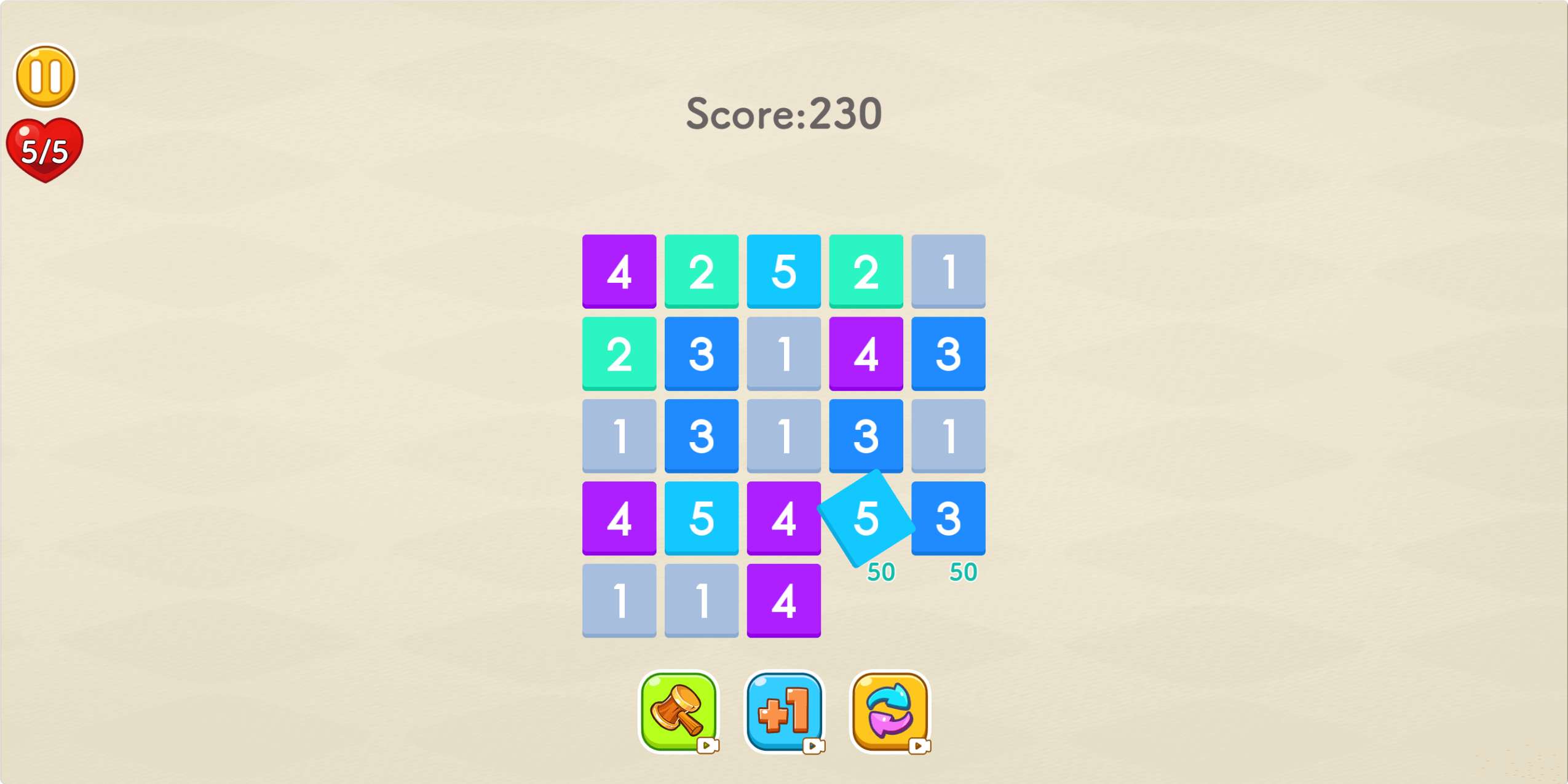
Number Merge Master is a quick puzzle game built around one simple loop: you drag numbered tiles around the board, and when two matching numbers touch, they combine into a bigger number. That sounds easy, and it is—until the health bar starts dropping and the whole board starts feeling like it’s working against you.
There’s no turn timer, but there’s still pressure. Every move you make without a merge costs health. So the real game isn’t about reaching some huge number. It’s about keeping your moves efficient enough to survive long enough to reach that huge number.
The Drag-and-Swipe Basics
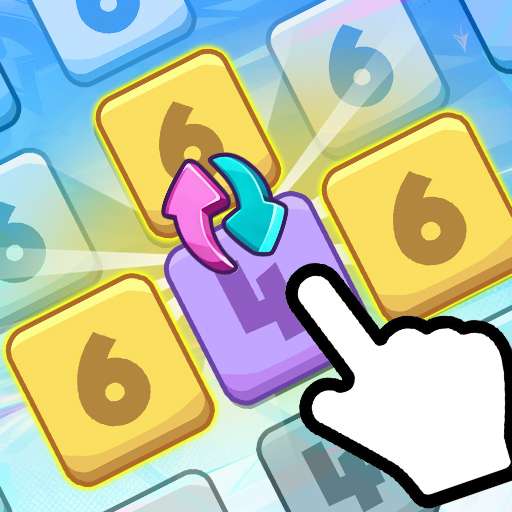
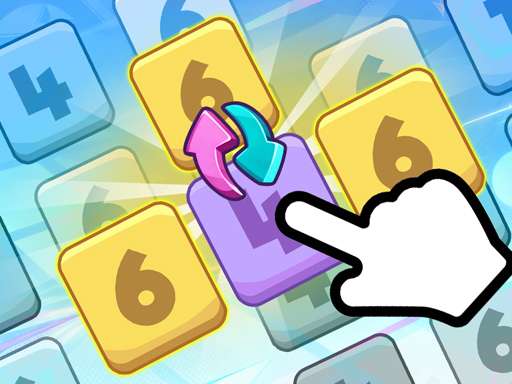
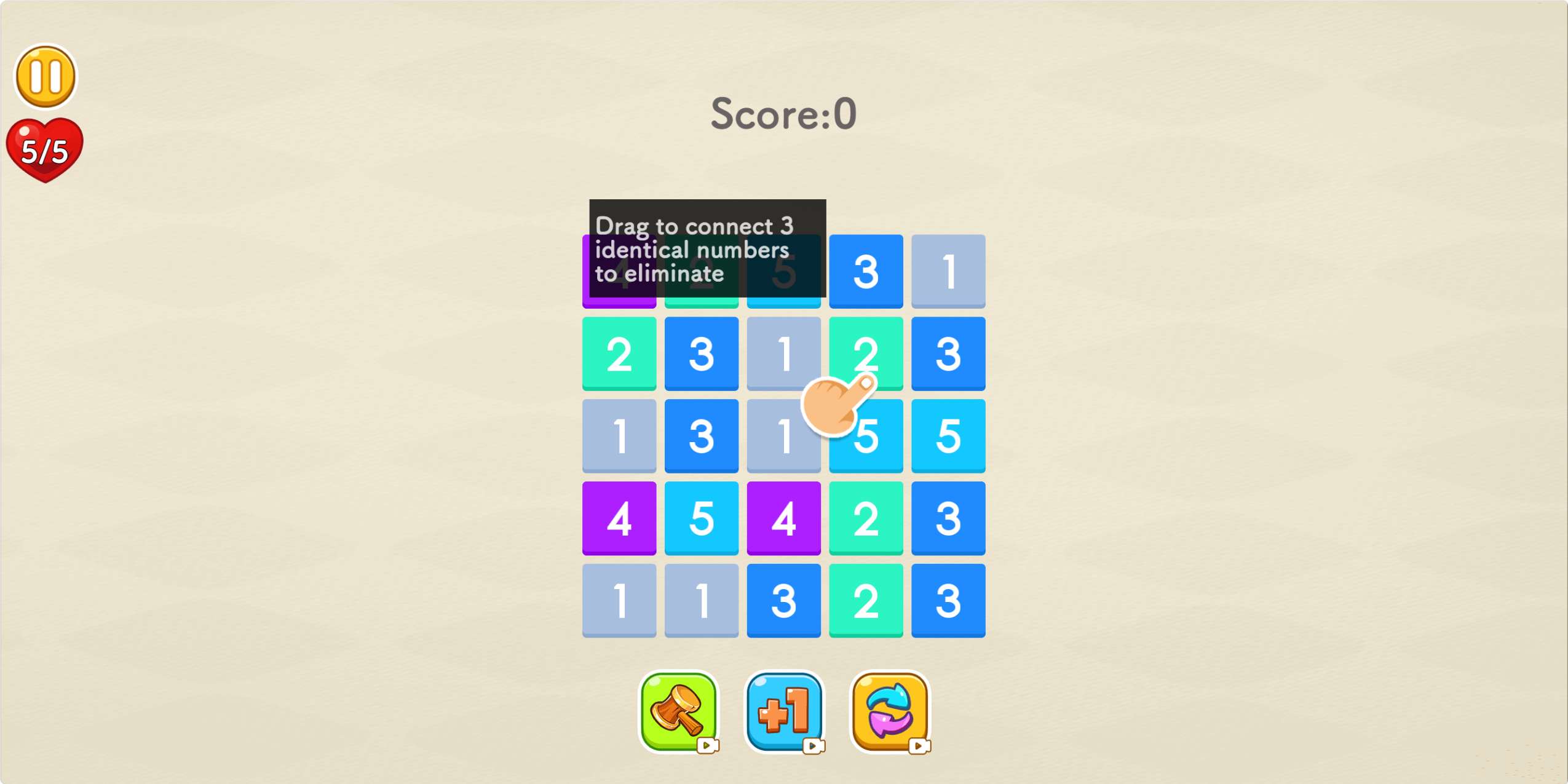
You control everything by swiping or dragging. Tap a tile, drag it onto a matching neighbor, and they’ll combine. That’s the whole control scheme, and honestly, it works well on both desktop and mobile. The game doesn’t punish you for sloppy inputs, which is good, because when the board gets crowded you’ll be making quick, messy swipes just to keep the health bar from draining.
One thing worth noting: you can drag a tile more than one space as long as the path is clear. That’s a bigger deal than it sounds. It means you can pull a tile from across the board toward a matching partner, as long as nothing blocks the route. Use that to your advantage when you spot a match trapped behind bigger numbers.
Why the Health Bar Changes Everything
Most merge games let you play at your own pace. Number Merge Master doesn’t. The health bar is constantly ticking down with every move that doesn’t produce a merge. That changes your priorities completely.
Early on, it’s tempting to set up big combos and plan three or four moves ahead. But if those setup moves aren’t merging anything, you’re bleeding health for nothing. The smarter play is to take whatever merge is available right now, even if it’s a small one, and keep the health bar topped up. Big numbers are great, but they don’t matter if you’re dead.
There’s a rhythm to it after a few rounds. You’ll start recognizing which moves are worth the health cost and which are just wasted swipes. That’s where the game actually gets interesting.
Practical Tips for New Players
If you’re just starting out, here are a few things that helped me stop dying in the first minute:
- Merge small, merge often. Don’t hold out for a perfect chain. A quick 2+2 keeps you alive and builds score steadily.
- Keep the board open. Don’t push all your big numbers into one corner. You need space to drag tiles around, and a cramped board means fewer merge opportunities.
- Watch for pairs near the edges. Tiles on the edges are easier to reach and match. They also don’t block the middle of the board, which is your main workspace.
- Don’t chase the biggest number early. Reaching a high tile feels great, but it takes many moves to get there. If you’re not merging on most of those moves, you’ll run out of health before you finish the climb.
The last tip is the one most people ignore. It’s easy to fixate on getting a 128 or a 256 and forget that every wasted move is a small cut to your health. The players who survive longest aren’t the ones making the boldest plays. They’re the ones making the most efficient ones.
Common Mistakes That End Runs Early
The biggest mistake I see in games like this is filling the board with mismatched numbers. When you have a 4, a 8, and a 16 all sitting next to each other, you’re stuck. You can’t merge any of them, and every move you make to rearrange them costs health. The solution is prevention: try to keep the board sorted by size, with smaller numbers on one side and bigger ones on the other. That way, when new tiles spawn, they’re more likely to land near a matching partner.
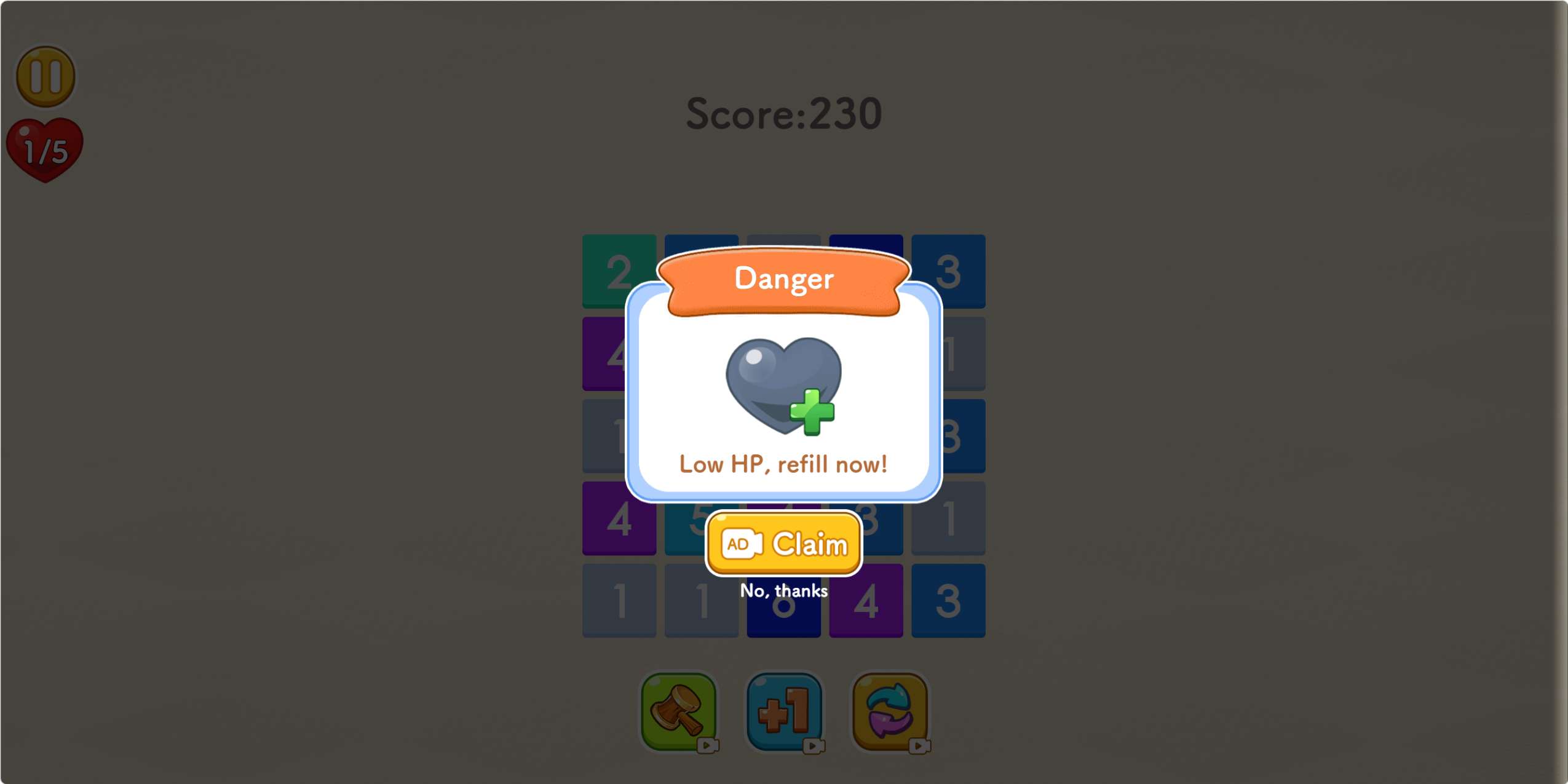
Another classic error is ignoring the edges. New tiles don’t spawn only in the middle. If you leave a lone 2 sitting in a corner, it’s going to stay there until you go get it. That’s not a problem by itself, but if it’s stuck behind a 64, it might as well not exist. Clear those edge tiles early so they don’t become dead weight later.
Who Should Play This One
Number Merge Master is a good fit if you like puzzle games that force you to think a little faster than usual. It’s not a deep strategy game, and it won’t hold your attention for hours the way a full campaign might. But it’s perfect for short sessions where you want to test your quick decision-making without committing to something heavy.
The health mechanic gives it a sharp edge that plain merge puzzles lack. You’ll lose runs because of your own impatience, and that’s fine. It’s part of the appeal. If you enjoy games where every move matters and you’re willing to accept the occasional frustrating death, this one’s worth a few rounds.