

















Not Your Average Match-Three
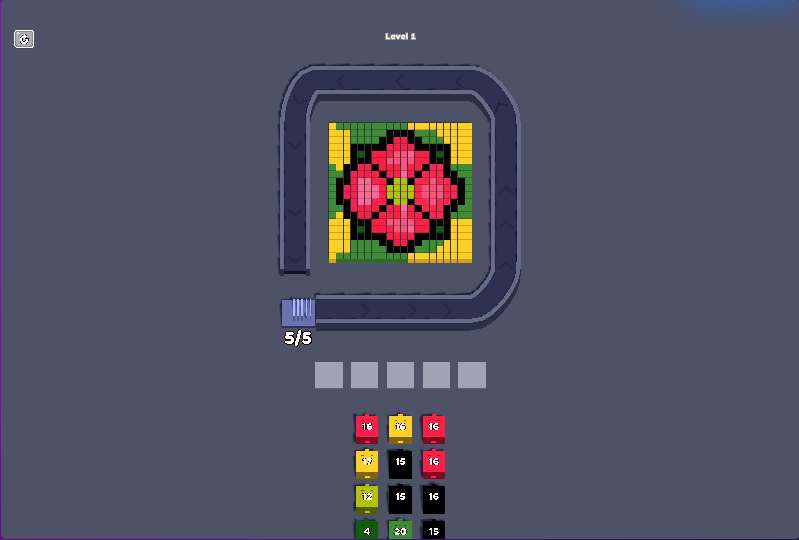
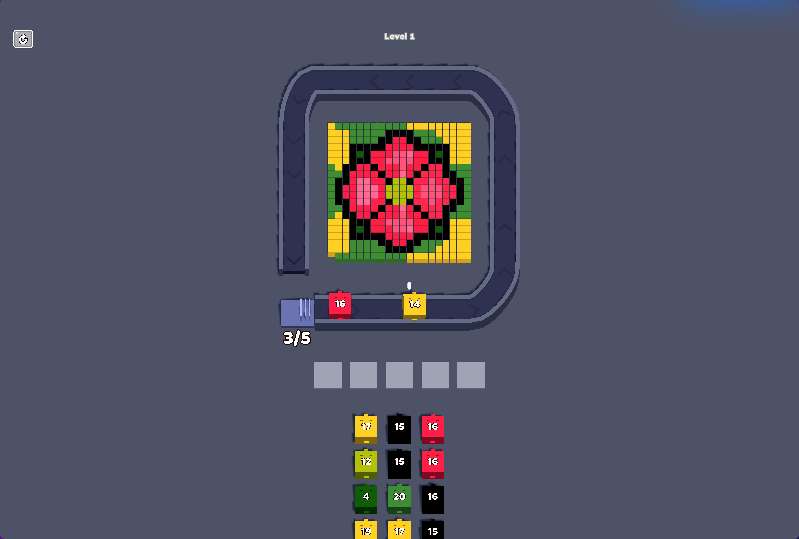
Color Pixel Flow takes the familiar idea of matching colors and twists it into something that feels fresh and surprisingly strategic. Instead of just swapping tiles, you're managing a small army of pigs on a conveyor belt. Each pig has a number above its head—that's its ammo, the number of hits it can deliver before heading offstage. If a pig still has ammo after its turn, it jumps into one of five waiting slots, ready to be redeployed. The whole thing runs on a loop: tap a pig, place it on the belt, watch it launch a ball at a matching cube, and repeat.
It sounds simple, and it is—at first. But the conveyor belt has limited space, and the cubes keep coming. Send too many pigs at once, and the belt gets clogged. You'll have to wait for them to clear before you can act again. That waiting period is where the tension builds.
Timing Over Twitch
This isn't a game about quick reflexes. It's about planning ahead. Each pig's ammo count matters. A pig with a high number can stay in the fight longer, but if you send it out too early, it might take up conveyor space when you need to deploy a different color. The waiting slots help, but they only hold five pigs. Once those are full, you have to cycle through the belt to free up space.
What I found interesting is how the game punishes greedy play. You might want to stack the belt with pigs of the color that's most common on screen, but doing that often backfires. The belt moves at a steady pace, and if you overload it, you lose control. You end up watching pigs pass by without being able to act. That forced pause is actually the game's smartest mechanic—it makes you slow down and think about the order of deployment.
Repetition That Works (Mostly)
Color Pixel Flow is undeniably repetitive. The core action never changes: tap, launch, clear, repeat. But the repetition doesn't feel empty because the puzzle layouts shift enough to keep you on your toes. Some levels introduce cubes that require multiple hits, others add obstacles that block your shots. The difficulty ramps up gradually, and each new layer forces you to adjust your strategy.
That said, I can see some players getting bored after a couple dozen levels. The visual feedback is minimal—just cubes breaking apart and pigs hopping off. There's no flashy animation or score multiplier to hype you up. The game trusts that the puzzle itself is enough to hold your attention. For me, it was. But if you need constant dopamine hits and particle effects, this might feel a little flat.
Who Should Play This?
If you like games where you can pause and think, where each move feels deliberate, and where a single bad decision can clog your entire operation, Color Pixel Flow is worth your time. It's the kind of game you play in short bursts—waiting for coffee, riding the bus—but it also has enough depth to keep you coming back for "just one more level." It won't blow your mind, but it doesn't need to. It's solid, it's smart, and it respects your ability to plan.
For a browser puzzle game, that's a pretty good deal.
Final Thoughts
Color Pixel Flow works best as a quick, low-pressure browser game. It may not hold everyone for long sessions, but it does a solid job at delivering a simple and accessible play experience.