
















The Basic Flow of AquaSort 2
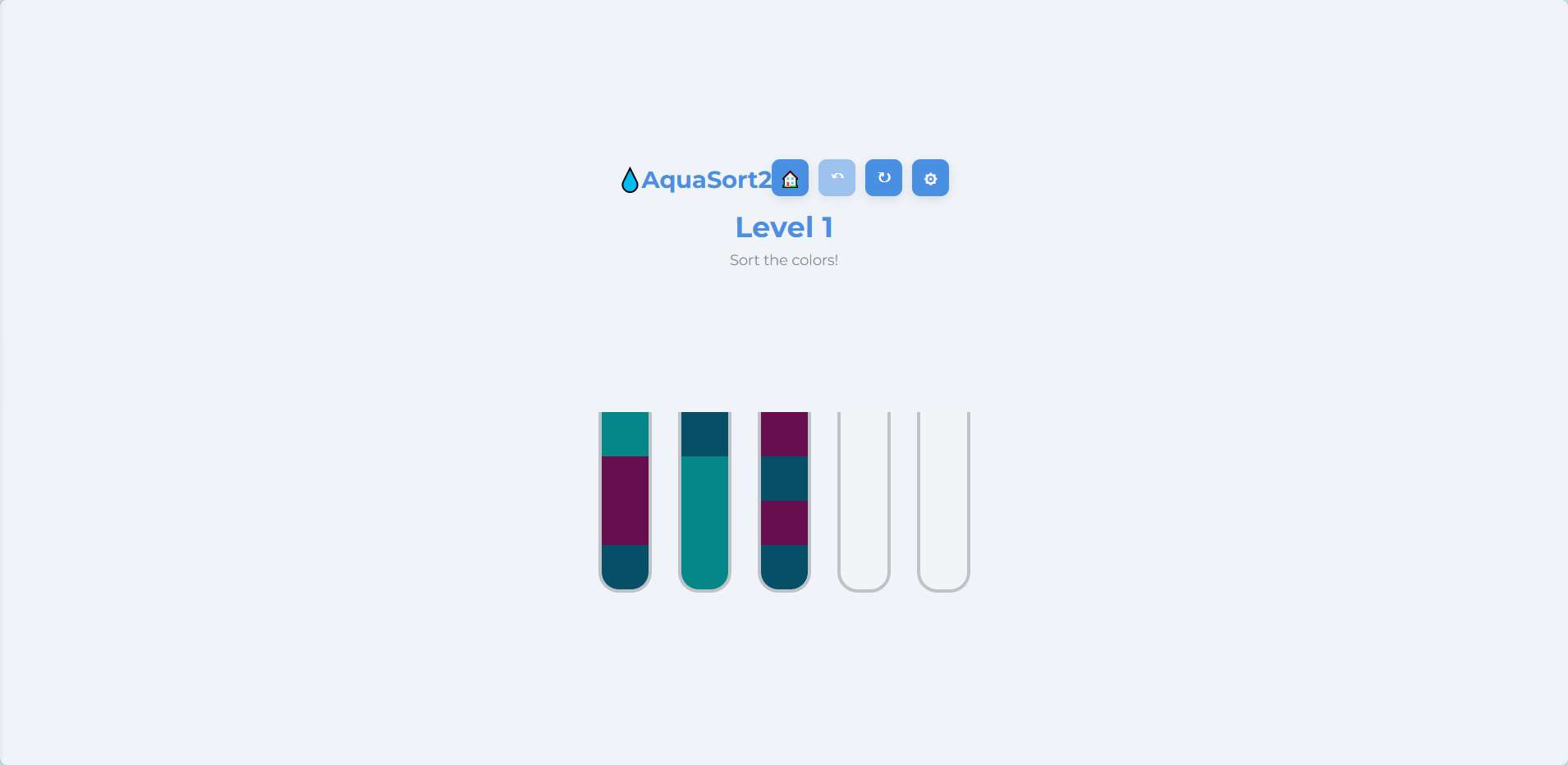
At its core, AquaSort 2 presents you with several glass bottles filled with layers of colored liquid. Your goal is to sort them so that each bottle contains only one color. You can only pour a liquid into another bottle if there's enough space and if the top colors match, or if the destination is empty. It starts gently, with just a few colors and bottles, but the complexity ramps up steadily.
The controls are straightforward: tap a bottle to select it as your source, then tap another bottle to pour. If you change your mind, tap the selected bottle again to deselect. Two crucial buttons sit nearby: Undo reverses your last move, and Reset clears the entire puzzle back to its starting state.
Common Pitfalls and How to Avoid Them
New players often get stuck by focusing only on the immediate top colors. A better strategy is to look a few moves ahead. Before you pour, ask yourself: will this move create a dead end? A classic mistake is using your only empty bottle to temporarily hold a color, then accidentally blocking it with another pour. Try to keep at least one bottle's worth of space free for maneuvering.
Another frequent error is overusing the Undo button reactively instead of planning. It's there to help, but if you find yourself undoing the same move repeatedly, it's better to hit Reset and approach the level with a fresh plan. The game doesn't penalize you for resets, so use them freely.
Choosing Your Difficulty: Easy, Normal, or Hard
AquaSort 2 offers three distinct difficulty settings that change more than just the number of colors. Easy mode gives you extra empty bottles, making puzzles more forgiving and the experience genuinely relaxing. Normal provides a balanced challenge with the intended number of bottles. Hard mode removes those safety nets, often giving you fewer empty bottles than the puzzle seems to require, forcing very precise sequencing.
If you're new to sorting puzzles, starting on Easy is perfectly reasonable—it teaches the mechanics without frustration. The jump to Hard is significant; it's for players who find the normal puzzles starting to feel predictable and want their logic thoroughly tested.
What Makes It Stick (And What Might Not)
From an editorial perspective, AquaSort 2's strength is its pure, uncluttered puzzle loop. There's no story, no energy timer, no intrusive ads between moves—just you and the logic problem. This makes it excellent for short sessions or as a mental cooldown. The hundreds of levels provide clear, incremental progression.
The potential downside is the inherent repetition of the mechanic. If you don't enjoy the core satisfaction of untangling a color-based traffic jam, the game won't convert you. It's a specialized taste. For the right player, however, that repetition becomes a calming ritual. The visual feedback—the liquid pouring smoothly—is oddly satisfying and does a lot of work to keep the simple act feeling engaging.
Practical Tips for Tougher Levels
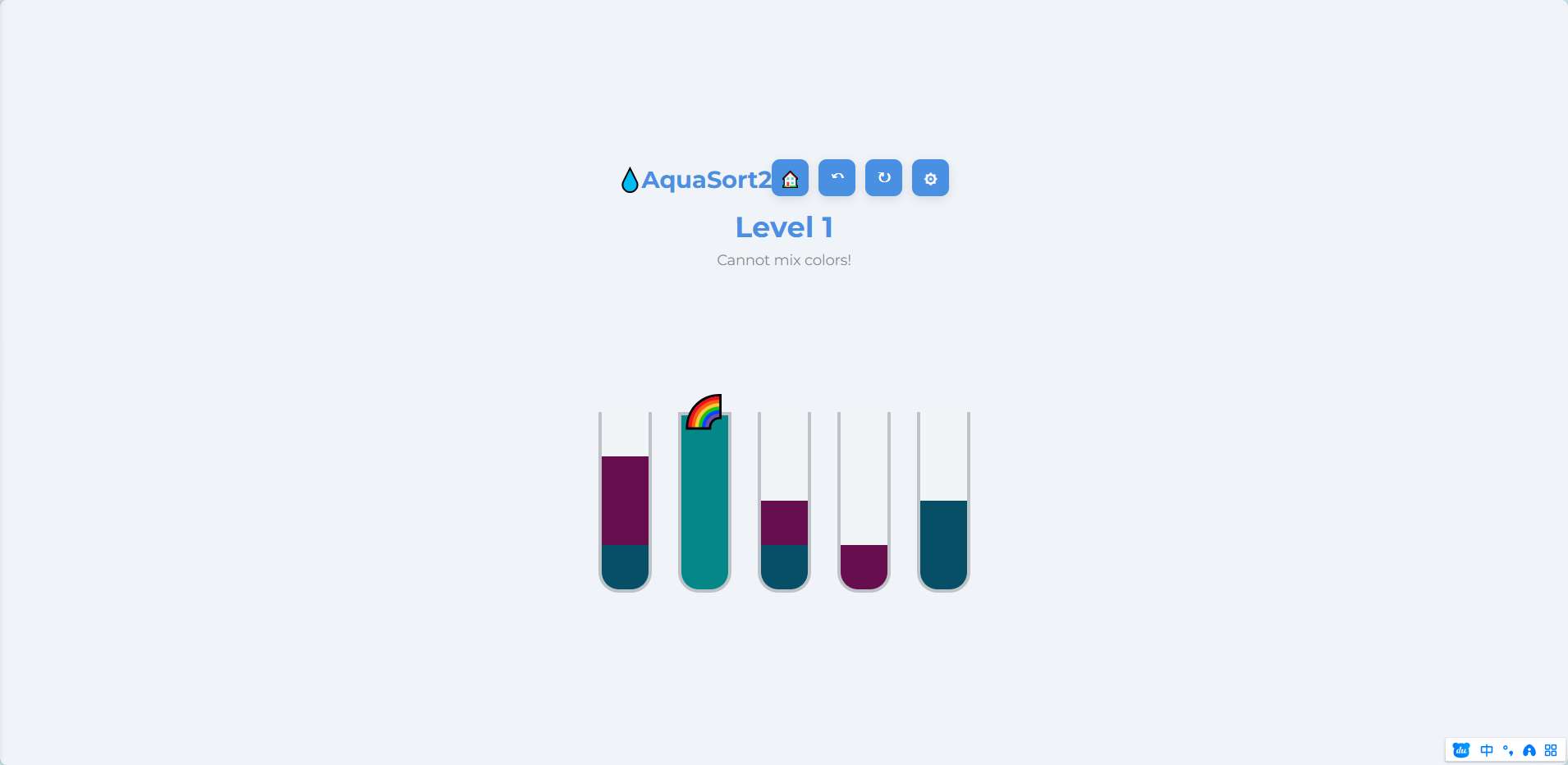
When levels get crowded, work backwards from your goal. Identify which color has the fewest total layers and try to free it up first. Create 'temporary' bottles deliberately: dedicate a bottle to holding just one or two colors you're actively trying to consolidate, rather than letting mixes accumulate randomly.
Pay attention to bottle capacity. Sometimes the solution involves partially filling a bottle, not completely emptying or filling it. Don't rush your taps; the game is turn-based, so take a moment to visualize the chain of moves. If you're truly stuck on a Hard puzzle, switching to Easy for that level isn't cheating—it's a way to learn the solution pattern you might be missing.