

















How Match Pairs Memory Card Works
At its core, this is a memory matching game: flip two cards at a time to find identical pairs. The basic controls are simple—click or tap to reveal cards. Where it expands is in its structure. Instead of one endless grid, you progress through 19 themed worlds, each with its own visual style and level designs. Levels aren't just about clearing all pairs; many have specific objectives, like finishing within a move limit or under a time constraint, and you can earn up to three stars per level based on your performance.
Adventure Mode and Boss Battles
Adventure Mode is the main progression path, with over 100 levels spread across the themed worlds. Objectives shift from level to level, which helps break up potential monotony. Some levels might restrict you to a certain number of moves, while others introduce obstacles or layouts that make matching trickier.
The boss battles are a notable twist. Here, you're not just matching against the clock—you're facing an AI opponent that also flips cards. If the boss finds a pair before you do, it claims those cards. This turns the game into a competitive memory race, demanding faster recall and a bit of prediction about which cards your opponent might target.

Using Boosts and Collectibles Wisely
You earn gems and boosters through play and daily logins. Three key power-ups can help in tight spots:
- Flash Vision: Briefly reveals all cards. Best saved for when you're stuck on a few remaining pairs.
- Time Freeze: Stops the clock for a short period. Useful in timed levels or boss fights where every second counts.
- Guardian Shield: Protects against a penalty, like an extra move or a boss steal. It's a good safety net for three-star attempts.
It's tempting to use boosts early, but they're finite. Hoarding them for later, more difficult levels or boss fights is a smarter long-term strategy. The game also lets you collect and unlock card skins, which fill out a Sticker Book—a purely cosmetic but satisfying side activity for completionists.
A Practical Tip for Faster Matching
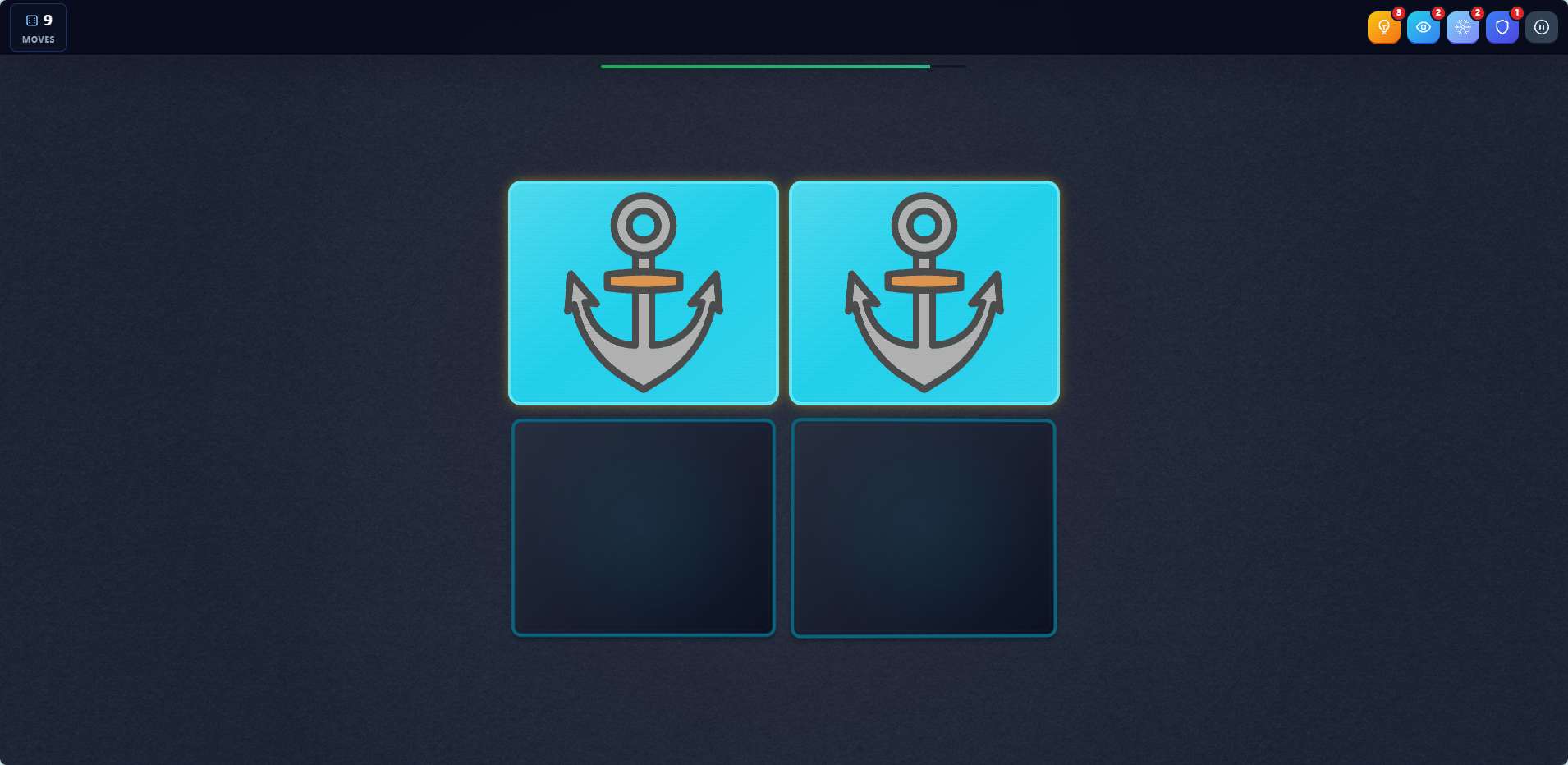
Many players instinctively try to memorize every card position from the start. That's overwhelming. A more effective approach is to focus on pattern recognition and location grouping. When you first flip a card, note its general area (top-left cluster, middle-right, etc.) and its symbol. On your next flip, if you see a symbol you recognize, try to recall the zone of its match rather than the exact tile. This spatial chunking reduces mental load and speeds up decision-making, especially in timed levels.
Where the Game Stands Out—and Where It Doesn't
Match Pairs Memory Card does a solid job of dressing up a simple concept. The themed worlds and boss battles provide enough variety to keep the gameplay from feeling stale too quickly. The three-star system adds a layer of replayability for perfectionists. That said, at its heart, it's still a memory matching game. If you find the core loop repetitive, the new objectives and power-ups might not completely offset that. The game is best suited for players who enjoy incremental progression, light collection mechanics, and a casual brain-teaser with occasional competitive spikes. It's less about raw difficulty and more about consistent engagement through its unlockables and varied challenges.
Getting Started Smoothly
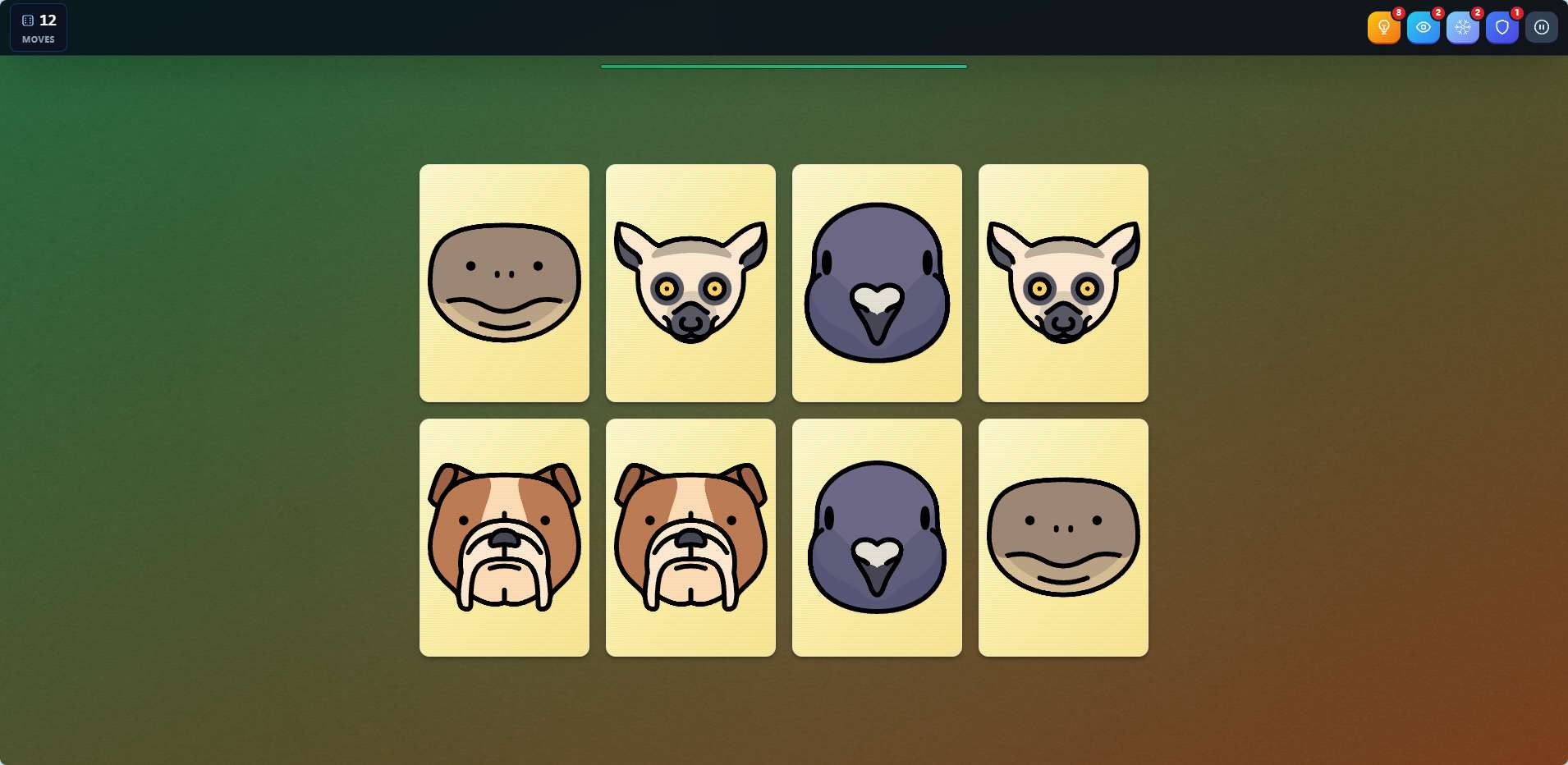
Begin by playing through the early worlds without worrying about stars—just learn the mechanics and objective types. Use the daily login rewards to build a small stockpile of gems and boosters before hitting tougher levels. Don't ignore the card skins; while they don't affect gameplay, unlocking them can provide a nice sense of side progression. And in boss battles, sometimes it's better to let the AI reveal cards for you early on—use its flips to gather information before making your own matches.
One Quick Tip
New players usually do better when they slow down a little and pay attention to repeating patterns instead of reacting too quickly.