
















What Is Survival Legend, Really?
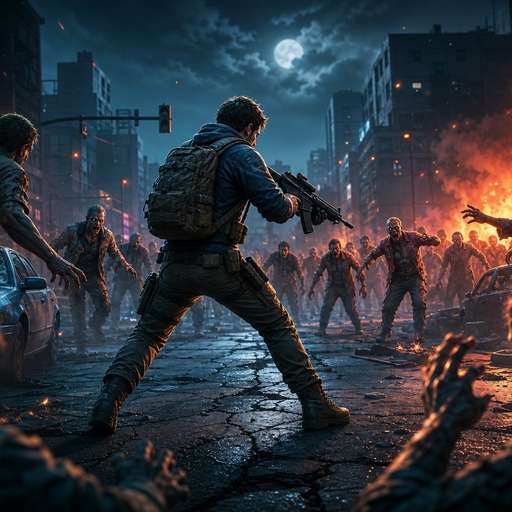
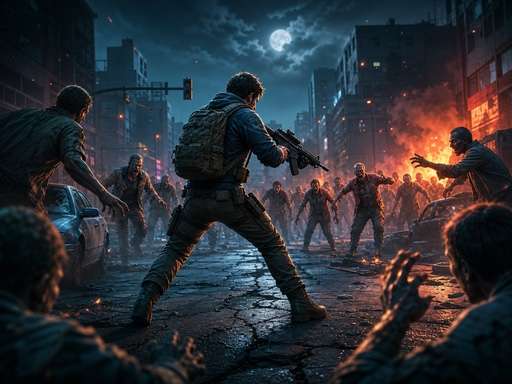
Survival Legend is a top-down .io game where you run around a zombie-infested city, collect coins, and upgrade your gear while endless waves of undead chase you. It’s not trying to reinvent the genre—it’s more about doing the basics well: fast movement, clear feedback, and a constant push to beat your own high score. The controls are simple (tap or click to move), and the action starts immediately. No tutorial, no fluff.
Early Runs: Don’t Get Greedy
The first few minutes of any run are the most dangerous. You start with weak weapons and no upgrades, so a single zombie swarm can end you fast. Your priority should be grabbing coins without overextending. Stick to the edges of the group, pick off stragglers, and always have an escape route in mind. If you see a glowing coin or a weapon pickup, only go for it if you’re sure you can dash out again.
One common mistake new players make is chasing every coin they see. Coins are important, but dying at 30 seconds with 200 coins teaches you nothing. Better to survive a few minutes with 100 coins and actually spend them on upgrades.

Upgrade Priorities: What Actually Helps
When you level up, you get to choose between stat boosts and new abilities. Some upgrades look flashy but don’t do much in practice. Here’s what I’ve found works best:
- Movement speed – This is almost always the best early pick. Being faster lets you dodge better and collect coins more safely.
- Weapon damage – Helps you clear crowds faster, but only after you have enough speed to stay alive.
- Health regeneration – More useful than raw health early on, because you can recover between waves without needing to find a medkit.
- Area damage – Good later when you’re surrounded, but not great at the start when you’re still picking off zombies one by one.
Don’t ignore the revive option either. If you die and have the chance to respawn with some coins, take it. That second life often lets you reach the next upgrade tier.
Movement and Positioning Matter More Than Gear
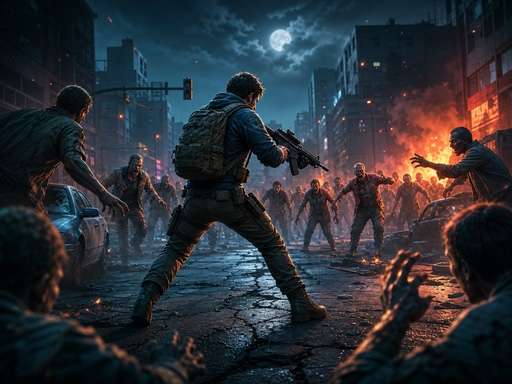
This is the part that separates casual runs from high scores. The city map has obstacles, narrow alleys, and open squares. You want to use the environment to funnel zombies into chokepoints. Running through a narrow passage forces them to line up, which makes your attacks more effective. Staying in the open is a death sentence once the numbers grow.
Also, don’t just run in a straight line. Circle around groups, cut corners, and keep checking your minimap (if there is one) to see where the densest clusters are. The game rewards players who stay aware, not just those who click fast.
What This Game Does Well (and Where It Gets Repetitive)
Survival Legend nails the core loop: run, survive, upgrade, repeat. Each run feels tense for the first few minutes, and there’s real satisfaction in surviving a wave you barely escaped. But let’s be honest—after ten or fifteen runs, the gameplay loop starts to show its edges. The zombie types don’t change much, and the map stays the same. What keeps you coming back is the leaderboard. If you’re the type of player who enjoys incremental improvement and comparing scores, this game clicks. If you need story or variety, it might feel shallow.
The revive mechanic is a nice touch. It gives you a second wind without feeling cheap, because you still have to earn your way back. That one extra chance often makes the difference between a run you forget and one you tell your friends about.
Quick Tips for Climbing the Leaderboard
- Focus on survival over kills in the first two minutes. Kill count comes naturally later.
- Save your revive for when you’ve already built up a good upgrade set. Don’t waste it on a run where you died at level 2.
- If you see a speed boost pickup, grab it even if you don’t need it right away. The temporary buff helps you reposition for the next wave.
- Watch the top players on the leaderboard. Their early movement patterns tell you a lot about optimal routes.
At the end of the day, Survival Legend is a solid time sink for anyone who liked earlier .io survival games. It doesn’t overcomplicate things, and that’s fine. Run fast, upgrade smart, and don’t stop moving.