
















What Is Sweet Screw Factory, Really?
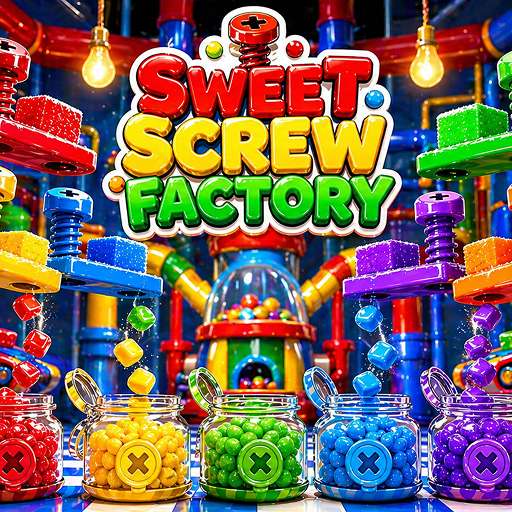
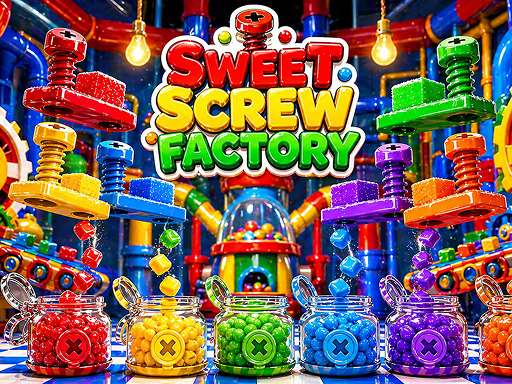
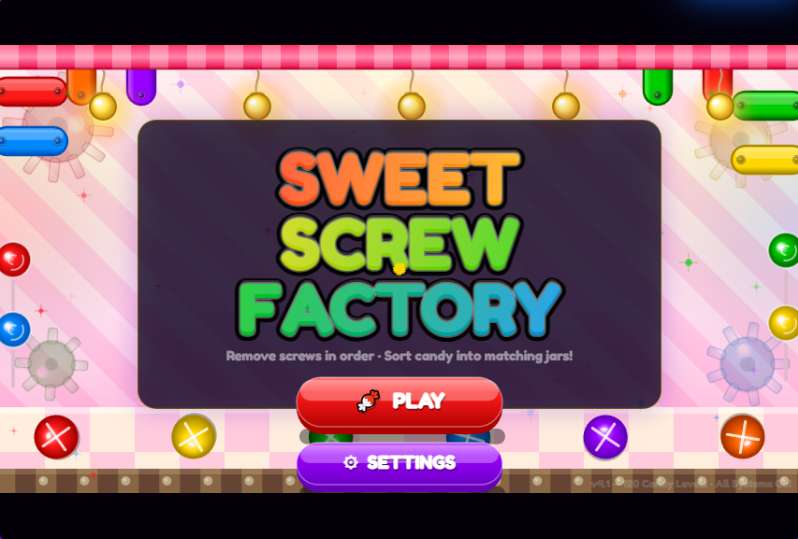
At first glance, Sweet Screw Factory looks like one of those casual physics games where you just tap screws and watch things fall. And sure, that's the basic loop. But there's more going on here than first impressions suggest. You're not just unscrewing random bolts—you're figuring out which order to pull them so that platforms tilt, slide, or drop in a way that lands candy blocks into jars of the right color. It's part puzzle, part Rube Goldberg machine, and it actually asks you to think ahead.
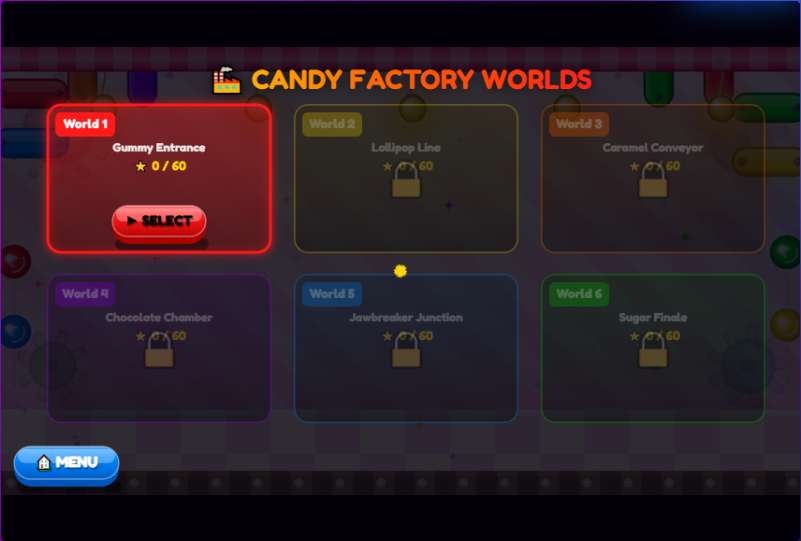
The candy theme is cute, but the puzzles are the real draw. With 120 levels split across six factory worlds, the game gradually introduces new mechanics like locked screws, trampolines, portals, and boss puzzles that mix everything together. You can pick Easy, Medium, or Hard at the start, which is nice if you just want to relax or if you prefer a real challenge.
How the Game Actually Works
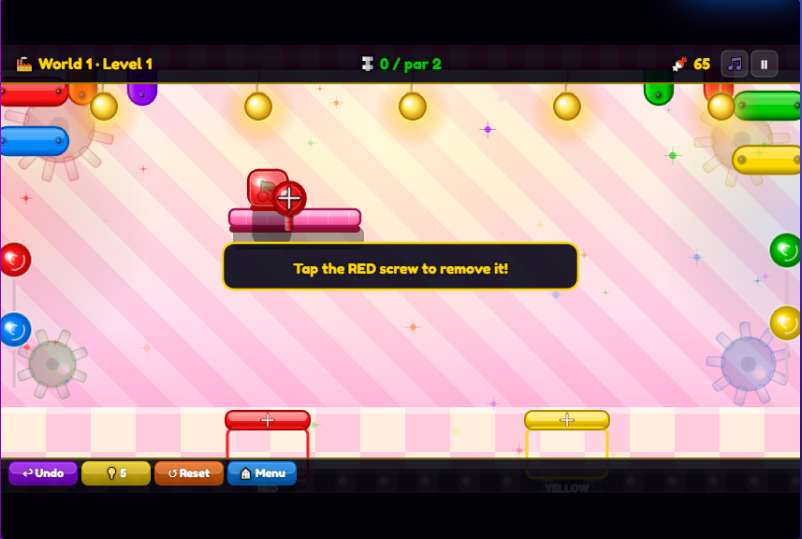
Each level gives you a structure made of candy blocks, held together by colored screws. Your job is to tap a screw to remove it. Once a screw is gone, physics takes over: blocks may fall, platforms may swing, and sometimes whole sections collapse. Your goal is to get all the candy blocks into jars that match their color.
The trick is that removing one screw can set off a chain reaction. A block that falls might hit a trampoline, bounce into a portal, and land somewhere completely unexpected. You need to visualize the sequence. If you just start pulling screws randomly, you'll likely trap a block behind something or drop it into the wrong jar.
Progress auto-saves, so you can jump back in without losing your place. That's a small thing, but it matters in a game where you might replay a tricky level a few times.
The Order of Removal Is Everything
Here's where most new players go wrong. They see a cluster of screws and start tapping the most obvious ones first. That often leads to a block sliding sideways into a dead end or a platform flipping too early.
Instead, take a moment to look at the whole layout. Ask yourself: If I remove this screw here, what happens to the block above it? Does it drop straight down, or does it hit a ramp? Can I remove a screw from the far side first to create a clear path?
Sometimes the correct first move is a screw that seems unimportant—a small one holding a corner that, once removed, lets a platform pivot just enough to guide a block into a jar. Experimenting is fine, but after a couple of failures, you'll start spotting these sequences faster.
Common Mistakes That Cost You a Perfect Run
Even experienced players trip up on a few things. Here are the ones I see most often:
- Ignoring locked screws. Some screws are locked and need to be freed by removing nearby screws first. If you keep tapping a locked screw and nothing happens, look for what's blocking it.
- Forgetting about trampolines and portals. These aren't just decorations. A block that falls onto a trampoline will bounce in a specific direction. Portals teleport blocks to linked locations. If you don't account for them, your candy block will end up somewhere useless.
- Removing screws too fast. There's no timer, so slow down. Watch the physics play out after each removal. You can learn a lot from seeing how a block actually moves before pulling the next screw.
- Not using the undo or restart option. If a move goes wrong, restarting is faster than trying to salvage a bad situation. The game saves your progress, so there's no penalty for trying again.
Editorial Take: Who Is This Game For?
I'll be honest—after about 30 levels, the core mechanic can start to feel a bit repetitive. Each level is essentially the same task: remove screws to drop blocks into jars. The new elements like portals and trampolines help, but they don't change the fundamental rhythm. You're still doing the same kind of spatial reasoning over and over.
That said, if you enjoy puzzle games where you can see the solution in your head before you execute it, this game hits that satisfaction button well. It's not a deep or narrative-driven experience, but it's a solid, clean physics puzzle that respects your time. Levels are short enough to play one or two in a break, and the difficulty curve is gentle—it doesn't suddenly spike and frustrate you. It's the kind of game you play while listening to a podcast or waiting for something else to load. Not groundbreaking, but well-made for what it is.
Practical Tips for New Players
- Start on Easy difficulty if you're new to physics puzzles. Easy levels have fewer screws and more forgiving layouts. You'll learn the patterns without getting stuck.
- Watch the color of the jar before you start. Some levels have multiple jars of different colors. You need to match not just the shape but the color of the block to the jar. A red block won't go into a blue jar.
- Use the pause and look around before making your first move. The game shows you the whole level. Take that time to plan a rough sequence.
- Don't be afraid to fail. You can restart instantly, and the game doesn't punish you for experimenting. Some of the best strategies come from seeing what doesn't work.
- Boss levels combine everything—locked screws, trampolines, portals, and multiple jars. They're designed to test your understanding. If you get stuck, try working backwards from the jar: what block needs to get there, and what screw removal would let that happen?