

















Game Introduction
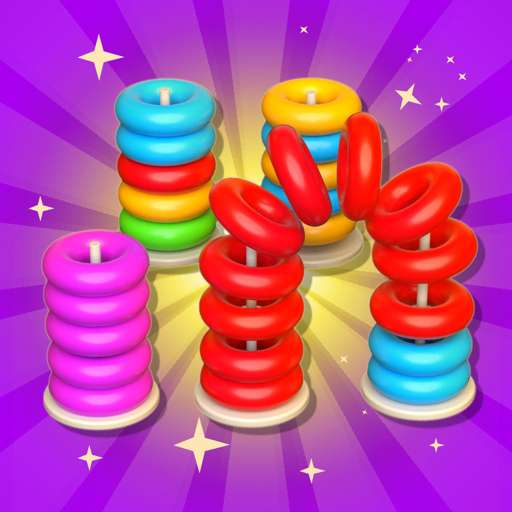
Sort, stack, and organize colorful rings in this fun & addictive puzzle game! Stack N Sort – The Ultimate Sorting Puzzle Challenge!
Get ready for a super satisfying and brain-teasing puzzle experience! In Stack N Sort, your goal is to sort and stack colorful rings onto the correct poles. Sounds simple? Think again!
With limited space and tricky arrangements, you’ll need sharp logic and smart moves to complete each level. From simple initial stages to brain-crushing difficult levels, every success will bring you unparalleled sense of accomplishment!
Let the colorful rings hook you, and use your wisdom to conquer all challenges. Are you ready to become the ultimate sorting master?
Game Features
1. Core Gameplay:
Sort and stack colorful rings, clear goal and easy to get started
2. Brain-Teasing:
Limited space + complex arrangement, testing logical thinking
3. Level Progression:
From beginner to high difficulty, graded challenges with layers
4. Immersive Experience:
Stress-relieving and healing + full sense of accomplishment, easy to get addicted
Gameplay and Controls
1. Operation Method:
Tap and drag the rings
2. Core Operation:
Move the rings to the target poles
3. Clearance Key:
Stack rings of the same color on the same pole
4. Notes:
Plan the moving steps in advance to avoid invalid operations
Game Guide
Stack N Sort may seem like a simple color-sorting game, but it actually tests your logical planning and rhythm control abilities. Many players fall into chaos at the beginning due to hasty operations. Mastering the following core strategies will help you quickly progress from a novice to a clearance master, easily tackling all levels from basic to high difficulty.
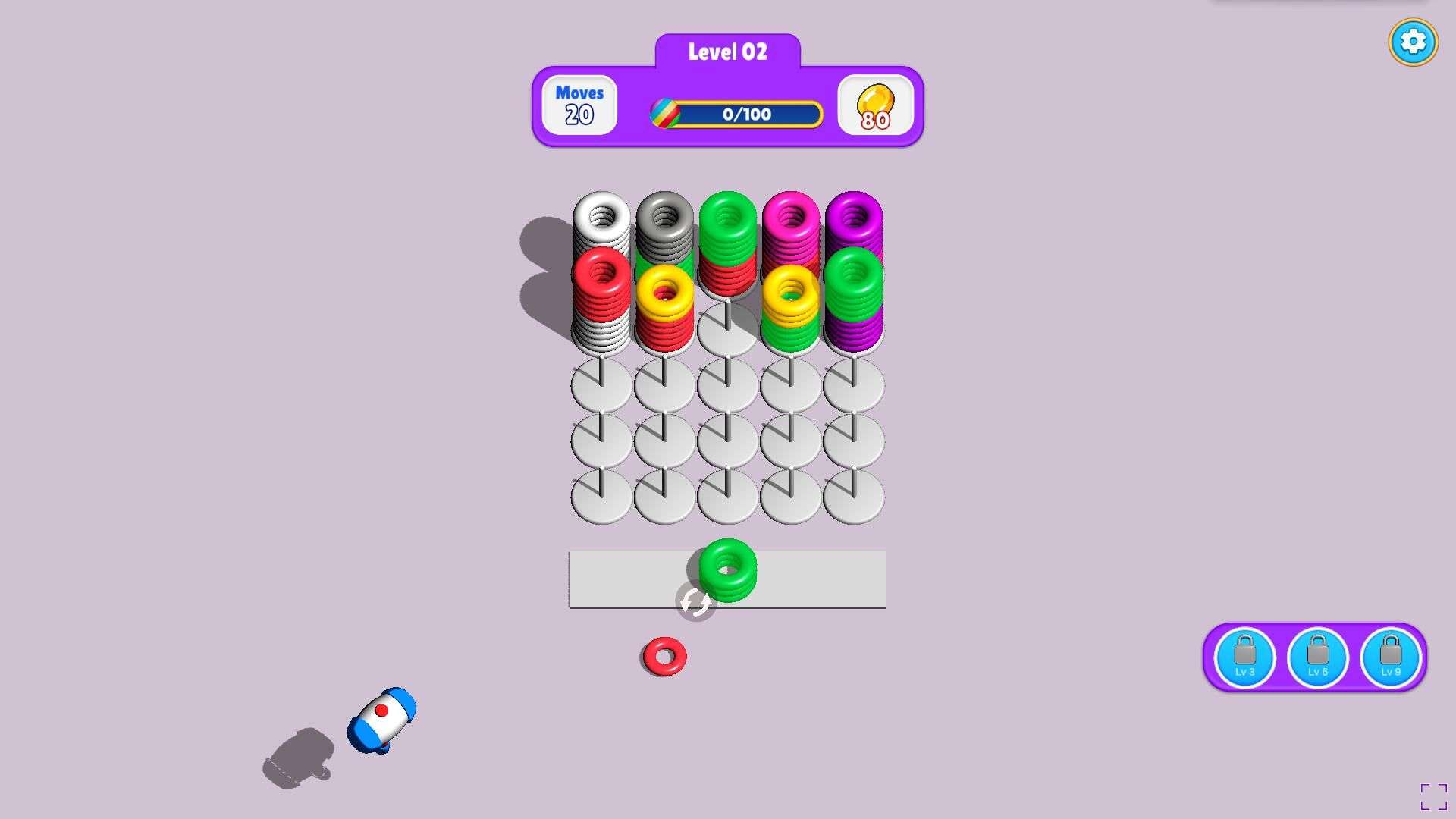
First, establish the "goal-first" mindset, which is the key to reducing ineffective operations. Do not rush to drag the rings at the start; spend 3 seconds observing the distribution of rings on all poles: count the number of each color, and prioritize locking the pole with the "most concentrated initial color" as the "target pole" for that color. If the colors are evenly distributed across multiple poles (e.g., each color has 2 rings on different poles), choose an empty pole or a pole with only 1 ring as the base target pole to avoid frequent adjustments later. For example, if Pole A has 3 red rings and 1 blue ring, and Pole B has 2 red rings, set Pole A as the red target pole and concentrate all subsequent red rings here to reduce repeated movements from the source.
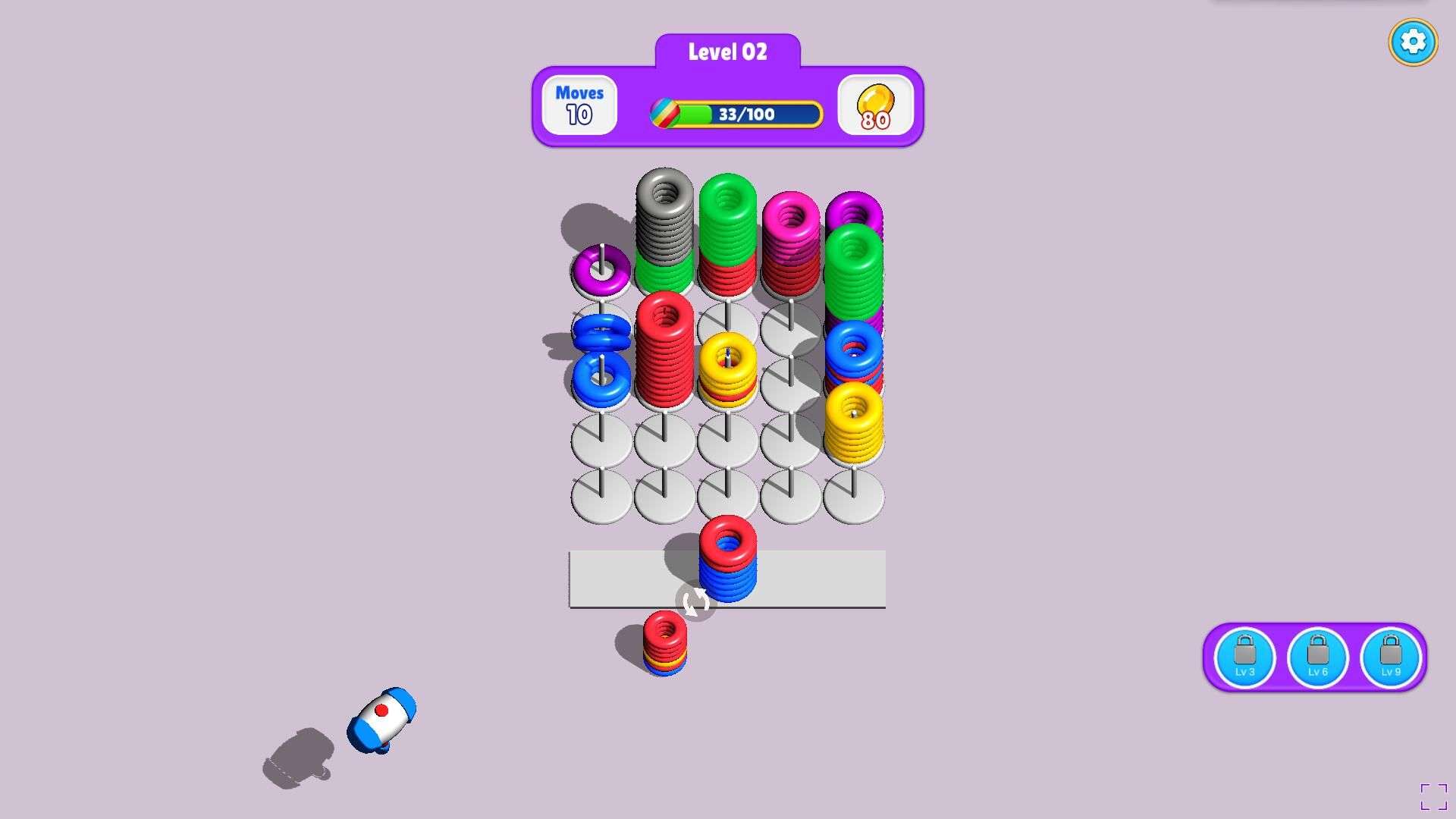
Skillfully using "transition poles" is the core technique to break through the bottleneck of blockages. When the top of the target pole is blocked by rings of other colors, do not move blindly; reserve 1-2 empty poles or poles with only a few rings of different colors as transition poles. Prioritize poles with only 1 ring of a different color as transition poles, as they can be cleared in just one step later. For example, if the top of the target pole is a blue ring and all the rings below are red, you can first move the blue ring to a transition pole. After all red rings are in place, move the blue ring to its corresponding target pole. Note: Transition poles are only for temporary storage; be sure to clear them in time after each use to avoid accumulating too many colors and becoming a new "source of chaos."

For high-difficulty levels, you need to master the "batch processing + priority sorting" technique. When the number of rings increases, if multiple colors have similar quantities, prioritize processing the colors with no blockages on the top layer to quickly clear some poles and free up operating space; if one color has significantly more rings, focus on sorting that color first to reduce visual interference. At the same time, pay attention to "multi-layer blockages" and disassemble them layer by layer starting from the top ring, just like peeling an onion. A common mistake for novices is frequently changing the target pole, which causes repeated movement of rings—this should be avoided. In addition, if a mistake causes chaos, pausing to re-observe is more efficient than blindly remedying. Deliberately slow down to practice logic in the early stage, and increase speed after becoming proficient later; clearing levels will naturally come easily.