

















What Is Mahjong Match, Really?
Mahjong Match takes the familiar tile-matching idea and spins it into a relaxed puzzle game. Instead of building hands or competing, you clear a board by finding identical tiles. Sounds simple? It is, at first. But as the layouts get denser and the tiles stack in layers, you'll need more than just quick eyes.
The game works with a classic mahjong tile set — bamboo, dots, characters, winds, dragons, and flowers. Your goal is to remove all tiles by matching pairs. But here's the catch: you can only select tiles that are free on at least one side (left or right) and not covered by another tile on top. This freedom rule is what turns a casual match into a spatial puzzle.
How to Actually Play — Controls and Flow
You can tap or drag to select tiles. Tap a free tile, then tap its matching partner. Or drag one tile onto the other. Both work fine. The interface is clean and responsive, so you won't fight the controls.
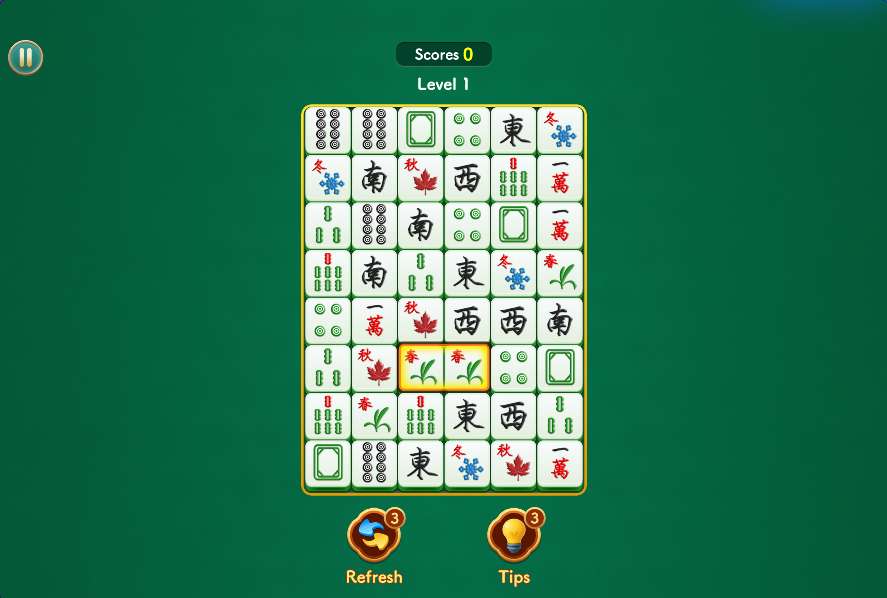
Each board starts fully stacked. As you remove pairs, more tiles become available. The challenge is that you might remove a tile now, only to realize later that its match is buried under other tiles. That's where planning comes in.
The game gives you a few tools: a hint button when you're stuck, a shuffle option to rearrange tiles, and a limited number of undos. Use them sparingly — they're not infinite.
Common Mistakes New Players Make
Most beginners rush. They see a pair, they take it. That's often fine, but not always. Sometimes removing a pair too early blocks access to tiles you'll need later. For example, if you match two tiles that were both acting as "locks" on top of other tiles, those lower tiles become free. But if you match two tiles that were themselves covered, you might free nothing useful.
Another mistake: ignoring the edges. Tiles on the outer edges of the board are usually easier to free. Clear them systematically, and you'll open up the middle faster. Also, don't hoard special tiles like flowers and seasons — they match with their own kind and are always free to remove. They're your best friends when you're stuck.
A Practical Tip That Actually Helps
Here's something I learned after a few boards: before you match any pair, scan the board for tiles that appear only once. If a tile type has only one copy visible and no other match in sight, you might be in trouble. But sometimes that lone tile's match is hidden under a stack. If you can free it by removing a different pair first, do that. If not, consider using a shuffle early instead of waiting until you're completely blocked.
Also, keep an eye on the bottom layer. In multi-layer boards, tiles on the bottom are often identical to tiles on top. Matching a top tile with a bottom tile can clear a whole column at once. That's efficient.

Who Is This Game For?
Mahjong Match is not a high-speed reflex test. It's a calm, methodical puzzle that rewards patience. If you enjoy games like solitaire or jigsaw puzzles, this will fit right in. It's also good for short sessions — you can finish a small board in five minutes or spend twenty on a big one.
That said, the game does get repetitive after a while. The mechanics don't change much from board to board. You'll see the same tile sets and similar layouts. What keeps it fresh is the slight variation in difficulty and the satisfaction of clearing a messy board cleanly. If you like incremental progress and don't mind occasional moments of frustration when a board seems unsolvable, you'll find plenty to like here.
Final Thoughts on Playing Smarter
There's no perfect strategy for every board. Mahjong Match is partly luck, partly planning. What matters most is staying aware of which tiles are locked and which aren't. Take your time. Use hints and shuffles when you're truly stuck, not just impatient. And if you hit a dead end, don't feel bad — some layouts are genuinely tough. That's the fun of it.