













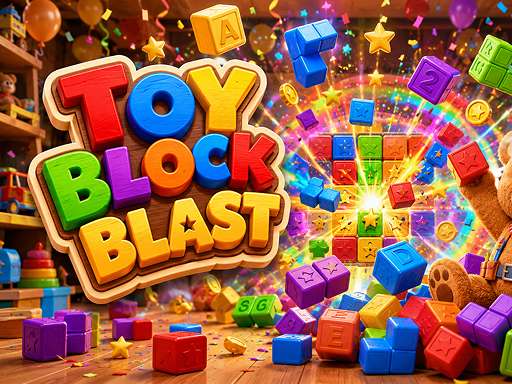
What Is Toy Block Blast, Exactly?
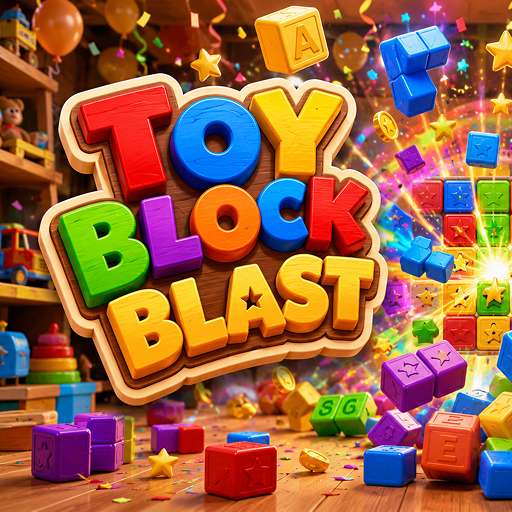
Toy Block Blast is a straightforward puzzle game built around a simple loop: drag colorful block shapes onto an 8x8 grid, fill entire rows or columns, and watch them explode for points. New pieces drop in one at a time, and the game ends when there's no room left to place whatever you're holding. It's not trying to reinvent the wheel, but the feel of dragging those chunky blocks and the satisfaction of a well-timed clear make it easy to lose track of time.
There are three difficulty modes — something like Easy, Medium, and Hard — which basically affect how fast new pieces arrive and how strict the scoring feels. If you're new to these kinds of grid-filling games, starting on Easy gives you space to figure out placement strategies without pressure.
How the Scoring and Combos Work
Clearing a single row or column gives you a modest score. But the real fun starts when you clear multiple lines at once. If dropping a piece clears both a row and a column in the same move, you get a nice bonus. Chain that with the next piece, and the points start climbing fast. The game also has bomb blocks — special pieces that, when placed, will explode in a small area, clearing surrounding cells. Bombs are rare, so save them for when your grid is getting tight and you need to open up space.
One thing that stands out: the game doesn't punish you for slow moves. There's no timer on each piece, so you can take your time looking at the grid. That makes it more about spatial planning than speed, which is a nice change from some arcade-style puzzles.
Practical Tips for New Players
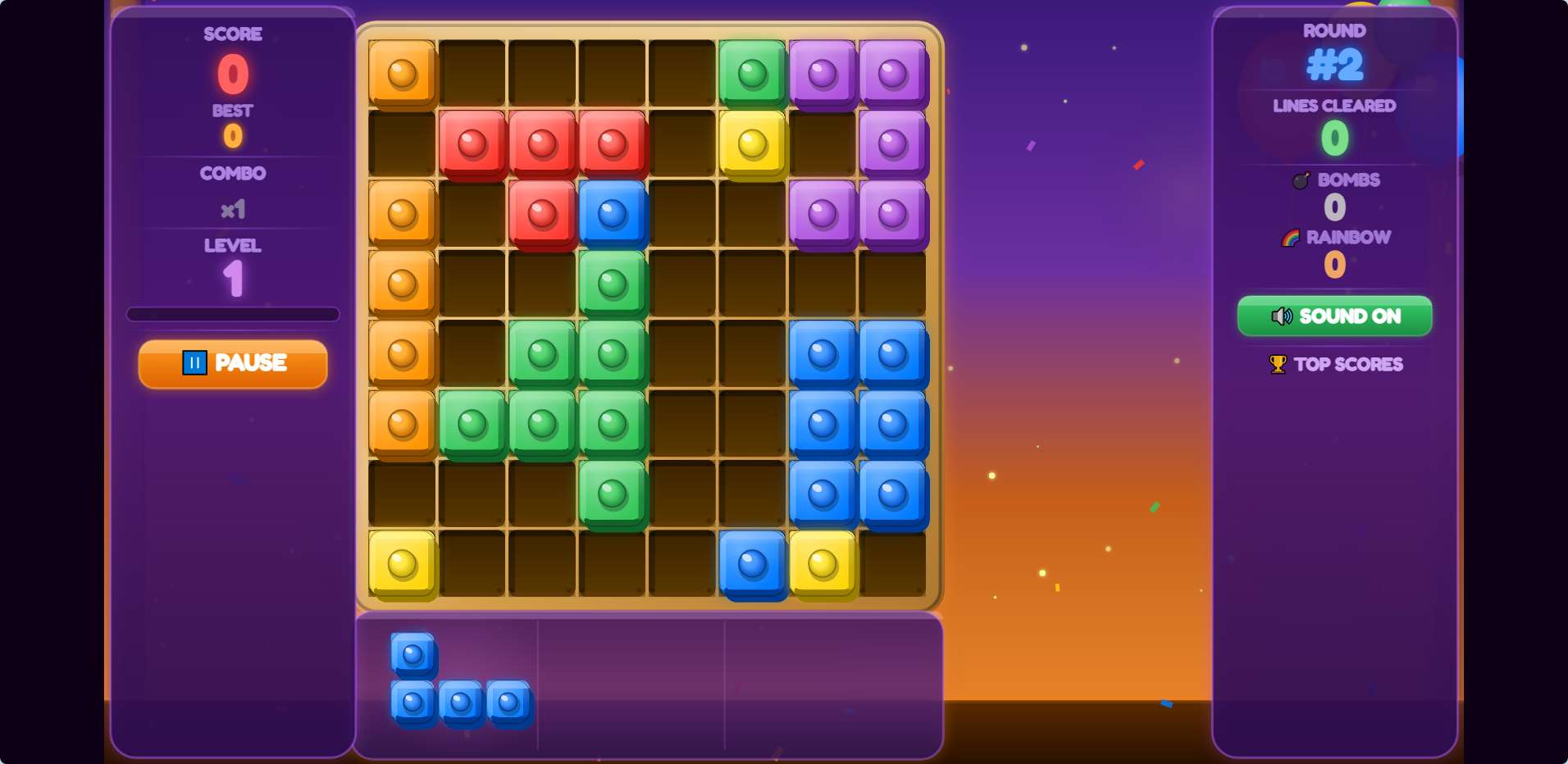
The biggest mistake beginners make is placing pieces randomly and hoping things line up. Instead, try to keep your grid as flat as possible. Avoid tall stacks of blocks in the middle, because they block your ability to place larger pieces later. Focus on clearing at least one column or row every few moves. If you leave too many partial lines, the board fills up fast.
Also, don't hoard bomb blocks forever. A common trap is thinking "I'll save this for an emergency" — but by the time the emergency comes, the bomb might be surrounded and useless. Use bombs when you see a 3- or 4-cell gap that's hard to fill otherwise.
Another simple trick: rotate the piece mentally before dragging. The game doesn't auto-rotate, so you have full control over orientation. Sometimes a piece fits better if you flip it sideways, even if it looks wrong at first glance.
Managing the Difficulty Modes
Easy mode gives you small pieces and lots of breathing room. It's good for learning patterns. Medium ramps up the variety of shapes and the frequency of large L-shaped or T-shaped pieces. Hard mode introduces more awkward shapes and less margin for error. If you're struggling on Hard, drop back to Medium and practice keeping the center of the grid open. The edges are your friends — fill those first, and the middle stays flexible for those tricky 4-block pieces.
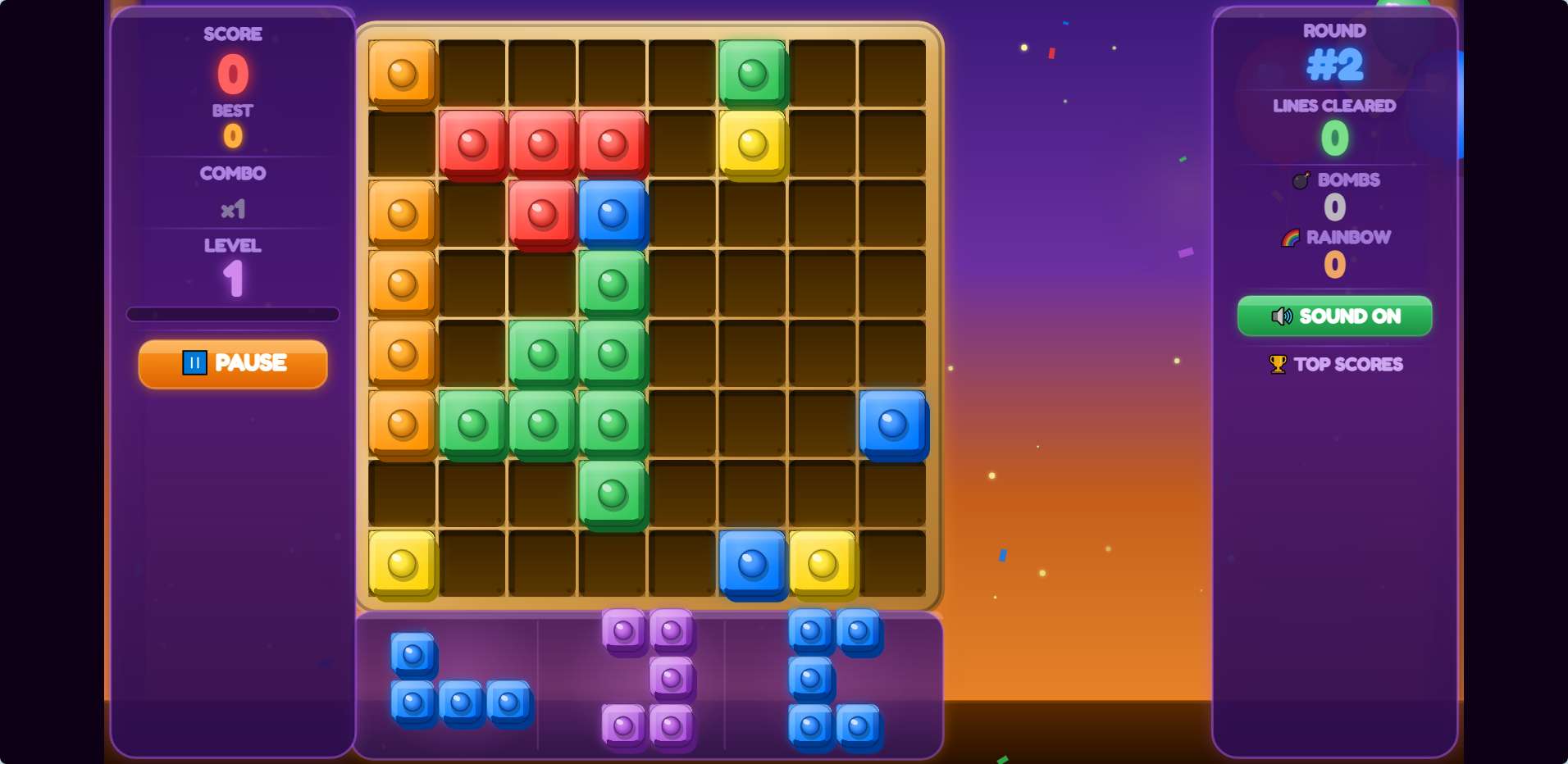
One editorial observation: the difficulty jump from Medium to Hard feels a bit steep. On Hard, you'll sometimes get three large pieces in a row that barely fit together. It can feel unfair, but that's also where the most satisfying clears happen. If you like a challenge that borders on punishing, Hard is worth sticking with.
What Kind of Player Will Enjoy This?
Toy Block Blast works best for anyone who likes spatial puzzles without time pressure. If you've played games like 1010! or Block Puzzle, this will feel familiar but with a slightly chunkier, toy-like aesthetic. The bomb mechanic adds a small twist that can change how you plan moves. It's also a good game for playing while listening to a podcast or waiting for something — each round lasts maybe 5 to 10 minutes once you get the hang of it.
That said, it can get repetitive if you're looking for deep strategy. The core loop doesn't change much, and there's no story or progression beyond chasing your high score. But for what it is — a clean, responsive block puzzle with satisfying explosions — it does the job well.