
































Game News

Calm Drop Cut: Relaxing Logic Puzzles
Game Introduction Dive into the addictive world of Cut & Drop Puzzle — a physics-driven puzzle game where precision meets strategy! Grab your virtual cutter, slice through objects with pinpoint accuracy, and guide balls toward their targets with clever drops. It’s the ultimate blend of casual relaxation and brain-teasing fun: unwind with smooth, satisfying slicing mechanics, or test your wits with tricky layouts that demand strategic thinking. Whether you’re here for quick, stress-busting rounds or deep dives into challenging puzzles, this game caters to every puzzle lover, slicing fan, and physics game enthusiast. Simple to pick up but hard to put down — Cut & Drop Puzzle turns every cut and drop into a rewarding adventure! Game Features Physics-engine driven gameplay delivers realistic, satisfying cutting and dropping mechanics. Balances casual relaxation with brain-teasing challenges, requiring precision and strategic planning. Easy to pick up but highly addictive, with progressively engaging level designs. Perfect for fragmented time, featuring short, stress-free single rounds. Diverse level scenes bring fresh experiences and new challenges in every playthrough. Gameplay and Controls 1. Drag the screen to control the virtual cutter and slice objects in the scene. 2. Make the balls drop by cutting, and guide them into the designated target area. 3. Predict the physical trajectory and cut precisely to achieve the goal. 4. Unlock the next level automatically after completing the current one, with increasing difficulty. 5. Retry freely if the cut fails, no limit on the number of attempts. Game Guide As a physics-engine driven puzzle game, Cut & Drop Puzzle seems simple to operate but actually hides strategic subtleties. Many players can clear early levels easily but get stuck in mid-to-high difficulty levels. This guide will cover four dimensions—basic operations, level-specific strategies, advanced skills, and pitfalls to avoid—to help you master the core logic of clearing levels and quickly advance from a novice to a puzzle-solving master. I. Essential Basic Operations: The Underlying Logic of Precise Cutting The game's core operations only involve two steps: "cutting" and "guiding," but mastering the details directly determines the efficiency of clearing levels. First, you need to abandon the habit of "random swiping" when cutting. Instead, it's recommended to use "short-distance precise cutting"—control the cutter's trajectory to be parallel to the edge of the object when dragging the screen, avoiding unnecessary cutting movements. Especially when cutting thin plates or ropes supporting the balls, controlling the single cut length to 1-2 centimeters (screen display size) can reduce the shaking amplitude of the object and lower the difficulty of trajectory prediction. Second, trajectory prediction is a core ability. Before cutting, observe the line connecting the ball's initial position and the target area, and identify the obstacles and supporting structures in between. For example, when the ball is supported by multiple layers of wooden boards, prioritize cutting the bottommost board with the least load-bearing capacity. Utilize gravity to make the ball fall naturally, reducing the need for secondary cutting. If there are slopes, rebound boards and other elements in the scene, plan the ball's falling path in advance and reserve buffer space for rebounds. II. Level-Specific Strategies: Targeted Solutions to Core Difficulties Game levels can be divided into three categories based on core difficulties: "Basic Load-Bearing Type," "Trajectory Guidance Type," and "Multi-Ball Coordination Type." Different types require differentiated strategies. Basic Load-Bearing Type is mostly seen in levels 1-20, with the core being destroying the supporting structure. For this type of level, it's recommended to use the "bottom-up cutting method"—first cut the bottommost load-bearing components, observe the direction of the object's collapse, then cut the remaining structures. It should be noted that the supports in some levels are designed with a "load-bearing critical point." When cutting, reserve 1-2 secondary support points to prevent the ball from deviating from the target due to too fast collapse speed. Trajectory Guidance Type (levels 21-50) adds elements such as rebound boards and teleporters, focusing on testing path planning. The key to clearing levels is the "reverse deduction method": deduce the rebound points the ball needs to pass through from the target area backward, then determine the cutting position. For example, if the target is on the right side of the screen, first find a suitable rebound board on the left. When cutting, let the ball fall onto the rebound board and use the rebound force to accurately enter the target. When encountering teleporters, confirm the teleportation direction in advance to avoid the ball missing the target due to trajectory deviation after entering the teleporter. Multi-Ball Coordination Type (after level 51) requires multiple balls to enter the target at the same time, with the core being "priority ranking." Prioritize handling the balls with the most tricky positions and complex trajectories, and reserve independent falling paths for them when cutting. For balls with regular positions, you can use the collapse inertia from the previous cut to drive them to fall, achieving "one cut, multiple effects." If there is a conflict between the trajectories of multiple balls, cut multiple times, focusing on 1-2 balls each time and advancing step by step. III. Advanced Skills and Pitfalls to Avoid Advanced players need to master "cutting timing control": in some levels, objects will shake slightly under the influence of gravity. It is recommended to cut when the object is stationary or has the smallest shaking amplitude to improve accuracy. In addition, make good use of the "retry mechanism"—if the ball's trajectory is close to the target but fails after the first cut, observe the deviation point and fine-tune the trajectory in the second cut without starting over. Common misunderstandings to avoid: First, over-cutting, which leads to chaotic scene structure and increases the difficulty of trajectory prediction; second, ignoring physical inertia and failing to consider the ball's parabolic deviation after cutting; third, being eager for success and operating blindly without observing the scene elements clearly. Remember, the best way to clear each level is often with "the least number of cuts." Patient planning is more efficient than repeated attempts. After mastering the above skills, you only need to accumulate experience in handling different scenarios in actual combat and gradually improve your sensitivity to trajectory prediction to easily overcome high-difficulty levels. The charm of Cut & Drop Puzzle lies in its "strategic depth under simple operations." Only by enjoying the process of solving puzzles can you truly experience the fun of the game.

Escape the Long Hand: Immersive Puzzle Adventure
Game Introduction Step into the world of Long Hand Escape — a spellbinding mix of puzzle and casual fun that puts your observation sharpness and quick thinking to the ultimate test! Here, freedom lies in the stretch of your hand — your most powerful tool to reach the exit and break free.Your hand has a unique gift: it can extend endlessly to weave through gaps, but caution is your best ally. Touch any obstacle, and it snaps back instantly. Every move needs a plan — you’ll have to map out the safest path, twist through narrow spaces, and avoid collisions that reset your progress.And don’t let your guard down — patrolling sentries are everywhere. One wrong stretch that catches their eye, and your escape attempt ends. It’s a thrilling balance of careful planning and split-second judgment: stretch smart, stay hidden, and edge closer to freedom with each move.Ready to embrace the challenge? Long Hand Escape calls for you to stretch beyond limits, outwit obstacles, and slip past guards. Find your exit, claim your freedom, and lose yourself in the addictive thrill of this one-of-a-kind escape puzzle! Let the escape begin! Game Features 1. Unique Core Gameplay: Use the infinitely stretchable hand as the core tool to navigate through gaps and find the exit. The hand retracts immediately upon touching obstacles, testing your path-planning skills.2. Dual Upgraded Challenges: Not only avoid various obstacles but also evade the detection of patrolling guards, requiring both strategy and reaction speed.3. Lightweight & Easy to Learn: Combines puzzle and casual elements with simple operations yet profound strategic depth, suitable for different players.4. Full Immersion: Every precise stretch and stealthy move brings a sense of accomplishment, creating a unique escape puzzle thrill. Gameplay and Controls 1. Core Operation: Long-press any position on the screen and drag it toward the target direction. The dragging range determines the stretching length of the hand, and the dragging track controls the stretching direction. When you release your finger, the hand stops stretching immediately and maintains its current state, allowing you to observe the surrounding environment before continuing to operate.2. Obstacle Avoidance: All static obstacles in the game will trigger the retraction mechanism, so you need to observe the distribution of obstacles in advance. If your hand accidentally touches an obstacle, it will quickly retract to the initial position. There's no need to panic at this time; you can re-plan a detour path based on the obstacle's position and try again.3. Guard Response: Guards will patrol along a fixed route and have a clear field of vision. You can first stay still to observe their movement cycle and line of sight direction. When the guard turns around or their sight deviates from the target area, quickly stretch your hand to move. Once you enter their field of vision, the game will immediately fail and you need to restart.4. Clear Goal: The exit is usually marked with a clear identifier. You need to control your hand to start from the initial position, avoid all obstacles and the guard's sight, and gradually approach the exit. When the tip of the hand completely touches the exit area, the system will determine that the level is cleared and unlock the next level. Game Guide As a casual game that combines puzzles and strategy, *Long Hand Escape* may seem simple to operate, but it actually requires precise judgment and planning. Master the following strategy tips, and you can easily break through various levels and achieve the escape goal efficiently. Refining core operations is fundamental. When long-pressing and dragging, it is recommended to adopt the strategy of "small-scale exploration + phased pauses" to avoid touching obstacles due to large-scale stretching at one time. Especially for beginners, it is best to control the dragging range within 1/3 of the screen. Pause and observe after each stretch segment—this not only allows precise control of the length but also helps detect hidden obstacles in corners (such as raised wall edges and small spikes) in time. When encountering narrow gaps, you can first simulate the trajectory 2-3 times by dragging your finger on the blank area of the screen. Only when the route completely matches the gap should you perform the official operation, which reduces the number of retractions and rework. In addition, for single-hand operation, you can use finger joints for positioning to improve the stability of the dragging trajectory; for two-hand operation, you can divide the work—one hand fixes the screen, and the other performs precise dragging. For obstacle avoidance, make good use of the "path prediction method". After starting the level, stay still for 3 seconds. During this time, observe the distribution of obstacles in the entire map. Distinguish between fixed obstacles and triggerable obstacles by the depth of color (some levels have hidden moving obstacles that do not appear when stationary), and clearly mark the "safe passages" and "dangerous areas". For densely arranged obstacles, adopt the "Z-shaped detour" strategy. Utilize the flexibility of hand stretching to move in a serpentine manner through the gaps between obstacles. Maintain a constant speed while dragging to avoid deviations caused by sudden acceleration. If you accidentally touch an obstacle and retract, do not rush to retry. Instead, zoom in on the screen to check the details of the obstacle contact point and analyze whether it is a route deviation or an undiscovered hidden obstacle. Adjust the detour angle in 15° increments—usually, a deviation of 15°-30° can avoid risks, while large adjustments may easily cause new problems. Dealing with guards is the key to clearing the level. Remember the three-step method: "Observe - Wait - Raid". First, observe the guard's patrol route and field of vision. Judge the direction of the field of vision by the direction of the guard's head—there is usually a faint light and shadow prompt in the field of vision area, and the darker the light and shadow color, the higher the alert level. Record the guard's round-trip cycle: guards patrolling in a straight line usually have a 5-second cycle, while those patrolling in a polygonal path require additional recording of the turning time (usually 1-2 seconds). The best time to start stretching is when the guard turns around and the light and shadow disappear. If guards are in an overlapping field of vision area, you can first stretch your hand to a middle obstacle (such as a box or pillar) and pause. At this time, even if detected by a guard on one side, it will not trigger a failure. Wait until the visions of the guards on both sides are staggered at the same time, then move quickly. It is safer to keep your hand in the shadow of the obstacle while moving. The advanced skill for clearing levels lies in "rhythm control". You can advance quickly in simple levels, but need to slow down the rhythm in complex levels, prioritizing the safety of your hand. There is often a "final line of defense" near the exit, which may be a combination of obstacles and guards. At this time, you need to combine the previous skills: either break through the obstacles first and then avoid the guards, or rush to the exit in one go during the guard's patrol gap. Remember, patience and precision are more important than speed. By proficiently using the above methods, you can easily achieve efficient escapes in various levels.
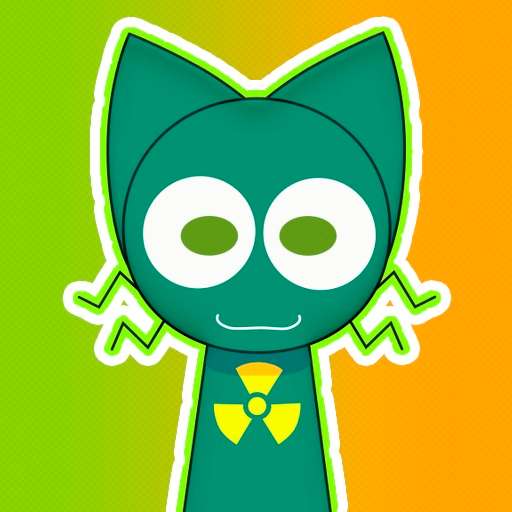
Sprunki Tox Rush: Epic Mod Adventures
Game Introduction Tox Sprunki Mod is a platformer with unique gameplay mechanics, centered around the "poison zone" that creates a distinct level-clearing experience.In the game, the poison zone continuously restricts your movements—you can neither stay in the same area for a long time nor return to regions you have already explored. This means you must think quickly and plan every jump and movement path in advance to avoid getting trapped.Currently, the game features 24 well-designed levels. Each level requires you to combine quick reflexes with strategic thinking to find the only viable path to clearance while under the pressure of the poison zone. Game Features 1. Tension-Driven Gameplay Fueled by Poison ZonesThe core mechanic revolves around "poison zones". Players can neither stay in the same area for long nor return to previously explored regions. This restriction forces players to stay focused at all times, eliminating the ease of "backtracking" in typical level-clearing. Every move comes with the pressure of making instant decisions.2. Dual Challenges of Strategy and ReflexesThe game is more than just simple platforming jumps—it requires advance planning of movement routes. Players must react quickly to avoid obstacles while simultaneously thinking through the logic of subsequent moves. Balancing "operation speed" and "strategic layout" is essential to clear levels successfully.3. 24 Well-Designed Progressive LevelsThe number of levels is moderate, with a reasonable difficulty curve. Starting from basic poison zone adaptation exercises, the challenge gradually escalates to complex terrains combined with multiple restrictions later on. Each level acts as an independent strategic puzzle, ensuring players continuously gain a sense of freshness and accomplishment during gameplay.4. Unique Mechanics for a Differentiated ExperienceUnlike traditional platformers, the "no backtracking from poison zones" rule completely reshapes the gameplay logic. Players don’t need to repeatedly backtrack for collection or exploration—they only need to focus on planning routes for the present and future, creating a unique gameplay rhythm centered on "moving forward". Gameplay and Controls 1. Character Movement:Control the character to move horizontally, and adjust the position accurately to cope with platforms and obstacles of different widths.2. Jump Operation:Trigger the character's jump action, and control the jump strength according to the distance from the target platform to avoid falling due to insufficient or excessive strength.3. Comply with Core Rules:Poison zones in the game take effect continuously. You must always avoid staying in the same area for more than 3 seconds. Moreover, explored areas will be covered by poison zones and cannot be passed through again, so you need to plan your route in advance.4. Achieve Clearance Goal:While evading poison zone restrictions and terrain obstacles, keep moving forward. Locate the finish marker on each level's map and reach it to complete the level challenge. Game Guide As a platformer centered on the "poison zone restriction" mechanism, Tox Sprunki Mod features 24 levels that progress from basic adaptation to in-depth strategic gameplay. Its core difficulty lies in the dual constraints of "no staying and no backtracking", requiring players to balance reaction speed and route planning. This guide will help players clear levels efficiently from three aspects: core thinking, phased strategies, and advanced skills. Grasping the core idea of "pre-planning" is the key to clearing levels. Different from traditional platformers, the poison zones in this game will cover explored areas in real-time, and staying for more than 3 seconds results in failure—blind advancement will inevitably lead to a dead end. It is recommended to observe the overall terrain first at the start of each level: keep in mind the distribution height, spacing of platforms and the location of the finish line, and outline the "shortest forward route" in your mind. For example, when encountering multi-layered platforms, prioritize marking connectable jump points to avoid being surrounded by poison zones due to temporary hesitation. At the same time, abandon the inertial thinking of "going back to pick up items"—there are no collection elements in the game, so all attention should be focused on "moving forward". Differentiated strategies are required for the three-stage difficulty design of the 24 levels. Levels 1-8 are the basic adaptation period, with slow poison zone spread speed and moderate platform spacing—the core goal is to master jump strength control. The "small-step probing method" can be used in this stage: pause briefly to confirm safety after moving to each platform, gradually master the jump strength corresponding to different spacings, and pay special attention to the precise landing skill on narrow platforms. Levels 9-16 enter the strategy improvement period, with elements such as moving platforms and height difference traps appearing. At this time, "dynamic route planning" is necessary. For example, when encountering a moving platform, first predict its movement trajectory, jump at the moment the platform approaches, and reserve adjustment space after landing to avoid falling into the poison zone due to platform displacement. Levels 17-24 are the advanced challenge period, where the superposition of multiple restrictions greatly increases the difficulty of clearing levels, and advanced skills become the key to breaking through. First, the "rhythm control skill": the poison zone spreads at a fixed rhythm. You can use this rule to charge briefly in a safe area, and then sprint and jump after the poison zone stabilizes to avoid misjudging the distance in a panic. Second, the "obstacle leveraging skill": the raised obstacles in some levels can be used as temporary landing points. If the jump strength is insufficient, you can use the obstacle to buffer and then jump again, but ensure that the stay time does not exceed 3 seconds. Third, the "failure review skill": do not rush to restart after failing in advanced levels. First recall the route loopholes before death, such as whether there is a better jump point or whether you misjudged the spread range of the poison zone. Adjusting the strategy in a targeted manner is more efficient than repeated trial and error. Finally, it should be noted that the core fun of the game lies in strategic gameplay rather than clearing levels quickly. When stuck on a level, you can take a proper rest to adjust your state—maintaining a clear mind is more important than pursuing operation speed. After mastering the above methods and optimizing the details according to your own operation habits, clearing all 24 levels will naturally come as a matter of course.

Enchanted Puzzles: Build Your Dream Kingdom
Game Introduction Looking for a game that keeps your brain active without feeling stressful? Kingdom Puzzle is perfect for you! When you open the game, you’ll see a grid divided into colored sections, and your main task is to place one king in each colored section.There are simple guidelines for placing the kings: each colored section can only have one king. Additionally, no two kings can be in the same row or column, and they can’t be adjacent to each other—their surrounding tiles must remain empty. Once you place all kings in positions that meet these requirements, you’ll successfully clear the level.Don’t worry if you place a king incorrectly; it will only deduct a small amount of points. If your points drop to zero, you can either skip the level with a score of zero or retry after watching a short ad—choose whatever feels more relaxed for you.No need to rush for progress or compete with speed. Open the game anytime you want and enjoy the fun of planning and placing the kings at your own pace! Game Features 1. Color-Coded Zone Visual Design, Intuitively Reducing Decision-Making DifficultyThe grid is clearly divided into zones using different colors, allowing players to quickly identify the core goal of "placing one king in each zone" without repeatedly confirming zone boundaries. The distinct color contrast ensures a clean visual experience while helping new players focus on layout logic faster, reducing mistakes caused by visual confusion.2. Reasonable Level Difficulty Progression, Catering to Both New and Advanced PlayersInitial levels feature small grids and few zones, with a low threshold for understanding rules, making it easy for new players to get started. As progress advances, grids become larger, zone shapes more complex, and the mutual constraints between kings' positions strengthen—gradually deepening strategic thinking and ensuring advanced players also enjoy continuous challenging fun.3. No Time Limit Design, Focusing on Enjoying the Strategic ProcessThe game has no level countdown, allowing players to deduce kings' positions at their own pace without anxiety from "rushing against time." Whether carefully calculating row/column and adjacency relationships or pausing temporarily to think, players have full control, truly achieving "relaxing brain-teasing."4. Independent Single Levels, No Dependency—Start/Stop Anytime Without Affecting ExperienceEach level is an independent layout task, with no plot connections or prerequisite item requirements. Even if you exit midway, re-entering allows you to restart from the current level—no need to review from the beginning or make up for progress. This perfectly adapts to "fragmented start-stop" scenarios, such as commutes or waiting in lines.5. Low-Pressure Sense of Achievement Feedback, Positively Motivating Continuous GameplayClearing a level only requires placing all kings correctly according to rules—no additional pressure from "star ratings" or "item consumption." Every completed level provides direct feedback of "successful layout." This low-threshold sense of achievement continuously motivates players to unlock the next level while avoiding psychological burden from pursuing high scores. Gameplay and Controls Kingdom Puzzle Operation Guide: Play with just clicks—easy to get started.1. Interface OverviewThree core interface modules in a level:1. Game Area: Color-coded grid, one king per colored section.2. King Icon Area: Kings displayed at the bottom/side (quantity = number of colored sections), auto-matched in some versions.3. Function Area: Buttons for "Restart", "Pause", "Back", etc.2. Core OperationsObjective: Place one king in each colored section (Rules: No same row/column, no adjacency). Operations:4. Select a colored section without a king.5. Click an empty cell in the section to place the king. Invalid placement triggers a prompt and score deduction.6. Click a placed king to remove and reposition it.3. Auxiliary Functions & Level ClearanceFunction buttons & clearance instructions:- Restart: Clear all kings to re-plan; Pause: Freeze progress; Back: Exit to level list.- Clearance: Place all kings correctly in their sections to unlock the next level automatically.Tip: Plan the layout first to reduce mistakes! Game Guide Centered on "low-stress brain-teasing", Kingdom Puzzle hides key logical layout skills behind the seemingly simple "place kings in zones". Master the following methods, and both novices and players stuck on levels can easily clear levels and progress. 1. Basic Understanding: Clarify the Core "No-No" Rules FirstThe key to clearing levels is avoiding three mistakes: first, each colored zone must have exactly one king—missing or placing extra kings leads to immediate failure; second, no two kings can be in the same row or column, which is the "row-column mutual exclusion" principle; third, kings cannot be adjacent, including 8 adjacent grids (up, down, left, right, and diagonally), known as the "8-directional adjacency ban" rule. It's recommended that novices scan the grid for 3 seconds before starting to mark the boundaries of each zone, avoiding misplacing due to visual confusion. 2. Novice Introduction: Break Through from the "Smallest Zone" to Reduce Decision-Making CostsEarly levels have small grids and regular zones. The most efficient method is to start with the "smallest zone". For example, zones with 1-2 grids have limited placement options. Confirming the king's position in these zones first can quickly lock "unusable rows and columns", reducing interference in subsequent decisions. For instance: if a king is placed in a 1-grid zone at the top-left corner, you can directly mark that row, column, and adjacent grids as "forbidden areas", avoiding them when placing other kings and greatly reducing error rates.Follow the "edge-first, center-last" principle when placing. Kings in edge zones only need to consider 3-5 adjacent grids, while central zones require consideration of 8 directions. Fixing edge positions first reserves more flexible layout space for central zones. 3. Advanced Skills: Use "Elimination + Preview" to Solve Complex LevelsAs levels progress, grids become larger and zones take irregular shapes (such as L-shapes, U-shapes). At this point, use the "elimination method" to narrow down options. Take a 4x4 grid with 4 zones as an example: first list all empty grids in each zone, then cross out invalid grids by comparing with the "forbidden areas" of placed kings. The remaining grid is the correct position.Logical reuse can be applied directly when encountering "symmetrical zones". If the grid has left-right or top-bottom symmetrical colored zones, placing kings in symmetrical positions naturally meets the "row-column mutual exclusion" and "no adjacency" rules. For example, if a king is in the top-left of the left zone, place one in the top-right of the right symmetrical zone to complete the layout quickly. 4. Stuck Rescue: Make Good Use of Function Buttons to Optimize Layout IdeasIf you lose many points after repeated placements, don't guess blindly. Click "Restart" to start over, and try a different placement order—for example, if you placed left to right before, try right to left this time. This often reveals new layout possibilities. If you can't find a valid position for a zone, leave it empty temporarily. After completing all other zones, the remaining valid grid must be correct—this is the "last zone must be valid" rule.Finally, remember: there's no time limit. After placing each king, spend 2 seconds checking its row, column, and adjacent grids. Confirm no violations before proceeding. Master the "smallest zone breakthrough + elimination method", and even complex 10x10 grids can be easily conquered, letting you enjoy the sense of accomplishment from logical layout.

Calm Emoji Time: Relaxing Sort Puzzles
Game Introduction Fancy testing your observation skills and logical thinking? Give Emoji Sort, the fun pattern - recognition puzzle game, a try! The game presents you with grids of different sizes. These grids are filled with various emojis, but some cells are left blank. These emojis are not arranged randomly; they hide specific patterns. They could be of the same category (such as all animals or all fruits), in an ordered sequence (like weather changes or number progression), or in associated combinations (such as food and tableware, or means of transportation and scenes). Your task is to carefully analyze the existing emojis, figure out the underlying logic, then select the correct emojis to fill in the blank cells and make the pattern of the entire grid complete. The game includes 30 levels, with difficulty increasing gradually and more varied types of patterns. When you get stuck, you can use the hint system to gain inspiration and break through the bottleneck easily. Whether you enjoy exploring logical connections from visual elements or want to exercise your brain during leisure time, this game will bring you a great sense of accomplishment! Game Features 1. Logic-Driven Pattern Recognition Gameplay The core revolves around "identifying patterns to fill in emojis", with a rich and clear variety of pattern types. Players need to recognize categories (e.g., animals, food), sequences (e.g., weather changes, number progression), or associative combinations (e.g., food and tableware) from the existing emojis in the grid. By using logical reasoning to complete the blanks, the gameplay offers both challenge and a sense of accomplishment. 2. Progressive Difficulty Level Design It includes 30 levels, with difficulty increasing gradually as players progress. Early levels feature simple and easy-to-understand patterns, helping players get started quickly. Later levels not only have more complex patterns but may also expand the grid size, continuously bringing fresh challenges to players and avoiding monotonous gameplay. 3. User-Friendly Hint Support System A built-in hint function is specifically designed for stuck situations. When players struggle to identify patterns for an extended period, they can use hints to gain key clues. This prevents frustration from difficult puzzles while preserving the core fun of independent reasoning, balancing the game’s difficulty. 4. Lightweight Experience for Multiple Scenarios The overall gameplay is lightweight, with short single-session durations and no complex operations. Whether during fragmented time (e.g., commutes, breaks) or focused relaxation, players can start the game anytime. It not only exercises observation and logical thinking but also serves as a casual stress-relief option, fitting various life scenarios. Gameplay and Controls Emoji Sort features simple and intuitive operations, with the core loop of "observe patterns - select emojis - fill the grid". New players can get started quickly. The detailed process is as follows: I. Start Preparation: Quick Entry 1. Launch & Level Selection: After opening the game, enter the level list. The first level is unlocked by default, and cleared levels can be replayed at any time. Tap the corresponding level icon to enter the puzzle interface. 2. Interface Recognition: The core area is a grid with blank cells (grid size increases with difficulty). A "candidate emoji pool" is located below or beside the grid, showing available emojis. A "hint" button is usually at the top right, and a "confirm/reset" button at the bottom right. The layout is clear and easy to recognize. II. Core Operations: Solve in 3 Steps The core operation is "tap", suitable for one-hand use. It can be completed in 3 steps: 1. Locate the Blank Cell: Tap the blank cell in the grid (highlighted border indicates selection). 2. Select Emoji: Observe existing emojis to infer patterns (categories, sequences, etc.), then tap the matching emoji in the candidate pool below. 3. Confirm/Modify: The selected emoji will be filled automatically. If wrong, tap the filled cell and select a new emoji to overwrite, or tap "reset" to clear. III. Clearance & Advancement 1. Clearance Condition: After filling all blanks, tap "confirm". The system will verify the pattern. If correct, a clearance animation will play and the next level will be unlocked; incorrect cells will be marked with a red border for modification and re-verification. 2. Advanced Tips: For complex levels, first fill cells with clear patterns, then infer the overall logic through partial patterns to reduce trial and error. Example: If "apple, banana" exist, confirm the "fruit" category first before filling.Tips: No time limit, supports pause and resume. Suitable for fragmented time. Game Guide As a pattern recognition game that tests observation and logical reasoning, Emoji Sort features 30 levels that seem easy at first glance, but actually involve a difficulty progression from "basic classification" to "complex association". Many players get stuck in the middle levels due to hidden patterns. However, mastering the three core skills of "category anchoring", "sequence decomposition", and "reverse verification" will allow you to clear the levels effortlessly. Below, we break down the key points of the full-process strategy with typical level examples. Newbie Phase (Levels 1-10) Core: Anchor "Explicit Categories" to Break Through Quickly. The first 10 levels focus on basic category patterns, and the key is to find the "category anchor" — the group of emojis with the largest quantity and most obvious features in the grid. For example, in Level 3, the grid contains three types of animal emojis, paired with 2 blank cells and animal emojis in the candidate pool. In this case, you can directly select animal emojis to fill in the blanks without hesitation. If you encounter a mixed scene with apples, bananas, grapes, and milk, pay attention to eliminating the outlier (milk belongs to drinks) and prioritize locking in the fruit category to fill the blanks. Newbies should avoid "trial and error one by one"; instead, scan the grid as a whole. Locating the high-frequency category within 3 seconds can save 80% of your time. Intermediate Progression (Levels 11-20) Key: Decompose "Complex Sequences" for Precise Positioning. At this stage, the patterns upgrade to a complex mode of "category + sequence", and relying solely on categories won't lead to clearance. Take Level 15 as an example: the grid shows an arrangement of "rain, cloud, sun, rain, cloud, ?", and the candidate pool includes sun, thunder, and snow. At this point, you need to decompose two layers of logic first: one is the "weather" category to eliminate non-weather emojis; the other is the cyclic sequence of "rain → cloud → sun", so the blank must be filled with sun. Another common complex pattern is "functional association + quantity". For instance, in Level 18, there are combinations like "dining plate + 1 fork" and "soup bowl + 2 pairs of chopsticks". The blank cell needs to match the dual logic of "frying pan + 2 pairs of chopsticks" (tableware + quantity). Remember the decomposition principle of "classify first, then find the sequence" — it can solve 90% of intermediate levels. Late-Stage Sprint (Levels 21-30) Secret: Reverse "Associative Logic" for Verification and Error Correction. Late-stage levels often feature "cross-scene association" patterns. For example, cars, taking-off planes, flying planes, and bicycles are paired with landing planes. On the surface, they are all means of transportation, but they actually hide the "air transportation" association (taking-off planes, flying planes, and landing planes are aircraft). At this point, you can use the "reverse method": assume the blank cell needs an air transportation tool, then check if there is a corresponding option in the candidate pool. If it matches, the assumption is valid. If you get stuck, fill in the blank cells with "clear patterns" first. For example, in Level 25, the grid clearly has the number sequence "1, 2, ?, 4". After filling in "3" first, the "associative logic" of the remaining blank cells will become clearer. Universal Tip for All Stages: Use "Local Verification" to Avoid Mistakes. Regardless of the level type, you must verify immediately after filling in the blanks: scan horizontally and vertically respectively to ensure no "outliers are mixed in". For example, if a row contains both fish and a ship after filling, and it's not an "aquatic association" level, it's most likely a wrong choice. Additionally, late-stage levels have grids expanded to 5x5. It is recommended to analyze row by row (row priority) to avoid missing pattern clues at the edges. Mastering these skills not only helps you clear the levels but also cultivates the logical thinking habit of "overall → local → verification", making every level a joyful brain-training experience.

Cozy Fox: Zippy Jumps in Sunny Glades
Game Introduction Ready for a zippy rush? Take control of the fox in this fast-paced runner game! Leap over tricky obstacles, test your lightning-fast reflexes, and dive into non-stop action that’ll keep you hooked. Brought to you by H5games4U, Zippy Fox promises endless fun—join the adventure and start running today! Game Features 1. Instant Start, No Waiting Open the game and jump straight into the running action. Progress is saved automatically, letting you pick up right where you left off, even during short breaks. 2. Easy to Learn, Deep to Master Simple taps and swipes let you jump and dodge—new players can get the hang of it quickly. Later levels add complex obstacles and dual-path designs, testing your reflexes and strategy for more advanced challenges. 3. Cute Art Style, Immersive Vibe Retro pixel art pairs with a lively fox character, and small animated details boost its charm. Natural-themed scenes work with rhythmic soundtracks to amp up the immersion while running. 4. Fun Levels, Item-Enhanced Gameplay Levels feature dynamic obstacles and hidden rewards, with rare items tucked in high-risk areas. Power-ups like speed feathers trigger short bursts of acceleration, and end-level easter eggs add extra surprises. 5. Fits All Needs, Stress-Relieving & Stimulating Casual players can breeze through levels, while completionists can aim for full collection. The fast-paced gameplay relieves stress and also hones hand-eye coordination and reaction skills. Gameplay and Controls Basic Operations Lightly tap any area of the screen: Make the fox jump upward to easily avoid basic obstacles ahead such as ground bulges and low fences. Release after tapping to complete a single jump. Quickly tap twice in a row: Trigger the double jump skill. The fox will jump upward again at the highest point of the first jump, which is enough to cross more complex obstacles such as double-layer platforms and wide gullies. Advanced Skills Accurately grasp the take-off timing: Pay attention to the appearance frequency and movement rhythm of obstacles ahead. For example, tap lightly when the rolling stone is about two body lengths away from the fox. Jumping in advance can effectively avoid collision errors, especially suitable for levels with continuous obstacles. Smart item use skills: When the fox touches items such as speed feathers and shields while running, the system will automatically activate the corresponding effects without additional operations. When accelerating, the fox's running speed increases and the jump height increases slightly, while the shield can resist one collision damage. Tip: Maintaining a stable tapping rhythm during parkour is the core key to achieving high scores. It is recommended to start with low-speed levels to familiarize yourself with obstacle rules, and gradually improve the accuracy of tapping timing and reaction speed through repeated practice! Game Guide As a parkour game that balances casual fun and challenge, the secret to high scores in Zippy Fox lies not only in reaction speed, but also in mastering rhythm control and strategic planning. Whether you're a new player just starting out or a veteran chasing high scores, grasping the key points in this guide will help you quickly improve your performance and unlock more gaming fun. I. Novice Introduction: Solidify Foundations and Avoid Core Mistakes The core of the novice stage is to familiarize yourself with the operation rhythm and obstacle patterns, avoiding wasting progress due to basic mistakes. Although the game's basic operation is just a light tap to jump, mastering the details directly affects how long you can survive. For a single jump, it's recommended to tap the screen lightly and release immediately—holding down the screen for too long will disrupt your jumping rhythm. When triggering a double jump, the interval between the two taps should be controlled between 0.3-0.5 seconds: too short an interval will result in insufficient jump height, while too long will cause you to miss the optimal timing to cross wide obstacles. Obstacles in the early levels appear in fixed patterns. For example, the combination of "low fence + ground bump" cycles every 3 seconds. New players are advised to focus on "jumping to the rhythm" rather than staring at the screen and panicking. Once you're familiar with the basic rhythm, try using your peripheral vision to observe the outline of obstacles about to appear on the right side of the screen, and prepare to jump 1 second in advance—this will greatly reduce the chance of collisions. II. Advanced Core: Rhythm Control and Path Selection Strategy When you break 1000 points and enter the intermediate levels, dynamic elements (such as rolling boulders and swinging vines) will be added to the obstacles, and there will be a split between the "safe path" and "reward path". At this stage, you need to shift from "passive avoidance" to "active planning". The key to dynamic obstacles is to identify their patterns: rolling boulders appear at fixed 4-second intervals and roll for 2 seconds each time—you can tap lightly to jump immediately after the boulder lands. For swinging vines, observe their swing range and jump when the vine reaches its highest point to avoid collisions perfectly. Path selection directly determines your scoring efficiency. The safe path has fewer obstacles but only contains basic coins, while the reward path places diamonds and rare items in high-risk areas (such as the edge of double-layer platforms or gaps between rolling boulders). New players are advised to prioritize the safe path to accumulate survival time. Once you score stably above 1500 points for 3 consecutive rounds, you can try challenging the reward path. When challenging, remember to "prioritize stability": if you find the obstacle density is too high, abandon the current diamonds and return to the safe path in time to avoid game over due to greed for points. III. Skillful Use of Items: Maximize Effects and Break Through Scoring Bottlenecks Items in the game are the key to breaking through high-score bottlenecks, and the timing of using different items directly affects their value. When activated, the Speed Feather increases the fox's running speed by 50% and jump height by 20%. It is suitable for use in "plain sections" with sparse obstacles—here, you can collect a large number of coins quickly and use the enhanced jump to cross hidden platforms that are usually hard to reach. The Shield item should be saved for "dense obstacle sections" (such as areas with 5 consecutive swinging vines), as it can resist one collision and buy time for you to adjust your rhythm. Items refresh according to fixed rules: an item refreshes every 500 points scored, and the probability of diamond items refreshing increases with continuous survival time. If you want to get a Speed Feather, intentionally choose the safe path when your score is close to 500 points to maintain your survival status. If you urgently need a Shield, actively trigger a collision in the low-score segment and restart—use the high item probability in the "new player protection period" to obtain it. IV. Pro Skills: Master Details and Chase Extreme High Scores When your score exceeds 3000 points, you need to master the "predictive jump" and "rhythm switching" skills. Predictive jumps are for hidden obstacles: some levels hide bumps behind grass or clouds, which can be judged by observing ground shadows—a circular shadow definitely indicates an obstacle, and jumping 0.5 seconds in advance can avoid it. Rhythm switching is for "speed change sections": when the level suddenly speeds up from a low speed, immediately shorten the jump interval by 0.1 seconds; when it slows down from a high speed, appropriately extend the interval to avoid mistakes caused by mismatched rhythms.Final reminder: The core of high scores is the balance between "stable survival" and "efficient scoring". It is recommended to practice 2-3 rounds a day to maintain your touch. After each round, review the collision position and optimize your jumping timing accordingly. As your skills improve, you will find that the parkour rhythm of Zippy Fox is like a precise dance. Master the rhythm, and you can make the little fox move freely between obstacles and keep breaking high-score records!

Cosmic Adventure: Escape with Your Spaceman
Game Introduction In the vast and lonely universe, an astronaut has lost contact with their companions and fallen into an unprecedented predicament. Your mission is to guide this helpless space traveler to find key items in the dangerous environment, unlock the escape door, and regain safety. Please note that there are deadly electric current traps hidden in the universe. Once you touch them, all your efforts will be reset instantly, and you have to start the challenge from the beginning. Only when you find the glowing portal can you truly reach the target and pass the level successfully. This battle against the universe has begun—are you ready to take on this ultimate escape challenge? Game Features 1. Clear Core Goal: Find the key, open the escape door, and guide the astronaut to survive the cosmic escape. 2. Distinct Risk Mechanic: Touching the electric current trap resets the level immediately, testing your operation and planning skills. 3. Obvious Clear Signal: Locating the portal means achieving the goal, providing quick feedback on level completion. 4. Strong Scene Immersion: Set against the vast and lonely universe, enhancing the sense of engagement in the space escape. 5. Easy-to-Learn Gameplay: No complicated operation barriers, focusing on the core experience of "avoiding risks + achieving goals". Gameplay and Controls 1. Basic Operations Movement Control: Tap and drag any position on the screen to guide the astronaut moving toward the target direction; or use the direction keys for precise movement control. View Adjustment: Pinch in/out to zoom the view; swipe the screen to rotate the view and observe the scene. 2. Core Interactive Operations Obtain the Key: When the astronaut approaches the key, a "Pick Up" prompt will appear on the screen. Tap the prompt button to get the key. Open the Escape Door: Carry the key and approach the escape door. An "Unlock" icon will appear on the door. Tap the icon to open the door. Enter the Clear Portal: Guide the astronaut to walk into the glowing portal, and the clear animation will be triggered automatically with no additional operations needed. 3. Risk Avoidance Operations The flashing electric current areas in the scene are deadly traps, which can be avoided through the following operations: Observe the current pattern: The electric current shows a cycle of "flashing - static - bursting". You can pause movement to observe its pattern. Quick pass skill: During the static interval of the electric current, press and hold the movement button to make the astronaut pass through the trap area quickly and avoid staying. 4. Quick Operation Tips Level Reset: If you accidentally touch the trap, the system will reset automatically; you can also tap "Restart" in the settings interface to reset manually. Game Pause: Tap the "Pause" icon in the upper right corner of the screen to pause the game and view the operation guide. Game Guide Centered on "space escape", Spaceman Escape Adventure combines puzzle-solving and operational challenges. Many players get stuck on electric current traps and key-finding. This guide will help you quickly grasp the essence of clearing levels from basic logic to advanced skills, easily leading the astronaut out of danger. First, clarify the core level-clearing logic: the core link of each level is "locate the key → avoid traps → unlock the door → reach the portal", and all operations must balance "efficiency" and "safety". A common mistake for beginners is moving blindly and wasting time. In fact, the key, traps and door in each level have a fixed layout connection, so the 3-second observation at the start is crucial. It is recommended to rotate the perspective to scan the entire scene at the beginning, mark the glowing key point and electric current trap area, and plan the shortest route from "obtaining the key to reaching the door" to avoid turning back halfway.Obtaining the key and avoiding traps are the keys to clearing early levels. The key is usually hidden in slightly off-angle positions in the scene, such as equipment shadows or platform corners, but it will emit a faint blue light. You can quickly locate it by paying attention to the light source when rotating the perspective. If the key is surrounded by multiple electric current traps, do not rush through. First, stand in a safe area to observe the trap pattern—ordinary traps cycle through "3 seconds of flashing + 2 seconds of stillness", while elite level traps shorten the still time to 1 second and may have cross traps. For ordinary traps, you can press and hold the movement button to pass quickly during the still period; for cross traps, you need to find the overlapping period of the still intervals of the two traps (usually 1.5 seconds apart) and pass through in one go after prediction. There are skills for unlocking the door and dashing to the portal. After getting the key, the door position will flicker slightly on the map. At this time, you need to note that some levels have "hidden traps" near the door—electric current areas that do not flicker but trigger when approached. Move slowly when passing by, and stop immediately if a red warning appears on the edge of the screen. After opening the door, the portal will activate and glow. At this time, you need to distinguish between "safe dash" and "risky dash": if there are no traps along the way, you can dash directly to the portal; if there are remaining traps, you must pass through according to the original avoidance logic to avoid ruining all previous efforts. Use advanced strategies to deal with high-difficulty levels. As levels progress, "moving traps" and "multiple keys" mechanisms will appear. Moving traps patrol along fixed paths. To deal with them, observe their movement cycle and pass through the gaps in the path. If necessary, use perspective zoom to accurately judge the distance. For multi-key levels, pick up keys according to the "nearest principle"—get the key closest to your current position first, then the others in sequence to avoid detours. If you accidentally touch a trap and reset the level, don't panic. Use the 3-second invincibility period after the system resets to rush directly to the nearest key, which can save time on re-planning.Finally, share practical tips: the pause function not only allows you to rest, but also freezes the screen to observe trap patterns in complex scenes; if you fail multiple times in the same area, zoom the perspective to the maximum to clearly see the trap boundaries. After mastering the above skills, you only need to maintain calm observation and precise operation to make every space escape easy and clear all levels quickly.

Calm Word Quest: Daily Crossword Challenges
Game Introduction It’s more than just a crossword; it’s a "brain charging station" that lets you have fun while relaxing! You don’t need complicated operations here. Just slide your finger to connect letters and form meaningful words. Whether you string letters horizontally or combine them vertically, every successful spelling brings a great sense of accomplishment. As you progress through the levels, you’ll not only unlock more fun in over 1,000 challenging levels but also unconsciously improve your spelling skills and expand your vocabulary, keeping your brain active. What’s more, there are free hints available in the game, and you can earn bonus coins by completing tasks. This lets you easily get through stuck levels and enjoy the pure fun of word puzzles. Game Features 1. Simple controls:Slide to connect letters and form words, with both horizontal and vertical combinations supported. 2. 1000+ challenging levels, with increasing difficulty for growing engagement. 3. Boosts spelling skills and vocabulary while being entertaining and brain-training. 4. Free hints available; earn bonus coins by completing tasks. 5. Relaxing yet stimulating—keeps your brain active while offering leisure fun. Gameplay and Controls 1. Core Operation: After entering a level, a grid filled with letters will appear on the screen. Your core goal is to form words to pass the level. To operate, simply tap and slide your finger to connect adjacent letters in order to form meaningful English words. After releasing your finger, the system will automatically verify the validity of the word. 2. Connection and Level Clearance: Two connection methods are supported—horizontal (adjacent left and right) and vertical (adjacent up and down). Flexible combination helps find hidden words faster. Try to form as many words in the grid as possible. When you meet the required number of words or score for the level, you can clear the level and win rewards such as bonus coins 3. Using Hints: If you get stuck, click the hint button on the interface to use free hints. Hints will mark the first letter or part of the letter positions of a word to help you break through the bottleneck. 4. Operation Key Points: Ensure that letters are connected in the correct order when sliding—only English words with correct semantics will be verified by the system. Prioritize trying common words first, then explore rare words to complete all spelling goals. Game Guide As a word-matching game that combines casual fun and mental stimulation, Word Connect - Crossword Puzzle Game features over 1,000 levels that may seem complex at first glance. However, you can clear them effortlessly once you master the key skills. This guide breaks down the core gameplay from beginner basics to advanced strategies, helping you form words efficiently and win rewards steadily. For beginners, the top priorities are "grasping basic logic and developing good habits". After entering a level, don't rush to slide letters blindly. It's recommended to spend 3 seconds scanning the entire letter grid and marking high-frequency letters—such as vowels like A, E, I, O, U, and common consonants like S, R, T. These letters are the core of word formation. For example, when you see "S", you can first associate it with plural forms; when you see "E", you can try using it as the end of a word. During operation, ensure smooth finger sliding and avoid connecting the same letter repeatedly. If the system indicates invalidity, release your finger promptly and re-plan to avoid wasting time. Meanwhile, develop the habit of "starting with short words before long ones". First form simple 2-3 letter words (such as "at", "and", "the")—this not only helps accumulate points quickly but also allows you to deduce adjacent hidden words through the positions of the already formed words. The mid-game levels (Levels 200-600) increase in difficulty, requiring mastery of "combination strategies and skillful use of hints". At this stage, the letter density in the grid increases, and the number of hidden words also grows. Relying solely on scattered word formation easily leads to omissions. It's recommended to adopt the "area division method": split the grid into 2-3 small areas horizontally or vertically and check each area one by one. For example, focus on the top 3 rows first, form all horizontal words, then extend vertically along the letters of the formed words. For instance, after forming "cat" horizontally, check the letters directly below "c", "a", and "t" and try to form words like "car", "ant", and "top". If you get stuck, don't use hints frequently. It's advisable to skip the current difficulty and switch to forming words in other areas. Sometimes, after forming adjacent words, the letter combination of the difficult word will naturally become clear. Use the hint function only when "stuck for more than 1 minute" or "only 1-2 words left unfound". Use the letter positions marked by hints to quickly lock the range of the target word. The key to advanced breakthroughs (Levels 600+) lies in "vocabulary expansion and reward accumulation". High-difficulty levels not only have more words but also include rare vocabulary. At this point, you need to make good use of "root and affix association". For example, when you see the prefix "un-", you can associate it with words with negative meanings; when you see the suffix "-ing", you can try forming the present participle form of verbs. Meanwhile, attach importance to reward accumulation. Try to form all words in the grid when clearing a level to get full bonus coins, which can be used to stock up on hint times for subsequent ultra-difficult levels. Additionally, summarize high-frequency thematic vocabulary, such as animals, food, and nature. Strengthening the memory of these words can significantly improve the speed of word formation. Finally, remember that "mindset is everything". Don't get anxious when encountering complex levels. Adjust your thinking by pausing to rest or switching to forming words in other areas, and maintain an efficient word-forming rhythm.
