
































Game News

Master Surge Bullets: Non Stop Target Annihilation
Game Introduction Forget mindless gunfire — Bullet Master is all about outsmarting the enemy with precision shots and clever tricks. As a top-tier marksman, you’ll take on dangerous adversaries in dynamic skirmishes where the environment is your greatest ally. Bounce bullets off surfaces to hit hidden targets, trigger chain reactions with explosive traps, and dispatch foes in ways that look as good as they feel. Polish your aim, stay one step ahead, and prove you’re the ultimate master of the bullet. Game Features 1. Physics-Driven Ballistic Puzzles Powered by a realistic physics engine, bullet ricochet trajectories fully follow mechanical laws. You need to calculate refraction angles precisely to pull off awesome feats like bypassing obstacles and "one-shot multi-kills". Every bullet is the key to solving puzzles, putting your physics-based thinking and aiming accuracy to a dual test. 2. Environment-Interactive Tactical Gameplay In-game elements like walls, explosives and destructible cover all serve as tactical resources. You can trigger chain explosions or knock down obstacles to block enemies by bouncing bullets, turning the battlefield into a tool for victory. There are no fixed clear paths—feel free to unleash your creativity and take down foes in your own style. 3. Dual Test of Strategy and Precision With limited ammo and complex enemy formations, brute-force shooting won’t get you far. Instead, you have to map out the optimal shooting paths. From basic straight-line ricochets to multi-obstacle combos, the difficulty ramps up gradually. Advanced rules like time limits and hostage protection are also added, delivering both casual fun and brain-teasing challenges. 4. Rich Content and Personalized Experience Dive into hundreds of unique levels and unlock over 20 special weapons, each with exclusive ballistics and effects. The game supports character skin customization and a skill upgrade system, paired with diverse game modes including Classic Mode, Time Challenge and Survival Mode, catering to the needs of different players. 5. Immersive Audio-Visual Feast and Competitive Feedback The cartoon art style, exaggerated kill animations and stunning explosion effects deliver a strong visual punch. The global leaderboard lets you compete with players worldwide for the fastest clear times, and unlocking achievements like "Ricochet Master" and "One Shot Three Kills" rewards you with a satisfying sense of accomplishment after solving each puzzle. Gameplay and Controls 1. Aim & FireDrag the screen to adjust your crosshair angle, predict the bullet ricochet trajectory, and release to shoot. 2. Use the EnvironmentLeverage walls and obstacles for bullet rebounds to hit hidden enemies. Shoot explosives to trigger chain reactions and clear the area efficiently. 3. Strategic ShootingAmmo is limited—plan the optimal shooting path in advance. Prioritize taking down key targets or unlocking in-game mechanisms first. 4. Retry MechanismTap the retry button to reset the level instantly after a misstep, and refine your shooting strategy repeatedly. Game Guide As a physics-based ballistic puzzle shooter, the key to victory in Bullet Master lies not in blind firing, but in precise prediction and environmental utilization. Master the following tips to quickly improve your clearance efficiency and unlock high-score gameplay. Basic Core: Predicting ricochet trajectories is a must-learn for beginners. The game follows the physical law of "angle of incidence equals angle of reflection". When dragging the screen to aim, plan the bullet's rebound path in advance. Prioritize bouncing off a single wall, offsetting the aiming point by 1-2 crosshair units from the wall edge to avoid missing due to angle deviations. For hidden enemies, use consecutive double-wall bounces to bypass obstacles. Practice repeatedly on low-difficulty levels to develop an intuition for spatial angle prediction. Environmental Tactics: Turn the scene into a winning weapon. Explosives are core resources—shoot props like gas canisters and dynamite crates to trigger chain explosions for area clearance, which is especially effective when enemies are clustered. Note to predict the explosion range to avoid self-damage or wasting ammo. Walls and obstacles are not just cover, but tactical fulcrums. For enemies on high ground, bounce bullets off the ground wall to hit targets accurately from below. Ammo Management: Allocate limited resources precisely. Each level has a fixed ammo count. At the start, first observe enemy positions and mechanism layouts, prioritize eliminating key targets or unlocking mechanisms before clearing mobs. Avoid repeated firing at a single enemy; try "one-shot multi-kills"—hit multiple enemies simultaneously via rebound trajectories, or trigger chain explosions with explosives for mass elimination. Advanced Tips: Adjust strategies flexibly to tackle complex levels. For moving enemies, predict their movement in advance and aim at the end of their trajectory instead of their current position. For time-limited levels, abandon the perfect path and prioritize clearance efficiency. Retry immediately after a misoperation, optimize the shooting angle through multiple attempts, and memorize the rebound rules of each wall. High-Score Secrets: Reduce the number of shots and clearance time. To unlock achievements like "Ricochet Master", deliberately practice clearing levels with fewer shots, even attempting to pass an entire level with one shot. Prioritize environmental kills over direct firing—it not only saves ammo but also grants additional score bonuses. In short, the core logic of the game is "shoot with your brain". Master rebound rules proficiently, make good use of environmental interactions, and allocate ammo accurately—you’ll progress from a novice to a true "Bullet Master".

Pixel Mecha Mayhem: Epic Shoot RPG Adventures
Game Introduction Dive into a retro-futuristic pixel realm where high-octane shooting clashes with strategic RPG depth — welcome to the world of Mecha Shoot Pixel RPG! Climb into your custom pixel mech, lock onto endless monster hordes, and charge into heart-pounding battles. Weave through enemy barrages with precise maneuvers, unleash devastating volleys of firepower, and level up your mech’s abilities to turn the tide of combat. Outthink, outshoot, and conquer in this adrenaline-fueled adventure where every shot and strategy counts! Game Features 1. Retro Pixel × Mecha Sci-Fi Aesthetic FusionVibrant retro pixel art brings the mecha battlefield to life, with intricate pixel textures highlighting the mechanical feel and sci-fi vibe of steel mechs. Richly colored scenes paired with smooth combat animations evoke nostalgic charm, while dynamic lighting effects enhance visual depth, making every shooting showdown visually striking. 2. Seamless Blend of Shooting Thrills and RPG DepthThis game balances the instant gratification of fast-paced shooting with the strategic depth of RPG progression. Core combat revolves around "precise controls + tactical character development". You’ll need to weave nimbly to dodge dense barrages and unleash overwhelming firepower against waves of monsters, while upgrading your mech’s stats and unlocking skill trees to build your unique combat style—delivering satisfying gameplay for both action and strategy fans. 3. Highly Customizable Mecha SystemEnjoy a wealth of mecha modification options, with free combinations available for everything from weapon modules (firearms, missiles, etc.) to defensive gear. Switch weapons in real time to adapt to different battle scenarios, and collect resources to unlock exclusive components that boost firepower, mobility, or shield strength, creating a one-of-a-kind war machine tailored to your playstyle. 4. Diverse Combat Challenges & Randomized FunDive into multiple combat modes, including endless monster swarms and epic boss battles—each boss features unique attack mechanics that require targeted tactics to defeat. Random elements are integrated into select levels, ensuring no two adventures feel the same. Paired with a progressive difficulty curve, the game delivers constant fresh challenges. 5. Streamlined Controls with Deep ReplayabilityThe game adopts intuitive control logic, with core actions limited to movement, dodging and shooting for quick beginner onboarding. At the same time, in-depth gameplay such as skill combos, equipment matching and weak point targeting caters to the needs of hardcore players, guaranteeing rich strategic gameplay even in single-player adventures. Gameplay and Controls Basic Controls Movement: Slide/Drag left and right to control the mecha. Dodge: Activate the dodge command to roll and avoid enemy attacks. Melee Attack: Activate the melee command to strike and counter nearby enemies. Additional Notes The mecha automatically fires by default—no manual trigger required. Focus on positioning and tactical dodging for effective damage output; tap the screen to perform interactive actions (e.g., menu selection, item use). Game Guide As a fusion of pixel mecha shooting and RPG, the core fun lies in "survival sustainability + tactical progression". Master the following tips to quickly advance from a novice, easily tackle monster swarms and epic bosses, and balance action excitement with strategic depth. I. Basic Survival: Positioning Matters More Than Damage The mecha fires automatically by default, so no need to distract yourself with aiming—focus on positioning and dodging. When facing dense monster waves, slide left and right to keep moving frequently, avoiding staying in one area to prevent being surrounded. When enemy barrages are intense, activate the dodge command precisely, using roll invincibility frames to avoid critical damage. Never greed for damage and take hits head-on. The melee command is only for close-range mobs; prioritize eliminating nearby enemies before pulling aggro from ranged targets to avoid being flanked. II. Mecha Customization: Builds Adapt to Battle Scenarios Building a custom mecha based on the battle situation is key to victory. Novices should prioritize the "survival build": equip high-defense armor and health regeneration parts to increase the margin for error; when unlocking the skill tree, max out dodge cooldown reduction and shield sustainability first to make up for the mecha’s fragility in the early stages. Advanced players can try the "burst build", equipping AOE missiles and high-damage firearms with ability haste parts to quickly clear mobs and gain an advantage; switch to precision weapons during boss fights for more efficient weak point strikes. III. Level Strategy: Break Through by Stages Progress steadily in normal levels, explore more to break crates for resources, stock up on materials for mecha upgrades, and avoid missing key parts. Adopt a "steady and cautious" strategy in Endless Mode: prioritize upgrading survival passives in the first 5 minutes, with armor and health regeneration taking precedence over pure damage stats; focus resources on evolving core weapons in the mid-game, then collect upgrade items dropped by elites. For boss fights, memorize their attack patterns—deal close-range damage when there are no large-area skills, pull back immediately when skill warnings appear, and kite around map corners to avoid knockbacks and homing attacks. IV. Advanced Tips Passive skill priority: Armor = Health Regeneration > Ability Haste > Movement Speed > Critical Rate > Damage. Allocate slots rationally to improve overall combat effectiveness. Avoid blindly pursuing high damage—survival sustainability is the core to tackling high-difficulty levels. Summarize positioning mistakes and mecha build issues after each defeat, optimize equipment combinations, and gradually enhance practical skills. Make good use of screen interactions to switch items quickly; save shields and healing items for the boss’s low-health phase to turn the tide with precise heals.

Coaster Fun Runner: High Speed Race Dash
Game Introduction Crave the rush of speed and the thrill of roller coasters? Dive into Runner Coaster Race – where parkour agility collides with the chaos of high-flying coaster tracks in a hyper-addictive arcade adventure. Sprint through gravity-defying loops, twist around hairpin turns, and channel your inner runner to outmaneuver bombs and deadly hazards at every twist. Snatch up waiting passengers to grow your convoy, grab cash to unlock custom skins, and test your reflexes as the tracks get faster and more unpredictable. This isn’t just a race – it’s a test of speed, skill, and split-second decisions. Will you keep your passengers safe, dominate the leaderboards, and claim the title of ultimate Coaster Runner champion? Game Features 1. Innovative Fusion of Two Gameplays Combines the heart-pounding thrill of roller coaster drops with the agile maneuverability of parkour, delivering a one-of-a-kind arcade experience that blends high-speed track racing fun with dynamic, free-movement gameplay.2. Gravity-Defying Track Design Features a variety of terrains including looping circuits, high-altitude sharp turns and steep downhill sprints. Paired with a realistic physics engine, it accurately simulates immersive sensations like weightlessness and centrifugal force, making every section of the track brim with unexpected excitement.3. Multi-Objective Racing Gameplay Tackle multiple tasks simultaneously during races: flexibly dodge random obstacles such as bombs, while picking up passengers and collecting cash along the way. The overlap of dual objectives injects strategic depth into every single game session.4. Progressive Difficulty Advancement Progress smoothly from easy-to-master basic tracks to high-difficulty stunt tracks packed with dense obstacles and complex terrain. The well-calibrated difficulty curve continuously challenges your reaction speed and operational skills.5. Customization Unlock System Use the cash you collect to unlock exclusive roller coaster skins and distinctive vehicle models, freely creating a one-of-a-kind racing appearance that caters to your personalized gaming preferences.6. Intuitive Control Scheme Streamlined controls are accessible to all types of players. Newcomers can quickly dive into the thrill of high-speed racing, while seasoned players can hone advanced techniques to enjoy both casual fun and in-depth gameplay experiences. Gameplay and Controls 1. Core Control Swipe left or right on the screen to switch track directions and avoid obstacles like bombs.2. Collection Objectives Automatically pick up passengers at designated spots and collect cash items along the way—no extra actions required.3. Track Navigation Follow the track’s physics rhythm to smoothly navigate loops, sharp turns and steep drops. Race to the finish line, accumulate resources and unlock custom content. Game Guide The core fun of *Runner Coaster Race* lies in the fusion of roller coasters and parkour. To steadily clear levels and accumulate resources, you need to balance operational precision, track prediction ability, and resource priority. Below are practical tips for players at all stages to help you break through challenges efficiently. Basic control is the premise of survival, with the core being "predictive steering". When swiping left or right on the screen to switch tracks, never wait until obstacles are near—observe the road ahead 1-2 seconds in advance. When encountering fixed obstacles like bombs, prioritize switching to the middle track, as it usually has the lowest obstacle density and allows flexible adjustments to both sides. Keeping the vehicle in the center of the track throughout can greatly reduce accidental collisions caused by terrain undulations and centrifugal force. Track response must align with physical rhythms, and each terrain type has exclusive tips. For loop circuits and high-altitude sharp turns, there’s no need to deliberately adjust speed—pass smoothly by following the track’s physical inertia, as forced steering can easily cause imbalance. During steep downhill dives, take advantage of gravity acceleration while focusing on the area 3 vehicle lengths ahead to predict obstacle distribution in advance. As difficulty increases, track complexity rises; it’s advisable to stabilize your rhythm on flat sections and slow down operation frequency on complex sections to avoid mistakes in haste. Resource collection requires clear priorities to avoid sacrificing the big for the small. Passengers are the core target—prioritize picking them up when passing designated spots, as the number of passengers directly affects settlement resources. Cash items are collected automatically; if they’re too close to obstacles, decisively abandon the cash to avoid danger. Use accumulated cash to first unlock vehicles with strong maneuverability rather than merely pursuing cosmetic skins, as flexible vehicles can improve error tolerance on complex tracks. Advanced level clearing requires mastering mistake recovery and rhythm control. If you accidentally scrape an obstacle, immediately return to the middle track to adjust direction and avoid chain collisions. When passing safe sections continuously, maintain a "light swipe steering" rhythm to reduce large-scale operations. New players should start with basic tracks, familiarize themselves with the physical feedback of each terrain type before challenging high-difficulty tracks, and gradually form muscle memory—avoid rushing for quick results. In short, the key to the game is "stability first, prediction foremost". Balance racing speed with operational stability, make reasonable trade-offs between resources and danger avoidance, and you’ll steadily improve your level-clearing efficiency and unlock more personalized content.

Air Force 1945: Classic Airplane Shooter
Game Introduction Step into the cockpit of 1945 Air Force: Airplane! Embark on a retro-inspired aerial adventure where sky-high shooting battles await at every turn. Upgrade your iconic WWII warplane, blast through enemy forces, and dive into epic dogfights that harken back to classic arcade thrills. Every victory edges you closer to becoming the most revered air force commander of the era! Game Features 1. Classic WWII Theme & A Huge Arsenal of Legendary WarplanesImmerse yourself in an authentic WWII aerial combat setting, featuring over 60 classic warplanes from nations including the US, Germany, Britain, and Japan. Iconic models like the P-51 Mustang and BF-109 are all included. Each warplane boasts distinct performance traits, allowing you to pick your signature ride based on your combat style, with a perfect balance between historical accuracy and gameplay fairness. 2. Classic Arcade Thrills & Modern Gameplay PolishContinue the legacy of classic vertical-scrolling shoot 'em up gameplay, where intense bullet hell barrages and smooth controls deliver unadulterated arcade fun. Meanwhile, the game upgrades to stunning HD visuals and spectacular explosion effects. Core mechanics like charged attacks and bomb screen clears are retained; the controls are easy to pick up, but mastering the game requires precise dodging and tactical foresight. 3. Abundant Levels & Diverse Combat ModesDive into 900+ campaign levels and more than 30 classic WWII battlefields, with scenarios spanning land, sea, and high-altitude skies. Unlock a variety of gameplay modes such as epic boss battles and stealth missions, and enjoy full offline single-player support—launch your aerial combat adventures anytime, anywhere. 4. In-depth Progression & Customization OptionsUpgrade your warplane’s core components including weapons, shields, and thrusters, and unlock exclusive tech trees to build a fully optimized, high-performance aircraft. Access diverse equipment combinations—mix and match engines, armor, radar, and more to perfectly adapt to the demands of different combat scenarios. Gameplay and Controls 1. Slide the screen: Control your warplane’s movement and dodge enemy fire2. Auto-fire: No manual button presses required; your warplane attacks enemies continuously3. Hold to charge: Press and hold the screen to trigger charged attacks, release to fire (wingmen unlock required)4. Tap to deploy bombs: Clear the screen quickly and deal massive area damage to handle emergencies5. Collect power-ups: Touch battlefield power-ups to boost firepower, replenish bombs or earn extra points Game Guide 1. Newbie Start: Choose the Right Warplane to Avoid Detours. In the early stage, prioritize unlocking and upgrading the P-51 Mustang or Thunderbolt. Both have balanced attributes, combining speed and firepower with a high fault tolerance rate, making them suitable for newbies to adapt to the rhythm. Avoid trying high-speed or heavy-firepower models too early; these warplanes are difficult to operate and prone to collapse due to movement mistakes. After completing the newbie tutorial, first grind "European Battlefield - Primary Airspace" to accumulate initial resources. This level has low enemy density and slow attack frequency, making it the best scenario to familiarize yourself with sliding movement and power-up collection. 2. Combat Core: Movement and Skill Usage Are Key. The core principle is "Keep Moving, Avoid Camping". Use small-scale snake-like movement to evade dense bullet hell; AI enemies will predict stationary positions, and pausing will make you an easy target. Prioritize eliminating small flanking enemies to avoid being surrounded and having your movement space compressed; only use the bombing skill when encountering clustered enemies or the boss's full-screen skills, and never waste it casually. Prioritize collecting "Energy E", "Shield", and "Ammo Box" on the battlefield. Energy is used to upgrade weapons or replenish skills, shields can save you in emergencies, and ammo boxes enhance special attacks. 3. Development Strategy: Concentrate Resources on Core Enhancement. Resources are limited in the early stage; do not distribute them evenly. Prioritize upgrading the weapons and shield of your main warplane, and unlock the exclusive tech tree to improve core combat effectiveness. For weapons, it is recommended to choose shotgun-type ones first; they have a wide coverage and are easier to deal with multiple targets. Equipment matching follows the principle of "adapting to combat scenarios": strengthen armor and shield recovery for tough levels, and focus on engine speed improvement and firepower enhancement for speed-clearing levels. Repeatedly challenge cleared low-difficulty levels to efficiently farm warplane fragments and upgrade materials, laying a solid foundation for subsequent high-difficulty campaigns. Finally, a reminder: when challenging a new level for the first time, focus on observing the boss's attack cycle, record skill warnings and evasion timings. Targeted movement in the second challenge can greatly improve clearance efficiency. Make good use of the offline single-player mode for repeated practice to gradually improve operational accuracy, and you will quickly grow into an ace pilot.

Space Hit Odyssey: Master the Move
Game Introduction Prepare for an interstellar clash unlike any other! Navigate your trusty spaceship through relentless waves of enemy ships, dodging incoming fire while snatching game-changing power-ups. It’s not just about speed—every twist and turn demands clever strategy to outmaneuver foes and conquer escalating challenges. Stay alive, eliminate targets, and chase high scores in this thrilling journey across the cosmos. Game Features 1. Fast-Paced Space Shooter Gameplay Dive into non-stop interstellar battles—pilot your spaceship through dense swarms of enemy vessels, dodge all-around lock-on fire, and land precise counterattacks to ignite thrilling combat excitement instantly. 2. Easy to Learn, Hard to Master Game Design New players can quickly grasp core mechanics and jump into the fray, while seasoned gamers can unlock advanced combat skills through precise positioning and battlefield prediction, crafting their unique fighting styles every match. 3. Dynamically Increasing Difficulty Level difficulty escalates progressively as you advance, with enemy numbers, attack frequencies, and projectile complexity ramping up continuously. Say goodbye to stale gameplay—every challenge brims with freshness and intensity. 4. Strategic Power-Up System A variety of powerful boosters spawn randomly on the battlefield, including firepower upgrades, shield defenses, and speed bursts. You’ll need to choose the right time to use them based on real-time battle situations, balancing the dual tests of reflexes and tactical planning. 5. Immersive Sci-Fi Combat Atmosphere Enjoy stunning space scenes paired with smooth, explosive battle animations—from dazzling nebula backdrops to spectacular spaceship explosion effects, fully immerse yourself in the adventure of the vast cosmos. 6. High-Score Competitive Challenge Mechanism Your score is directly tied to survival time and enemy takedowns, motivating you to push your operational limits and climb the global leaderboards. Perfect for competitive players craving endless replayability to chase higher scores. Gameplay and Controls 1. Move & Evade: Control your spaceship to dodge enemy attacks. 2. Auto Combat: Automatically attack incoming enemies—focus on maneuvering. 3. Collect Power-Ups: Grab in-battle boosters to enhance combat capabilities. Game Guide The core fun of "Move n Hit Space" lies in fast-paced interstellar battles and strategic gameplay. To stand firm amid the ever-escalating waves of enemy ships and chase high scores, the key lies in "precise evasion + rational item usage + rhythm control". Below is a core guide tailored for players at all stages to help you easily conquer the cosmic battlefield. Beginner's Guide: Prioritize Movement to Build a Solid Survival Foundation. The game adopts an auto-attack mechanism, so players only need to focus on spaceship movement and evasion. In the early stages, there are few enemies and low attack frequency. It is recommended to use the "circular movement" technique—move around the edge of the battlefield to avoid enemy straight-line projectiles while allowing auto-attacks to fully cover targets within sight. Remember: "Survival takes precedence over output". Do not chase a single enemy and fall into crossfire from multiple enemy ships. Maintain a safe distance from enemy swarms, clear targets gradually, and advance through levels steadily. Advanced Tips: Skillful Use of Items to Control Battle Rhythm. As levels progress, the number of enemies and attack density will increase significantly, making items the key to turning the tide of battle. Three core items randomly spawn on the battlefield—firepower boost, shield defense, and speed dash—and their usage timing must be precisely controlled: Use shield items first when surrounded by multiple enemy ships to avoid being destroyed instantly; Firepower boost is suitable for activating during waves of dense enemies to quickly clear the field and reduce pressure; Speed dash is used to urgently evade large-area barrages or chase low-health high-value targets. It is recommended to reserve 1 item slot for emergencies and not pick up items blindly to avoid wasting effects. High-Score Strategy: Steady Progress to Balance Survival and Efficiency. Game scores are directly linked to survival time and the number of enemy ships destroyed. To chase high scores, you need to balance both. On one hand, try to extend survival time by predicting enemy projectiles and moving in advance. For small enemy ships with fast speed and tricky trajectories, prioritize eliminating them to avoid sneak attacks. On the other hand, improve killing efficiency by leveraging the clustering characteristics of enemy swarms—lure multiple enemies to the same area and then activate firepower boost to achieve a "one-shot-multiple" combo effect. After the difficulty increases, you can appropriately shrink your movement range, advance gradually relying on the relatively safe area at the edge of the battlefield, and avoid penetrating deep into the hinterland and falling into a siege. Summary: The core of this game is "dynamic balance"—beginners need to first practice movement to build a solid survival foundation, advanced players rely on items to control the rhythm, and high-score players achieve breakthroughs through the balance of offense and defense. Familiarize yourself with the attack patterns of enemies in different waves, make precise predictions, and use items rationally. You will then be able to continuously push your limits in the vast starry sky and top the leaderboard.
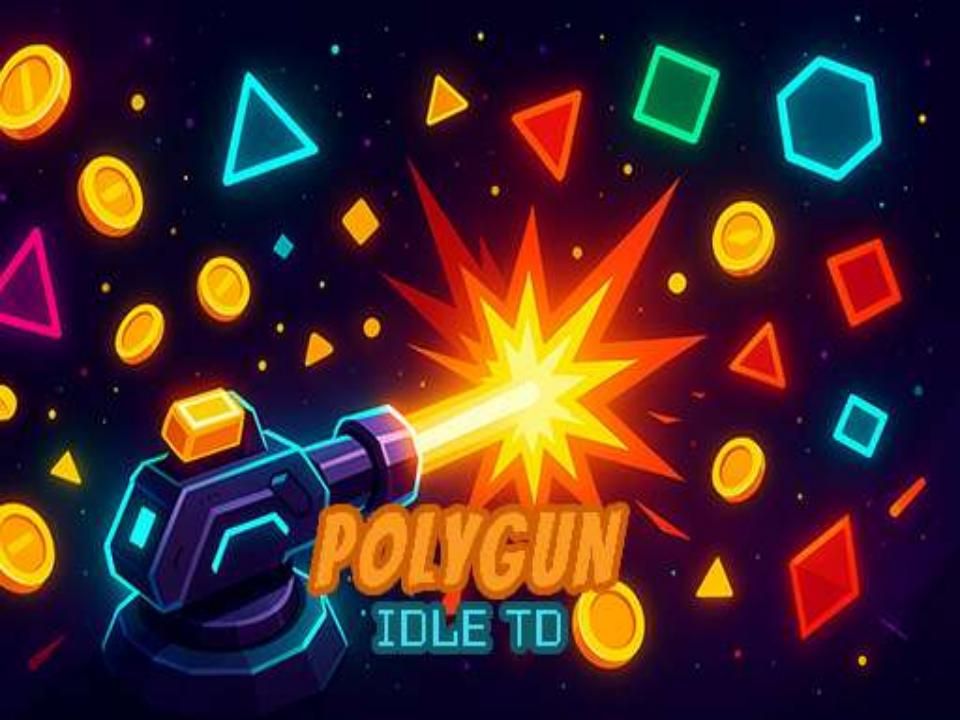
Idle Poly Turret: Gun Powered Tower Defense
Game Introduction Step into the polygonal battlefield where idle ease meets tower defense thrills! Welcome to the world of PolyGun, where endless waves of geometric foes surge forward, and your auto-firing turrets stand as the last line of defense. These sharp-edged enemies aren’t here to hold back—each boasts unique movement patterns, from swift darting shapes to heavy-hitting behemoths, keeping your strategic senses on high alert. But fear not: command your PolyGun turrets, and let the automated firepower do the work, even when you’re away. Upgrade to forge an unstoppable arsenal, unlock new turret types to counter every threat, and dominate the battlefield with strategic card enhancements. Tackle thrilling quests and challenges that push your defense limits, and claim generous daily rewards to fuel your progress. Whether you’re a casual player seeking relaxed idle progression or a strategy fan craving tactical depth, PolyGun: Idle TD blends non-stop action with effortless growth. Ready to build your ultimate polygonal defense and crush the geometric onslaught? Game Features 1. Idle & Strategy Dual Experience No constant operation is required — auto-firing turrets fend off geometric enemies round the clock, and you can accumulate resources and make steady progress even when offline. Meanwhile, flexible turret layouts and tactical combinations are supported, with full autonomy in turret mixes and card enhancement directions, catering to both casual idle players and deep strategy enthusiasts. 2. Minimalist Polygonal Visual Style Featuring low-poly geometric modeling, it creates a concise and distinct battlefield atmosphere. Turrets and enemies boast highly recognizable designs, paired with clean and uncluttered combat effects, delivering an immersive visual experience. 3. Multi-Dimensional Progression System Upgrade turrets to unlock diverse fire modes, ranging from single-target burst damage to full-area AOE attacks. Combine with the card enhancement system to precisely shore up your defensive weaknesses and build your exclusive invincible defense line. The progression path is clear, allowing you to feel the satisfaction of power escalation with low entry barriers. 4. Diverse Challenges & Reward Mechanisms A huge number of levels include various modes such as regular enemy waves and boss raids. Each geometric enemy has a unique movement path, making every round of defense feel fresh and engaging. Dual rewards from daily bonuses and mission challenges ensure effortless resource collection, fueling your rapid progression. Gameplay and Controls 1. Select a level and enter battle 2. Drag turrets to strategic positions on the battlefield; they auto-fire to fend off enemies 3. Consume resources to upgrade or unlock turrets and boost combat power 4. Activate cards to strengthen your defense line and optimize tactics 5. Auto-battle needs no constant operation; earn rewards even when offline 6. Claim rewards after completing challenges to fuel your progression Game Guide The core fun of PolyGun: Idle TD lies in the balance between casual idle gameplay and strategic layout. By mastering the following tips, beginners can quickly break through early bottlenecks and steadily enhance their combat effectiveness. Initial layout is fundamental. Prioritize path corners and narrow passages as core defense points, where placing area-damage turrets (such as shotgun-type ones) can maximize splash damage coverage to multiple waves of geometric enemies. There’s no need to scatter multiple low-level turrets in the early stage; concentrate resources to upgrade 1-2 core turrets to level 3, which offers far higher output efficiency than scattered layouts. It’s recommended to first use area-damage turrets to deal with swarms, and later add 1 single-target high-damage turret to guard against elite enemies. Resource management determines progress speed. Follow the "7:3 Rule" for resources obtained by defeating enemies: 70% invested in core turret upgrades, 3% allocated to card enhancements, and the rest kept as emergency reserves. Be sure to complete daily rewards and challenge tasks in a timely manner, as they are the main stable source of early resources. Ensure your defense line is solid before going offline, and use the auto-battle mechanism to accumulate earnings. When you return to the game, you can quickly unlock new turrets or upgrade technologies. The card system is key to a combat effectiveness leap. Beginners should first unlock universal bonus cards such as "Attack Speed Boost" and "Range Extension" that are compatible with various turrets; before BOSS waves, switch to cards like "Critical Hit Bonus" and "Armor Penetration" to greatly improve elimination efficiency. There’s no need to evenly upgrade all cards; focus on 1-2 core combinations for in-depth development. For example, "Range + Attack Speed" is suitable for swarm defense lines, while "High Damage + Critical Hit" specializes in BOSS battles. Advanced response requires flexible adjustments. When facing fast-moving small geometric enemies, add slowdown auxiliary facilities to extend their damage-taking time; when encountering large BOSSes, concentrate high-damage turrets on the BOSS’s main path and activate card ultimate skills to continuously reduce its health. After clearing every 5 levels, review defense loopholes, promptly replace inefficient turrets, and adjust layout strategies in advance according to the enemy types of subsequent levels. Follow the three core principles of "focused layout, concentrated resources, and card adaptation". You can not only enjoy the ease of idle gameplay but also experience the fun of strategic layout, quickly growing from a beginner to a defense master.

Geometry Jump Dash: Neon Beat Challenge
Game Introduction Dive into a neon-fueled rhythm adventure where Geometry meets Jump and Dash! Sync your taps to pulse-pounding beats as you dash through glowing geometric landscapes, leaping over vivid obstacles that light up with every note. This fast-paced journey tests your reflexes and timing, turning each precise jump into a satisfying rush of momentum. Neon lights dance to the rhythm, transforming the game world into a sensory spectacle—every dash feels electric, every obstacle a beat to conquer. Easy to pick up but impossible to put down, it balances accessible one-tap controls with increasingly intense levels that push your skills further with each run. Unlock vibrant icons, chase high scores, and lose yourself in the hypnotic flow of geometry and rhythm. Can you keep up with the beat and master the geometry of speed? Dive in and let the rhythm guide your jump! Game Features Core Gameplay: One-Button Control & Rhythm Synchronization Simple one-button operation: tap to jump, hold to fly, with an auto-run mechanism that lowers the entry barrier and lets you start playing right away. All movements are precisely synced to electronic music beats. You can predict obstacle timing through sound, creating an immersive audio-guided obstacle prediction experience. Features diverse mechanics including jumping, gravity reversal, and speed switching, paired with form transformations like spaceships, UFOs, and waves, adding rich layers to the gameplay. Visual Presentation: Neon Geometry & Dynamic Light and Shadow Set against a backdrop of high-saturation neon colors, the geometry-constructed scenes pulse in time with the music, delivering a cyberpunk-style visual feast. Obstacles, portals, and character movements all come with particle effects and light feedback, triggering stunning light bursts upon hitting targets or completing levels. The stark contrast between dark backgrounds and glowing elements ensures visual impact without compromising operational clarity. Challenge Factor: Easy to Pick Up but Hard to Master & Progressive Difficulty Introductory levels feature straightforward rules, while advanced stages incorporate complex tracks and instant-trigger mechanisms, testing your reflexes and muscle memory. The dynamic difficulty system adjusts obstacle density based on player performance, balancing challenge and a sense of accomplishment to avoid frustration. Includes time-limited challenges, high-score rush modes, and global leaderboards to fuel the desire for repeated competitive play. Content Expansion: Diverse Levels & Unlock System Levels cover a range of rhythm styles, from mellow electronica to high-tempo EDM, catering to different player preferences. Hidden collectibles are scattered throughout the game, unlocking exclusive character icons, color themes, and special levels to extend gameplay longevity. Each play session lasts within 3 minutes and supports offline play, making it perfect for commutes and other fragmented time slots. Gameplay and Controls 1. Basic Control: Single-button operation – Tap to jump, hold to fly. 2. Auto-run: Character moves forward automatically; focus only on timing jumps/flights. 3. Rhythm Sync: Align taps with music beats to avoid neon obstacles. 4. Form Switch: Automatic transformation (spaceship/UFO etc.) in specific levels, no extra operation needed. Game Guide Geometry Dash Jump is centered on rhythm synchronization and quick reactions; behind the seemingly simple one-button operation lies many skills. Mastering the following key points will help you quickly get through the beginner stage, steadily improve your clearance rate, and enjoy the fun of the collision between geometry and rhythm. I. Essentials of Basic Operations The core of the game is one-button control, compatible with tapping the screen, the spacebar, or the left mouse button. The character runs forward automatically by default, so there's no need to manually control the direction—just focus on grasping the timing of operations: tap lightly to jump in Cube form, and click continuously for consecutive jumps; hold the screen to fly continuously in Ship form, and release to fall, requiring precise control of flight height to avoid obstacles; click to switch gravity in Ball form, which is suitable for dealing with interlaced traps above and below. Note that there is no additional operation for switching between different forms; you need to predict form changes in advance to avoid confusion. II. Core Rhythm Control Skills Rhythm is the key to clearing levels—all obstacles appear in precise synchronization with the background music. For beginners, it's recommended to listen to the level music in full first, familiarize yourself with the beat rules, and bind jumping and flying operations to drumbeats or accents to form a conditioned reflex of "audio-guided positioning". When encountering dense obstacle sections, you can tap the beat softly along with the music to avoid disrupting the rhythm due to visual interference. In addition, yellow jump pads provide higher jumping power, and green gravity orbs enable arc jumps; you need to predict and trigger them in conjunction with the beat in advance to improve operational accuracy. III. Level Clearance Strategies Entry-level levels (such as Stereo Madness) focus on familiarizing yourself with basic operations. The Ship form sections from 30%-48% and 85%-100% are relatively low-difficulty, allowing you to take the opportunity to adapt to the flight rhythm. Advanced levels will feature dynamic obstacles and multi-form switching; it's recommended to adopt the "segmented breakthrough method": when encountering sections with continuous mistakes, first remember the obstacle distribution, practice that section repeatedly alone, and then connect the whole process after proficiency. Do not rush to collect hidden coins—prioritize clearing levels during the beginner stage. Coins are often located in dangerous areas, and forced collection is likely to lead to frustration. IV. Advanced Improvement Points The core of improving reaction speed is extensive muscle memory training, with targeted special training for high-frequency mistake points. Activating Practice Mode allows you to freely adjust progress and accurately overcome difficult sections. The dynamic difficulty system adjusts obstacle density according to performance; when you're not in good form, you can return to simple levels to find the rhythm first to avoid continuous setbacks. In the later stage, you can try turning off some visual effects to reduce interference and focus on rhythm and operations themselves. Keep a steady mindset—don't get anxious about a single mistake. The key to continuous clearances lies in stable performance rather than pursuing speed. In short, the core of this game is "rhythm + proficiency". Accumulate feel from simple levels, use beats to assist operations, and then break through difficult points through segmented practice. You will soon master the essence of Geometry Dash and move forward steadily on the neon track.

Sharp Ninja Slice: Crunchy Veggie Fun
Game Introduction Unleash your inner ninja and dive into a zippy veggie-slicing spree! Swipe fast to slash through flying veggies, turning them into colorful confetti as you pile up high scores. Watch out—sneaky bombs lurk among the produce! One wrong swipe, and your slicing fun comes to an abrupt halt. With buttery-smooth cross-device controls, it’s easy for players of all ages to jump in and enjoy non-stop thrills. How long can you keep the ninja slicing streak going? Game Features Fast-paced ninja veggie-slicing gameplay Slash through flying veggies with swift swipes, dodge hidden bombs, and put your instant reflexes and focus to the test. Smooth cross-device controls Fully optimized for both mobile touchscreens and desktop platforms, delivering lag-free, responsive gameplay with zero learning curve. Vibrant and dynamic visual experience Brilliant, colorful veggies paired with satisfying slicing effects create striking, eye-catching visuals and rewarding sensory feedback. Infinite challenges & high-score competition Endless waves of gameplay keep the fun going non-stop, encouraging players to beat their personal bests and blend casual enjoyment with competitive thrill. All-age friendly design Simple, easy-to-grasp rules and well-balanced pacing make it a perfect pick for players of all ages to enjoy in their fragmented downtime. Gameplay and Controls 1. Swipe/drag the screen to slice flying veggies and score points. 2. Avoid bombs hidden among the veggies—one wrong slice ends the game right away. Game Guide As a fast-paced veggie-slicing competitive game, the core fun of "Ninja Veggie Slice" lies in balancing precise slicing and thrilling bomb avoidance. To become a top-tier ninja veggie-slicing master, the key is to master operation rhythm, optimize scoring strategies, and avoid fatal traps. Below is this concise and practical guide. Basic operations need to be accurately adapted to device characteristics. Mobile players are advised to swipe lightly and quickly with their fingertips, preferably using straight-line slicing trajectories, which can not only ensure slicing efficiency but also reduce operational redundancy; desktop players complete actions by dragging the left mouse button, noting to match the dragging speed with the flying speed of veggies to avoid missing slicing opportunities due to excessive mouse movement. Regardless of the device, avoid frequent and irregular random swipes, which will not only miss veggies but also easily trigger bombs by mistake. The core of high scores lies in balancing combos and efficiency. Continuously slicing multiple veggies in the game can trigger combo bonuses, doubling the score. It is recommended to prioritize targeting dense veggie areas and use "sweeping" slicing to cover more targets. Especially when multiple veggies are arranged in a fan shape or straight line, a single precise long swipe can easily get high combo scores. At the same time, learn to make trade-offs. If a single veggie far from the cluster is in a remote position, you can give up decisively to avoid disrupting the overall rhythm by chasing scattered targets. Bomb avoidance skills are the key to extending survival time. Bombs are often mixed among veggies, mostly with dark textures or special markers on their appearance, and their flying speed is slightly slower than ordinary veggies, so it is necessary to predict the trajectory in advance. When a bomb is found, immediately stop swiping in its direction and can detour by slightly adjusting the slicing angle. Remember the principle of "better miss than wrong slice": missing a veggie only loses a small amount of points, but mistakenly slicing a bomb will end the game directly. When the bomb density increases in later waves, you need to stay more focused and avoid flustered operations. Advanced practice can start from two aspects: first, practice rhythm control in fragmented time to familiarize yourself with the appearance rules of veggies in different waves; second, record the reasons for mistakes. If you frequently trigger bombs by mistake, you can appropriately reduce the slicing speed and prioritize ensuring accurate judgment. Through continuous practice, gradually form the muscle memory of "predict - slice - avoid bombs", and you can steadily improve your high-score record in the endless veggie-slicing frenzy.
